

The best Anne Carson book overall is Autobiography of Red, a lyrical novel in verse that makes her blend of classical myth and modern feeling especially accessible. For readers drawn to ideas, Eros the Bittersweet connects desire with literary form, while If Not, Winter offers a distinctive encounter with Sappho’s surviving fragments. The main choice is between narrative momentum, experimental poetry and essays, or translations that leave gaps visible on the page. Some books reward a first-time reader quickly; others ask for patience with allusion, fragmentary structure, or classical context. Read on for a comparison of all 11 picks and a guide to choosing the one that fits your interests.

Get art and craft supplies delivered free with Prime
- Fast, free delivery on millions of items
- Prime Video, Amazon Music and more included
- Member-only deals all year
Key Takeaways
- Autobiography of Red is the clearest first choice for readers who want a story alongside Carson’s formal experimentation.
- Eros the Bittersweet is the strongest fit for readers who prefer literary criticism and ideas about desire over a plot-driven book.
- If Not, Winter makes fragmentation part of the reading experience, while Bakkhai and Antigone suit readers seeking classical drama in translation.
- Red Doc> returns to the world of Autobiography of Red but is more elliptical, so reading it second makes the connection easier to follow.
- Carson’s books vary widely in form: choosing by format and subject is a more useful first step than assuming every title offers the same kind of poetry.
| Autobiography of Red |  | Best Overall | Title: Autobiography of Red | Author: Anne Carson | ASIN: 037570129X | VIEW LATEST PRICE | See Our Full Breakdown |
| Eros the Bittersweet: An Essay |  | Best for Readers Who Like Ideas | Title: Eros the Bittersweet: An Essay | Author: Anne Carson | ASIN: 0691247935 | VIEW LATEST PRICE | See Our Full Breakdown |
| Bakkhai |  | Best for Greek Tragedy Readers | Title: Bakkhai | Author: Anne Carson | ASIN: 0811227103 | VIEW LATEST PRICE | See Our Full Breakdown |
| Men in the Off Hours | 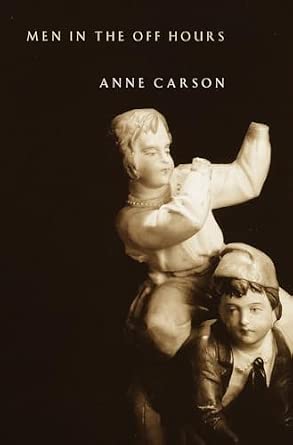 | Best for Fragmented, Cross-Genre Reading | Title: Men in the Off Hours | Author: Anne Carson | ASIN: 0375707565 | VIEW LATEST PRICE | See Our Full Breakdown |
| Glass, Irony and God | 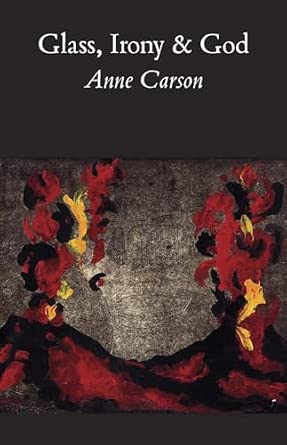 | Best Early Collection | Title: Glass, Irony and God | Author: Anne Carson | ASIN: 0811213021 | VIEW LATEST PRICE | See Our Full Breakdown |
| Wrong Norma |  | Best for Readers Who Like Formal Surprises | Title: Wrong Norma | Author: Anne Carson | ASIN: 0811230341 | VIEW LATEST PRICE | See Our Full Breakdown |
| The Beauty of the Husband: A Fictional Essay in 29 Tangos |  | Best for Readers Who Want a Compact, Structured Entry | Title: The Beauty of the Husband: A Fictional Essay in 29 Tangos | Author: Anne Carson | ASIN: 0375707573 | VIEW LATEST PRICE | See Our Full Breakdown |
| Red Doc> |  | Best for Returning Readers of Autobiography of Red | Title: Red Doc> | Author: Anne Carson | ASIN: 0307950670 | VIEW LATEST PRICE | See Our Full Breakdown |
| Antigone (Modern Plays, 4) |  | Best for Readers Who Prefer Drama | Title: Antigone | Author: Anne Carson | ASIN: 1350344397 | VIEW LATEST PRICE | See Our Full Breakdown |
| Decreation: Poetry, Essays, Opera |  | Best for Readers Seeking Carson’s Broadest Range | Title: Decreation: Poetry, Essays, Opera | Author: Anne Carson | ASIN: 1400078903 | VIEW LATEST PRICE | See Our Full Breakdown |
| If Not, Winter: Fragments of Sappho |  | Best for Readers of Ancient Poetry | Author and translator: Anne Carson | Subject: Surviving fragments by Sappho | Languages presented: Ancient Greek and English | VIEW LATEST PRICE | See Our Full Breakdown |
| Anne Carson book | Title | Author | ASIN |
|---|---|---|---|
| Autobiography of Red | Autobiography of Red | Anne Carson | 037570129X |
| Eros the Bittersweet: An Essay | Eros the Bittersweet: An Essay | Anne Carson | 0691247935 |
| Bakkhai | Bakkhai | Anne Carson | 0811227103 |
| Men in the Off Hours | Men in the Off Hours | Anne Carson | 0375707565 |
| Glass | Glass, Irony and God | Anne Carson | 0811213021 |
| Wrong Norma | Wrong Norma | Anne Carson | 0811230341 |
| The Beauty of the Husband: A F | The Beauty of the Husband: A Fictional Essay in 29 Tangos | Anne Carson | 0375707573 |
| Red Doc> | Red Doc> | Anne Carson | 0307950670 |
| Antigone | Antigone | Anne Carson | 1350344397 |
| Decreation: Poetry | Decreation: Poetry, Essays, Opera | Anne Carson | 1400078903 |
| If Not | — | — | — |
More Details on Our Top Picks
Autobiography of Red
Autobiography of Red is my strongest starting recommendation for readers who want Anne Carson’s formal experimentation paired with a story they can follow. It reworks the ancient myth of Geryon as a modern coming-of-age narrative, using a hybrid form that moves between poetry and prose. That gives it more narrative momentum than Eros the Bittersweet, whose central appeal is its sustained essayistic thinking. The tradeoff is that readers seeking a conventional novel or a straightforward poetry collection may find its shifting form hard to categorize. Compared with Red Doc>, its companion work in this roundup, this is the more natural first choice: it establishes Geryon’s story before readers encounter its later reimagining. I rank it first for its balance of accessibility, invention, and emotional reach.
Pros:- Combines a recognizable myth with a modern coming-of-age story
- Hybrid poetry-and-prose form offers variety without abandoning narrative
- Provides a strong entry point to Carson’s recurring interest in myth and desire
Cons:- Its shifts in form may frustrate readers who want a clearly defined genre
- Mythic and poetic passages leave some emotional or narrative details open
Best for: Readers new to Anne Carson who want a memorable narrative alongside formally inventive poetry.
Not ideal for: Readers who prefer conventional novels, linear storytelling, or poetry in a single consistent form.
- Title:Autobiography of Red
- Author:Anne Carson
- ASIN:037570129X
- Form:Verse novel
- Genre:Poetry and fiction
- Source material:The myth of Geryon
Our verdict“Choose this first if you want Carson’s most inviting blend of narrative drive, myth, and formal play.”
Eros the Bittersweet: An Essay
Eros the Bittersweet is the choice I’d make for readers drawn to Carson’s critical intelligence as much as her poetry. Presented here as a Princeton Classics edition, it examines desire through Greek literature and the tension between longing and distance. Its essay form gives the argument more continuity than the associative leaps of Men in the Off Hours, while its focus on eros offers a useful lens for reading the emotional undercurrents in Autobiography of Red. That intellectual focus is also its main tradeoff: readers seeking a plot-led book or a collection of poems may find the sustained literary discussion less immediate. I rank it below Carson’s more narrative work as a first purchase, but it is especially rewarding for readers who want to see how she builds an argument.
Pros:- Offers a sustained exploration of desire in Greek literature
- Connects classical texts to a clear, recurring idea
- The essay format gives readers a more continuous argument than Carson’s fragmented works
- Princeton Classics edition identifies it as part of a classics-focused series
Cons:- Its critical focus may feel academic to readers expecting lyric poetry
- Less suited to readers who want plot or a character-led reading experience
Best for: Readers of classical literature and literary criticism who want a focused study of desire rather than a story or poetry collection.
Not ideal for: Readers seeking an accessible narrative introduction to Carson or a book composed primarily of poems.
- Title:Eros the Bittersweet: An Essay
- Author:Anne Carson
- ASIN:0691247935
- Format:Princeton Classics edition
- Form:Essay
- Subject:Eros and desire
Our verdict“Pick this for Carson’s thinking about desire and classical literature, not for a narrative introduction.”
Bakkhai
Bakkhai is my pick for readers who want Carson working directly with ancient drama rather than reshaping myth into a contemporary narrative. As a version of Euripides’ tragedy, it brings the conflict of the play to the foreground; that makes it a sharper fit for readers interested in theatrical language than Autobiography of Red, where myth supports an invented modern life. The dramatic form also sets it apart from the essayistic inquiry of Eros the Bittersweet: here, tension comes through confrontation and performance, not extended analysis. The tradeoff is that readers unfamiliar with Greek tragedy may have less context for the play’s stakes, and a script offers a different kind of intimacy from Carson’s more personal-seeming poems. I rank it as a specialized but compelling choice for drama-minded readers.
Pros:- Centers a complete Greek tragedy rather than using myth as a loose premise
- Offers a distinct dramatic reading experience within Carson’s work
- Pairs well with Carson’s other classical interests, including those in Eros the Bittersweet
Cons:- Knowledge of the source play can deepen the experience
- The script form may feel less intimate than Autobiography of Red
- Readers seeking a broad introduction to Carson’s range may prefer a more hybrid work
Best for: Readers of Greek tragedy, classicists, and theatergoers interested in Carson’s approach to Euripides.
Not ideal for: Readers who want a self-contained contemporary story or prefer lyric and essay forms to drama.
- Title:Bakkhai
- Author:Anne Carson
- ASIN:0811227103
- Form:Play
- Source play:The Bacchae by Euripides
- Subject:Greek tragedy
Our verdict“Choose this if you want Carson’s engagement with Greek tragedy in a dramatic, rather than essayistic or narrative, form.”
Men in the Off Hours
Men in the Off Hours suits readers who want Carson’s writing to move across poetry, history, and reflection without settling into one sustained story. Its place in the Vintage Contemporaries series is the only edition detail supplied here; the stronger reason to choose it is its reputation as a cross-genre collection. Against Autobiography of Red, it offers less narrative continuity and more shifts in subject and approach. Compared with Glass, Irony and God, it makes more sense for readers specifically interested in Carson’s later, collage-like range than for someone seeking a single, unified introduction. That variety is also the drawback: abrupt changes can make it harder to build momentum or identify a central thread. I place it below the more focused options for first-time readers, but it rewards those who enjoy associative structures.
Pros:- Shows Carson working across multiple subjects and modes
- Offers a more fragmented experience than the narrative structure of Autobiography of Red
- Appeals to readers who enjoy connections formed through juxtaposition
- Identified as part of the Vintage Contemporaries series
Cons:- Its shifts can make the collection feel less unified
- Provides less narrative momentum than Autobiography of Red
- May be a demanding starting point for readers unfamiliar with Carson’s style
Best for: Experienced poetry readers who enjoy collections that combine lyric writing, historical references, and abrupt changes in direction.
Not ideal for: Readers who need a clear narrative arc, a single central subject, or a straightforward first book by Carson.
- Title:Men in the Off Hours
- Author:Anne Carson
- ASIN:0375707565
- Series:Vintage Contemporaries
- Form:Poetry and prose collection
- Style:Cross-genre and fragmented
Our verdict“Choose this for Carson’s associative, cross-genre mode if you value formal variety over a continuous storyline.”
Glass, Irony and God
Glass, Irony and God is my choice for readers who want a collection rather than the plot-shaped entry point of Autobiography of Red. It brings together poems and longer pieces, giving readers a view of Carson’s range without asking them to follow one continuous narrative. Compared with Men in the Off Hours, it is the better fit for someone seeking an earlier collection as a focused introduction to her poetry, though its variety still resists a single, simple reading path. That’s the tradeoff: readers who prefer one sustained argument may be better served by Eros the Bittersweet, while those who want a conventional set of standalone lyric poems may find the longer, more varied pieces less predictable. I rank it as a strong poetry-first option, not the easiest all-purpose starting point.
Pros:- Offers a collection-based alternative to the narrative form of Autobiography of Red
- Gives poetry-first readers access to Carson’s varied writing
- Provides a different route into her work than the critical essay Eros the Bittersweet
Cons:- Its range of forms may feel uneven to readers who prefer a consistent structure
- Less suitable than Autobiography of Red for readers who want a clear narrative through-line
- May be less immediately focused than a single-subject essay
Best for: Poetry readers who want an early Carson collection with varied forms and are comfortable moving between shorter poems and longer pieces.
Not ideal for: Readers who want a straightforward story, a single continuous argument, or only conventional short lyric poems.
- Title:Glass, Irony and God
- Author:Anne Carson
- ASIN:0811213021
- Form:Poetry collection
- Contents:Poems and longer pieces
- Style:Varied poetic forms
Our verdict“Choose this if you want to meet Carson through a varied poetry collection rather than through a novel-like narrative.”
Wrong Norma
Wrong Norma suits readers who want Carson’s work at its most shape-shifting: the collection moves among poems, prose, and hybrid forms rather than following one sustained narrative. That variety makes it a useful counterpoint to Autobiography of Red, whose linked story gives readers a clearer through-line. Here, the pleasure lies in shifts of voice and structure, and in seeing how Carson’s ideas change when the form changes with them. The tradeoff is that the pieces may feel less cohesive than a novel-length work, and readers looking for a straightforward introduction to her recurring themes may find the collection’s formal turns demanding. I’d choose it for curiosity about Carson’s experiments, not for a single continuous plot.
Pros:- Offers variety across forms rather than relying on one sustained structure.
- Shows Carson’s formal experimentation in a concentrated collection.
- Pairs well with readers’ knowledge of her longer works, including Autobiography of Red.
Cons:- The changing forms can make the collection feel less unified.
- Its formal shifts may frustrate readers who prefer clear narrative continuity.
Best for: Readers familiar with Carson who want a varied collection of formally adventurous writing rather than one continuous story.
Not ideal for: Readers seeking a linear narrative or a gentle first introduction to Carson’s style.
- Title:Wrong Norma
- Author:Anne Carson
- ASIN:0811230341
- Format:Book
- Work type:Collection
- Primary appeal:Formally varied writing
Our verdict“Choose Wrong Norma if you want Carson’s formal range on display and do not need a continuous plot to tie the pieces together.”
The Beauty of the Husband: A Fictional Essay in 29 Tangos
The Beauty of the Husband gives its account of love and betrayal an unusually clear frame: a fictional essay arranged in 29 tangos. The recurring form gives readers a pattern to follow even as the subject turns emotionally unsettled, making this a more defined entry point than the shifting collection Wrong Norma. Its focus on marriage and desire also sets it apart from the classical material in Antigone. The constraint is part of the appeal, but it can also make the book feel deliberately constructed rather than immersive; readers wanting a conventional novel or expansive argument may find its compressed, hybrid approach too oblique. I’d pick it for a tightly shaped work that keeps poetry and essay in conversation.
Pros:- The 29-tango structure gives the work a memorable organizing pattern.
- Combines essay and poetic approaches instead of settling into a single genre.
- Its relationship focus offers a distinct alternative to Carson’s classical plays.
Cons:- The hybrid form can feel indirect to readers expecting conventional narrative.
- Its compressed structure leaves less room for a broad, sustained exploration.
Best for: Readers who like formally structured writing about love, marriage, and betrayal, and want a focused Carson book rather than a large collection.
Not ideal for: Readers looking for a conventional romance, a linear novel, or a sustained scholarly essay.
- Title:The Beauty of the Husband: A Fictional Essay in 29 Tangos
- Author:Anne Carson
- ASIN:0375707573
- Format:Book
- Work type:Fictional essay
- Structure:29 tangos
Our verdict“Pick this book for a tightly framed, formally inventive treatment of love rather than a conventional relationship story.”
Red Doc>
Red Doc> is the natural choice for readers who want to return to the myth-shaped world of Autobiography of Red, rather than begin with an unrelated Carson mode. Its place in the roundup is defined by that connection: readers already drawn to the earlier book’s reworking of classical material have a reason to follow Carson back into related territory. Compared with The Beauty of the Husband, which announces its structure through the tango sequence, this pick is better approached as a companion to an existing reading experience. That connection is also its main limitation. Newcomers may lack the context that makes the pairing meaningful, and anyone seeking a wholly self-contained introduction may be better served by starting with Autobiography of Red itself.
Pros:- Offers a clear follow-up path for readers already invested in Autobiography of Red.
- Keeps the roundup’s myth-and-literature strand distinct from Carson’s essay collections.
- Rewards readers who enjoy tracing connections across an author’s books.
Cons:- Its strongest appeal depends on familiarity with Autobiography of Red.
- Less suited than a standalone collection for readers who want a broad first sample of Carson.
Best for: Readers who have read Autobiography of Red and want another book connected to that work’s mythic world.
Not ideal for: First-time Carson readers seeking a self-contained starting point or readers unfamiliar with Autobiography of Red.
- Title:Red Doc>
- Author:Anne Carson
- ASIN:0307950670
- Format:Book
- Work type:Literary work
- Related title:Autobiography of Red
Our verdict“Read Red Doc> after Autobiography of Red if you want to continue exploring Carson’s connected mythic writing.”
Antigone (Modern Plays, 4)
Antigone is the drama-focused pick here, suited to readers who want Carson working with a classical play rather than shaping a collection of poems and essays. Its listing identifies it as part of the Modern Plays series, which gives the book a clear theatrical context. That makes it a different choice from Bakkhai, another play in the roundup: readers can compare Carson’s engagement with Greek drama across distinct works. The tradeoff is narrowness. A play gives less room for the range of forms found in Decreation, and this product information does not specify a performance edition’s extra material or editorial features. I’d choose it for interest in Carson’s Antigone and dramatic writing, not as the broadest survey of her work.
Pros:- Provides a focused dramatic alternative to Carson’s collections and essays.
- The Modern Plays series placement identifies its theatrical category.
- Can be compared directly with Bakkhai for readers exploring Carson’s Greek drama.
Cons:- A single play offers less formal range than Decreation.
- The available product details do not identify supplementary notes or edition-specific features.
Best for: Readers of Greek tragedy, theatre students, and Carson readers who specifically want her Antigone.
Not ideal for: Readers seeking a broad overview of Carson’s poetry, essays, and hybrid forms.
- Title:Antigone
- Author:Anne Carson
- ASIN:1350344397
- Series:Modern Plays
- Series number:4
- Work type:Play
Our verdict“Choose Antigone if your main interest is Carson’s dramatic engagement with Greek tragedy, not a wide-ranging introduction.”
Decreation: Poetry, Essays, Opera
Decreation is the broadest-form pick in this group: its stated mix of poetry, essays, and opera gives readers more ways into Carson’s work than the single-play Antigone or the tightly framed Beauty of the Husband. That range makes it especially appealing to readers who want to see her move between literary modes, rather than follow one narrative or subject. The same breadth creates a real tradeoff: shifts among forms can make the book feel less like a unified collection, and readers who prefer a clear story may find it demanding. I’d rank it for range, not accessibility. For someone who already enjoys Carson’s genre-crossing approach, it offers a fuller sense of how varied her writing can be.
Pros:- Brings poetry, essays, and opera together in one collection.
- Offers greater formal breadth than the play-focused Antigone.
- Makes sense for readers interested in Carson’s movement between literary modes.
Cons:- The shifts among forms may make the collection feel uneven or less unified.
- Its range can be challenging for readers looking for a clear narrative thread.
Best for: Experienced readers of poetry and literary essays who want a single collection that spans several of Carson’s forms.
Not ideal for: Readers new to Carson who want a straightforward narrative or a consistent genre throughout.
- Title:Decreation: Poetry, Essays, Opera
- Author:Anne Carson
- ASIN:1400078903
- Format:Book
- Work type:Collection
- Contents:Poetry, essays, opera
Our verdict“Choose Decreation for Carson’s range across poetry, essays, and opera, provided you are comfortable with a varied reading experience.”
If Not, Winter: Fragments of Sappho
I’d choose If Not, Winter for a close encounter with Sappho’s surviving work and Anne Carson’s choices as a translator. The poems appear with the original Greek alongside Carson’s English, making the book especially rewarding for readers who want to attend to gaps, fragments, and shifts between languages. That experience differs from Eros the Bittersweet, which uses ancient poetry to develop an argument about desire; here, Sappho’s fragments remain at the center. The fragmentary form is also the main tradeoff: these are not complete narratives, and the blank spaces can feel demanding rather than inviting. Readers seeking the continuous story of Autobiography of Red should start there instead. I’d rank this as Carson’s strongest pick for readers drawn to translation, classical poetry, and the texture of incomplete texts.
Pros:- Pairs Carson’s English translations with the original Greek.
- Makes the fragmentary condition of Sappho’s surviving work central to the reading experience.
- Offers a direct encounter with ancient poetry rather than a modern story inspired by it.
Cons:- The surviving poems are incomplete, so readers should not expect continuous narratives or fully preserved works.
- The Greek text may be less useful to readers who cannot read the language.
- Its close, fragment-focused reading can feel less accessible than the narrative arc of Autobiography of Red.
Best for: Readers of classical poetry, translation, or Greek literature who want Carson’s English beside Sappho’s original text.
Not ideal for: Readers looking for a continuous plot, complete poems, or an easy first introduction to Carson’s more narrative work.
- Author and translator:Anne Carson
- Subject:Surviving fragments by Sappho
- Languages presented:Ancient Greek and English
- Text format:Fragments presented alongside the original Greek
- ISBN-10 / ASIN:0375724516
- Work represented:Poetry by the ancient Greek poet Sappho
Our verdict“Choose If Not, Winter if you want Carson’s paired Greek and English rendering of Sappho’s fragments, and skip it if you need a continuous story.”

How We Picked
I ranked these books by how well they serve distinct reader needs: a welcoming starting point, a sustained story, a strong critical argument, an inventive collection, or a focused encounter with classical texts. I also weighed how much context or patience each form asks of a reader. Narrative clarity and a recognizable point of entry helped a title rank higher for general readers; deliberate fragmentation and denser allusion were treated as strengths for the right audience, not universal advantages.
The order reflects usefulness across the range of readers searching for the best Anne Carson books, rather than a claim that one form is inherently superior. I compared each title with others in the lineup so that poetry, essays, plays, and translations have distinct roles. A reader who already knows Carson’s work may reasonably choose a more specialized book first; the ranking favors a balanced path while keeping those alternatives visible.
Factors to Consider When Choosing Best Anne Carson Books
Before choosing, decide what kind of reading experience you want. Carson moves between poetry, criticism, translation, drama, and hybrid forms, so the title that best introduces her may not be the one that best suits your existing interests. These distinctions can help you avoid buying a book for its subject when its format is the real deciding factor.
Choose a Form Before a Subject
A book about Greek myth can still read very differently from a translated Greek play or a work of literary criticism. If you want a continuous reading experience, favor narrative or essay structures; if you enjoy pauses, gaps, and shifts in voice, a fragmentary or hybrid book may be more rewarding. A common mistake is to pick only by a familiar myth or author and then discover that the form is less inviting than expected. Check whether you want a story, an argument, a translation, or a mix before settling on a title. That simple choice often matters more than whether a book is labeled poetry.
Match the Book to Your Tolerance for Allusion
Carson frequently places classical material beside modern language and unexpected images. Readers who enjoy following references can treat that layering as part of the pleasure, while readers seeking a straightforward narrative may prefer a book with a clearer story line. You do not need specialist knowledge to begin, but expecting every reference to be explained can make the reading feel harder than it is. A useful approach is to keep reading for the emotional or formal thread when a reference is unfamiliar. Choose a denser work when curiosity about its sources matters as much as immediate clarity.
Treat Fragmentation as a Feature, Not a Defect
Some of Carson’s books leave breaks, gaps, and abrupt turns visible rather than smoothing them into a conventional whole. That can create a vivid sense of absence, especially in work shaped by surviving fragments, but it may frustrate readers who want every narrative question answered. Before buying, ask whether you like a book that invites interpretation or one that gives a more complete arc. Fragmentary writing often rewards rereading, though it may not be the best choice when you want a quick, plot-led read. The right expectation can change whether an unconventional structure feels purposeful or merely difficult.
Decide How Much Classical Context You Want
Carson’s translations and retellings do not all ask for the same background knowledge. A reader may come for a familiar figure such as Sappho or a Greek tragic plot, while another may prefer Carson’s own contemporary reworkings. Existing familiarity can add resonance, but it is not a prerequisite for every book. Avoid buying a translation solely because the source is famous if you mainly want a modern story or essay. Pick based on whether you want to meet the ancient text directly, see it reframed, or follow a new work that borrows its echoes.
Think About Reading Pace and Re-Reading
A short, formally concentrated book can take longer to absorb than a longer narrative, because its compressed passages invite pauses and returns. If you read in brief sessions, a collection of distinct pieces may be easier to approach than a work whose meaning gathers across an extended sequence. That does not make one format more demanding in every case; it changes how attention is distributed. Readers who enjoy annotation or revisiting lines may get more from Carson’s layered writing than those who prefer to move quickly from beginning to end. Choose with your actual reading habits in mind, not just the book’s length.
Pay for the Kind of Reading You Want
For this author, the meaningful upgrade is usually not a more elaborate edition but a better match between the book and your interests. A reader new to Carson may gain more from beginning with an accessible narrative than from choosing a specialized collection simply because it looks more substantial. On the other hand, readers already interested in translation, theory, or classical drama should not feel obliged to start with the most familiar title. Think of a first purchase as choosing an entry point into a body of work, not as a definitive survey. If you are unsure, favor the book whose form you are most likely to finish and revisit.
Frequently Asked Questions
Which Anne Carson book should I read first?
For many first-time readers, Autobiography of Red is a strong starting point because it gives Carson’s formal inventiveness a sustained story to follow. If you prefer essays and literary ideas, begin with Eros the Bittersweet instead. Readers who already enjoy Greek literature may feel more at home starting with a translation or play. The best first book is the one whose format you are most likely to enjoy, rather than a title you feel you must read in a set order.
Do I need to know Greek mythology before reading Anne Carson?
No, prior knowledge is not required to begin, though familiarity can add extra layers to her use of classical sources. Carson often places ancient material in a modern setting or presents it in an unexpected form, so readers can follow the book’s language and structure even when a reference is new. If a myth or source interests you, looking it up after reading a passage can add context without interrupting your first encounter. Readers who want a direct introduction to ancient texts may prefer a translation or play; those seeking a contemporary reworking can start elsewhere.
Should I read Autobiography of Red before Red Doc>?
Reading Autobiography of Red first is the clearest route because Red Doc> revisits its characters and world. The earlier book gives you a useful point of reference for the later work’s changes in tone and form. That said, Red Doc> can be approached on its own if its more elliptical style is what interests you. If you want the relationship between the books to register fully, read them in publication order rather than treating the sequel as a substitute.
Is If Not, Winter a good choice if I have never read Sappho?
Yes, especially if you are curious about how surviving fragments can shape a reading experience. The gaps are part of the book’s form, so it does not read like a complete collection of conventional poems. Readers expecting an uninterrupted body of work may find the missing portions challenging, while readers interested in translation and textual survival may value that openness. If you want a continuous narrative instead, start with a different Carson title and return to Sappho when you are ready for a more fragmentary book.
Which book should I choose if I want Anne Carson’s ideas rather than a story?
Eros the Bittersweet is the most direct match if you want an extended critical argument about desire and literary form. Men in the Off Hours and Glass, Irony and God offer other ways into her work across poetry and essay-like writing, with a less single-minded focus than a dedicated study. If you mainly want a play or a translation, choose Bakkhai, Antigone, or If Not, Winter instead. The key distinction is whether you want Carson to develop an idea at length or to make meaning through poetic form and source material.
Conclusion
For a first purchase, I recommend Autobiography of Red as the best overall: its story gives readers a clear route into Carson’s unusual form. Eros the Bittersweet is the best value for idea-driven readers, since its focused argument suits anyone more interested in literary thought than narrative. For a premium, more layered reading experience, choose Decreation if you want poetry, essays, and opera gathered in one ambitious work. Autobiography of Red is also my best pick for beginners, while If Not, Winter is the specific choice for readers drawn to Sappho and the meaning of textual gaps. If Greek drama is your priority, turn to Bakkhai or Antigone; if you want to continue a story, read Red Doc> after Autobiography of Red.
Halloween Picks
halloween
As an affiliate, we earn on qualifying purchases.