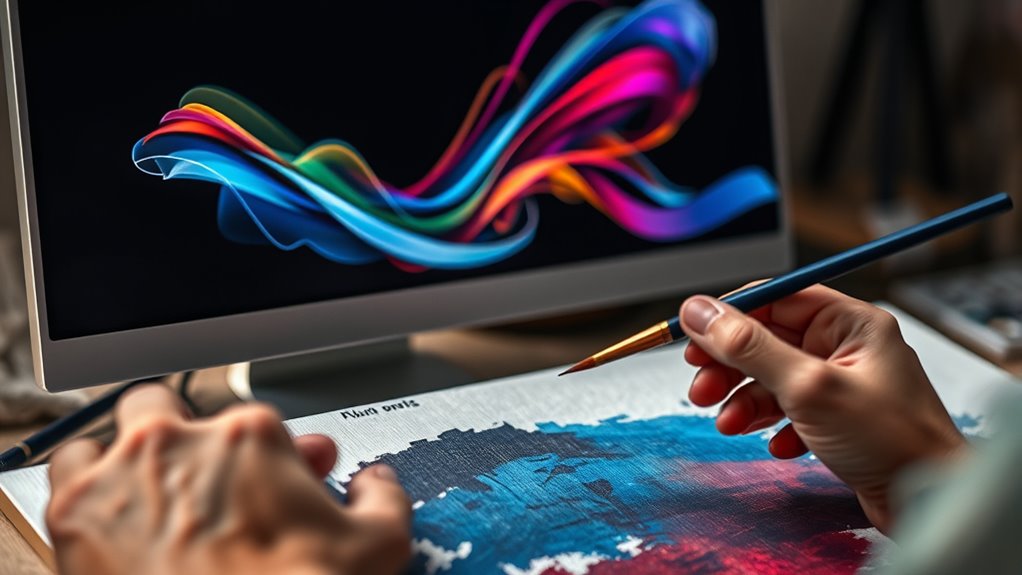

Many artists seamlessly turn digital sketches into physical artworks by blending innovative techniques with traditional craftsmanship. They start with quick digital experiments, then print or project their designs onto canvas for accuracy. Using brushes and paint, they translate their digital blueprints into textured, vibrant pieces. This hybrid approach enhances creativity and craftsmanship, helping artists refine their ideas before committing to final touches. If you want to explore how this process works in detail, keep exploring the different methods artists use.
Key Takeaways
- Many artists use digital sketches as blueprints, projecting or printing them onto canvas for accurate physical translation.
- The hybrid process combines digital experimentation with traditional brushwork, enhancing creative flexibility and precision.
- Artists often refine digital concepts before manual execution, ensuring better composition and color accuracy in final artworks.
- Digital sketches serve as reference guides that streamline the transition from pixel-based ideas to tactile painted pieces.
- Integrating digital tools with traditional media fosters innovative techniques and enriches the artistic process.
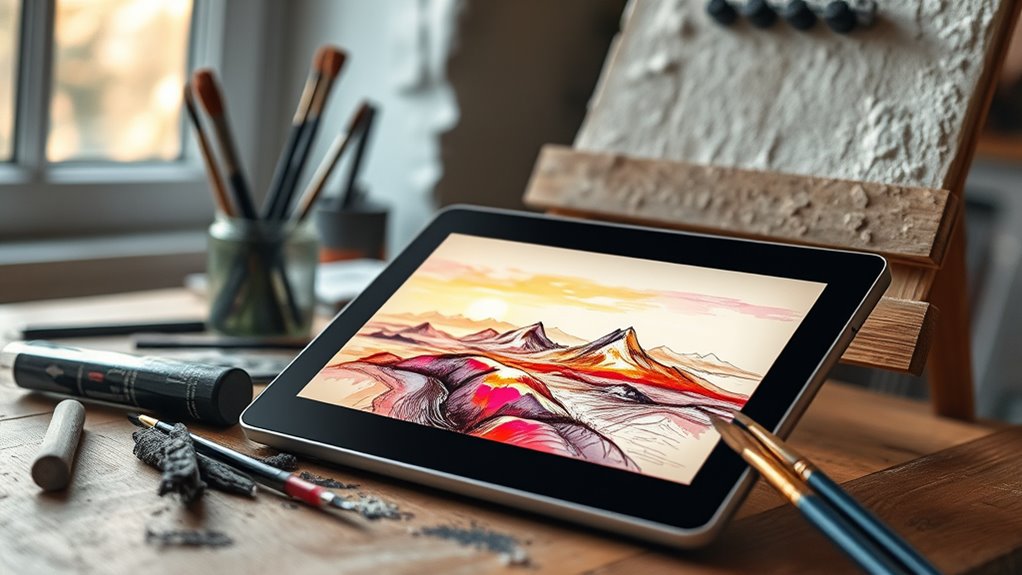
Digital sketches have revolutionized the way artists plan and experiment with their ideas, but many still choose to bring those concepts to life on traditional canvases. This blend of digital techniques and traditional creativity allows you to explore initial ideas quickly and refine them before committing to a physical medium. You might begin by sketching rough outlines using digital tools, taking advantage of the flexibility they offer—easy adjustments, undo options, and layers. This process helps you experiment freely, testing different compositions and color schemes without the mess or time constraints of traditional media. Once you’re satisfied with the digital version, you can translate those sketches onto a canvas, blending the best of both worlds.
Digital sketches enable quick experimentation before bringing ideas to life on traditional canvases.
The shift from pixels to paint requires a keen understanding of how digital techniques can inform traditional work. As you move from screen to canvas, it’s essential to adapt your digital concepts into physical form, considering factors like texture, brushwork, and color mixing. Your digital sketches serve as blueprints, guiding you through the process while still leaving room for spontaneity and personal interpretation. This approach not only preserves your initial vision but also enhances your traditional craftsmanship, giving your artwork depth and authenticity that digital alone can’t replicate.
Many artists find this hybrid approach enriching because it allows them to leverage digital tools’ precision and convenience while maintaining their tactile connection to traditional materials. You can print out your digital sketches to use as references or project them onto your canvas for accurate outlines. This step guarantees your composition remains true to your digital design, yet it’s your skill with brushes and paints that breathe life into the final piece. It’s about translating the digital language of pixels into the physical language of brushstrokes and texture, creating a dialogue between the two mediums.
This process also encourages continuous learning. As you work, you’re not just copying digital images but interpreting them through your unique artistic voice. The digital techniques you used initially become a foundation, but your hands add nuance, emotion, and character that digital tools can’t provide alone. Incorporating color accuracy and understanding how to calibrate your digital and traditional palettes can significantly improve the coherence between your sketches and finished artwork. Additionally, understanding drivetrain components and their maintenance can ensure your tools and materials stay in optimal condition, supporting your creative process. Developing a sustainable practice can help you maintain consistency and avoid burnout over time. By merging digital sketches with traditional creativity, you develop a more versatile skill set, gaining confidence in both worlds. Whether you’re an aspiring artist or a seasoned creator, this method allows you to innovate and refine your artistic process, making your shift from digital drafts to finished canvases a seamless and rewarding journey.
Frequently Asked Questions
How Do Artists Choose Which Digital Sketches to Finalize on Canvas?
You select digital sketches to finalize based on your conceptual evolution and artistic intuition. You look for ideas that resonate with your creative vision and show potential for growth. Trust your instincts to identify which sketches capture the essence of your concept and hold emotional impact. By aligning your intuition with your evolving artistic goals, you choose the sketches that best translate your digital ideas into compelling canvas artwork.
What Tools Are Essential for Transforming Sketches Into Painted Artworks?
You might think any tool works, but the key tools are digital brushes and precise color calibration. These keep your digital sketches alive and ready for transformation. You’ll need responsive digital brushes that mimic real paint textures and accurate color calibration to guarantee your hues translate perfectly onto canvas. Without these, your masterpiece could lose its vibrancy and authenticity. Mastering these tools is essential to turn your digital ideas into stunning painted artworks.
How Do Artists Maintain the Original Sketch’S Spirit During Transfer?
You preserve the sketch’s spirit by staying true to its digital authenticity and emotional integrity. Focus on capturing the original energy and nuances rather than overly refining details. Use techniques like layering and soft blending to maintain spontaneity, and regularly step back to compare your work with the initial sketch. This mindful approach guarantees your transfer remains genuine, keeping the artwork’s emotional depth alive while honoring the core essence of the original.
What Challenges Do Artists Face When Translating Digital Art to Physical Media?
Translating digital art to physical media is like capturing a fleeting dream on canvas. You face challenges like maintaining color fidelity, ensuring your hues match the digital version, and adapting textures to real-world materials. These hurdles test your skills, as digital precision can be hard to replicate physically. You must balance technical accuracy with artistic expression, making each brushstroke a bridge between the virtual and tangible worlds.
Are There Specific Techniques for Blending Digital and Traditional Art Styles?
You can explore digital integration and mixed media techniques to blend digital and traditional art styles seamlessly. Use layering, collage, or overlay effects to combine digital textures with physical media. Experiment with transferring digital sketches onto canvas through print or transfer techniques, then enhance with traditional paints or materials. This approach allows you to create unique, hybrid artworks that showcase both digital precision and tactile authenticity.
Conclusion
You might think digital sketches lack the soul of traditional art, but when you see artists bring these pixels to life on canvas, it’s clear that creativity transcends tools. The transformation proves that passion and skill turn fleeting digital ideas into lasting masterpieces. Don’t dismiss the process—embrace it. It’s not about the medium, but about the message and emotion behind every stroke, whether on screen or canvas.