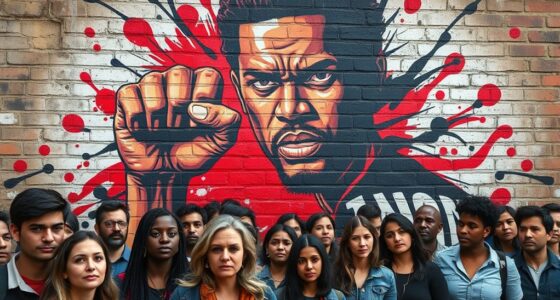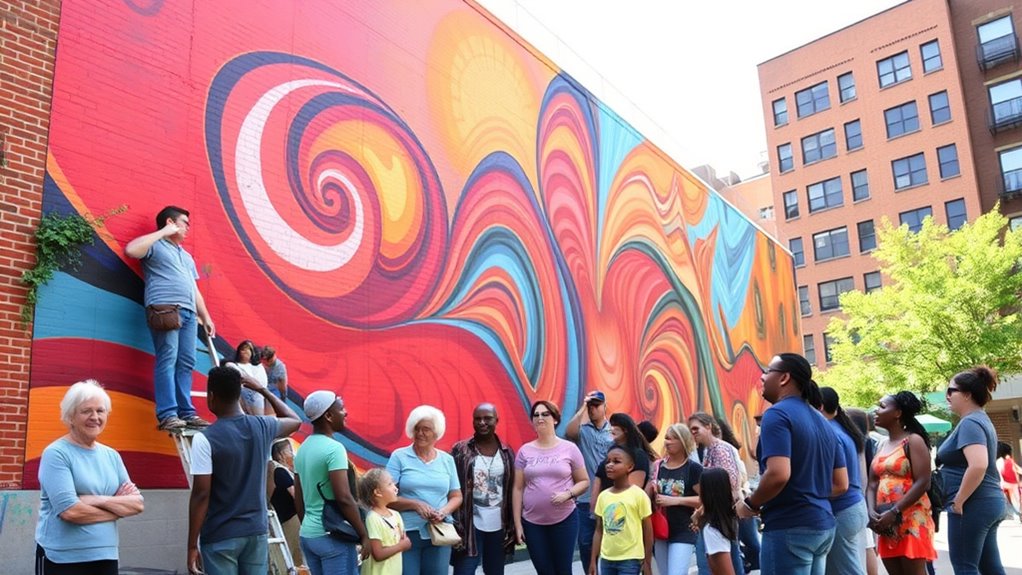

Collaborative mural projects are a fantastic way for you to unite diverse communities by turning blank walls into vibrant symbols of shared identity. As you get involved, you’ll see how the process fosters teamwork, celebrates local culture, and revitalizes neglected spaces. These murals not only boost neighborhood pride but also offer social and educational benefits, encouraging ongoing participation. To discover how these projects can make a lasting impact, keep exploring the many ways to bridge communities through art.

Get art and craft supplies delivered free — and shop member deals
- Fast, free delivery on millions of items
- Access to Prime Big Deal Days deals on October 6–7
- Prime Video, Amazon Music and more included
Key Takeaways
- Collaborative murals foster community identity by involving diverse voices, promoting inclusivity and shared ownership of public spaces.
- The creative process encourages teamwork, dialogue, and compromise, strengthening relationships among different community groups.
- Murals serve as cultural landmarks that celebrate local history and values, enhancing neighborhood pride and cohesion.
- Participatory art projects provide educational opportunities and empower residents through skill development and social engagement.
- Successful initiatives require effective funding, planning, and maintenance to ensure long-term community benefits and project sustainability.
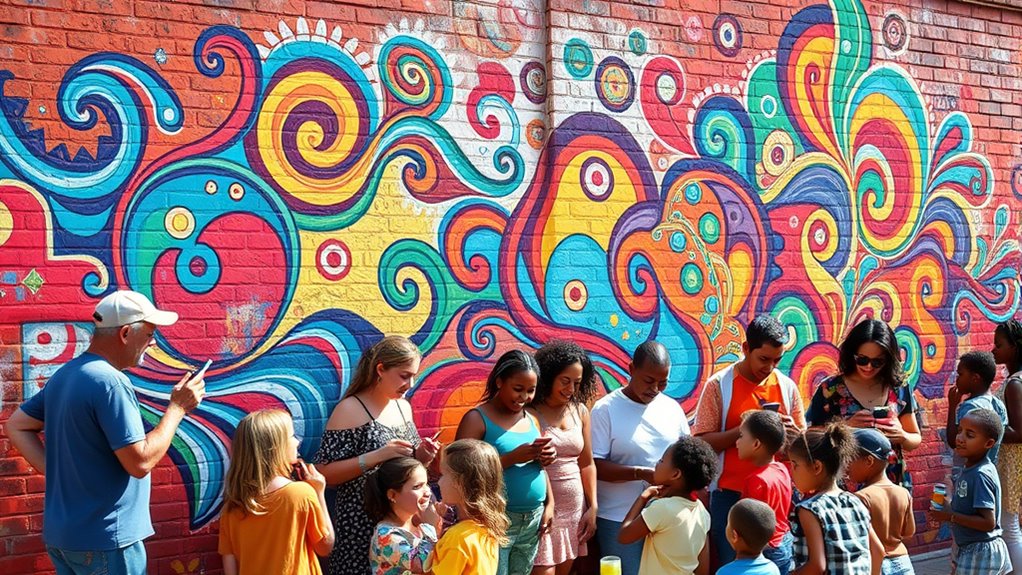
Collaborative mural projects bring communities together by transforming blank walls into vibrant works of art. When you participate in these initiatives, you’re not just creating a visual display; you’re fostering a sense of belonging and shared identity. These murals serve as a canvas for community engagement, inviting diverse voices to contribute and be seen. As you work alongside neighbors, artists, and local groups, you realize that the process of designing and painting the mural becomes a powerful tool for building trust and understanding. Everyone’s input, ideas, and stories weave into the final piece, making it more meaningful and representative of the community’s collective spirit.
Artistic collaboration lies at the heart of these projects. You and your fellow participants combine your skills and perspectives, blending different styles and ideas into a cohesive artwork. This collaboration isn’t just about the end result; it’s about the journey. Through brainstorming sessions, sketching, and painting, you learn to listen and compromise, valuing each contribution equally. The shared effort transforms the mural into a symbol of unity, showcasing how diverse talents and backgrounds come together to create something beautiful. This process often sparks conversations beyond the artwork itself, encouraging ongoing dialogue about community issues, history, and aspirations.
Engaging in a mural project gives you a sense of ownership over your neighborhood. As you contribute your time and creativity, you feel more connected to the space around you. It’s a way to celebrate local culture, history, and values while also revitalizing neglected or overlooked areas. These murals can inspire pride and inspire others to get involved, creating a ripple effect of participation. They often become landmarks, attracting visitors and fostering new interactions among residents. Plus, the collaborative effort breaks down barriers, allowing people from different backgrounds to bond over a shared goal, which can lead to lasting friendships and stronger community ties.
You also benefit from the educational aspect of mural projects. They provide opportunities for learning about art techniques, community history, and social issues. As you work together, you develop skills in teamwork, communication, and problem-solving. The sense of achievement from completing a mural that genuinely reflects your community’s identity is incredibly rewarding. It’s a reminder that collective effort and artistic collaboration can produce not only eye-catching visuals but also meaningful change, bringing people closer and strengthening the fabric of your neighborhood. Additionally, understanding the importance of financial aspects, such as securing funding and managing budgets, can help ensure the sustainability and success of these community initiatives.
As an affiliate, we earn on qualifying purchases.
Frequently Asked Questions
How Do Communities Select Mural Themes?
You select mural themes by engaging your community in discussions about what’s meaningful to them. Focus on symbolic storytelling and cultural representation to guarantee the mural reflects shared values and identities. You might hold workshops or surveys to gather ideas, then collaborate with local artists to develop a theme that resonates. This inclusive process helps foster pride and unity, making the mural a true reflection of your community’s stories and heritage.
What Is the Typical Budget for a Mural Project?
Typically, a mural project costs between $2,000 and $10,000. About 60% of funding comes from local government or grants, while the rest often relies on community donations or sponsorships. During the budgeting process, you’ll need to take into account artist fees, materials, permits, and potential community events. Securing diverse funding sources helps ensure your project stays within budget and reflects community interests effectively.
How Are Artists and Community Members Involved in Design?
You involve artists and community members through artistic collaboration and active community participation. You might hold workshops or brainstorming sessions where everyone shares ideas, ensuring the design reflects local culture and values. Artists listen to community input, integrating their perspectives into the mural. This inclusive process fosters ownership and pride, making the mural a true reflection of the community’s identity and fostering stronger connections among residents.
What Safety Precautions Are Taken During Mural Creation?
Think of mural creation as building a sturdy bridge—you need safety to cross it safely. You’ll wear safety gear like helmets, gloves, and masks, ensuring protection from potential hazards. During project planning, you identify risks and set safety protocols, so everyone stays safe. Clear communication and proper equipment keep the process smooth, allowing you to focus on transforming a blank wall into a vibrant community masterpiece without compromising safety.
How Do Mural Projects Sustain Community Engagement Long-Term?
To sustain community engagement long-term, you should secure ongoing community funding and involve local residents in the mural process. Collaborate with artists who understand the community’s culture and values, ensuring the artwork resonates deeply. Keep dialogue open through events and social media, encouraging participation and pride. Regular updates and new projects can maintain interest, making community members feel invested and connected to the mural’s evolving story.
As an affiliate, we earn on qualifying purchases.
Conclusion
By participating in collaborative mural projects, you have the power to transform neighborhoods and foster lasting connections. Imagine working alongside neighbors to create a vibrant, shared masterpiece that tells your community’s story. For example, in a small town, residents came together to paint a mural celebrating local history, which now draws visitors and sparks pride. Your involvement can turn blank walls into symbols of unity, inspiring change and strengthening bonds for years to come.
As an affiliate, we earn on qualifying purchases.
As an affiliate, we earn on qualifying purchases.
Fall Picks
fall essentials
As an affiliate, we earn on qualifying purchases.