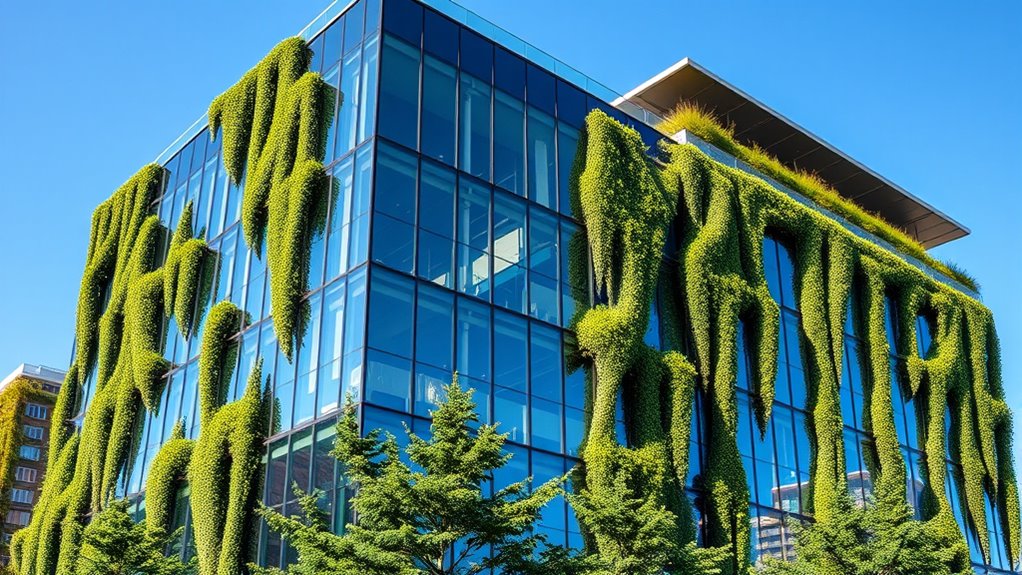

The Edge Building in Amsterdam is a leading example of sustainable office design, combining green architecture with smart technology. You’ll see how natural light and smart glass reduce energy use, while sensors optimize heating, cooling, and lighting based on occupancy. Renewable energy and rainwater harvesting further lower its environmental impact. This innovative approach promotes efficiency, health, and productivity. If you explore further, you’ll discover how this model can inspire greener urban development worldwide.

Get art and craft supplies delivered free with Prime
- Fast, free delivery on millions of items
- Prime Video, Amazon Music and more included
- Member-only deals all year
Key Takeaways
- The Edge Building in Amsterdam exemplifies sustainable architecture with extensive natural lighting and smart glass façade technology.
- It integrates advanced smart systems for real-time monitoring of environmental conditions and occupant presence.
- Renewable energy sources like solar panels and rainwater harvesting make it highly eco-efficient.
- The building’s data-driven controls optimize energy and water use, reducing its carbon footprint.
- Serving as a model for green office design, it highlights innovative integration of sustainable practices and smart technology.
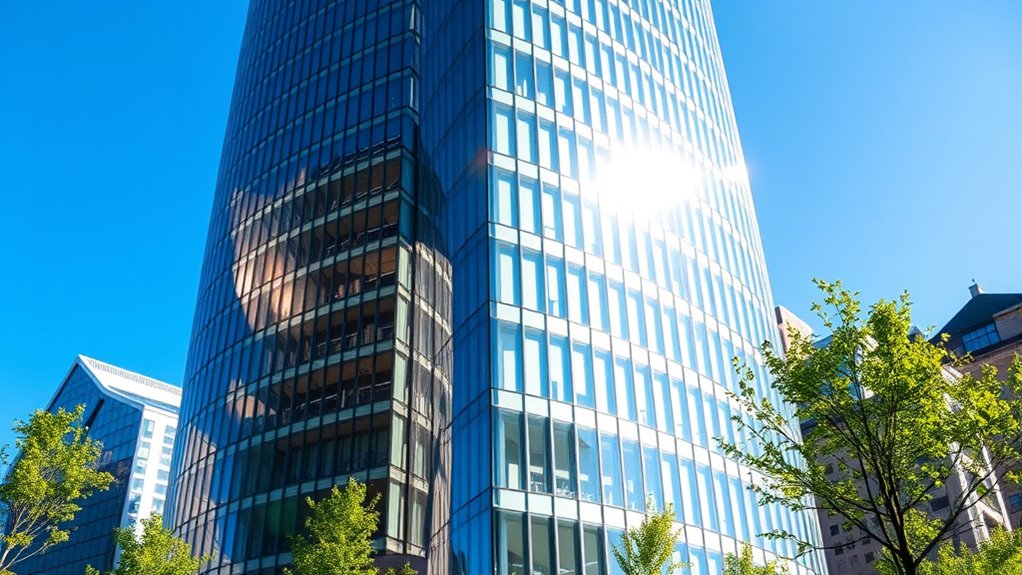
The Edge Building in Amsterdam is a groundbreaking example of sustainable architecture and innovative design. As you step into this office space, you immediately notice how it embodies the principles of green architecture. Every detail has been thoughtfully engineered to minimize environmental impact while maximizing efficiency. The building’s design incorporates extensive use of natural light, reducing the need for artificial lighting during the day. Its façade features smart glass that adjusts tint levels based on sunlight, helping to regulate indoor temperatures and cut down on energy consumption. This focus on green architecture isn’t just about reducing carbon footprints; it’s about creating a healthier, more productive environment for those inside.
What truly sets The Edge apart is its integration of smart technology. From the moment you enter, you see how digital systems seamlessly connect different aspects of the building’s operation. Sensors monitor temperature, humidity, and occupancy levels in real time, allowing the building to automatically adapt to changing conditions. This not only conserves energy but also ensures ideal comfort for everyone. You might notice how the lighting adjusts as you move through the space, or how the ventilation system kicks in precisely when needed, thanks to sophisticated data analytics. These smart systems create a dynamic environment that responds intelligently to its users, eliminating waste and enhancing sustainability.
You’ll also appreciate how the building’s energy management system harnesses renewable sources. Solar panels on the roof generate electricity, while rainwater harvesting systems reduce reliance on external water supplies. All these features work together to form a cohesive network of green solutions. Additionally, the integration of innovative smart building systems optimizes resource use and operational efficiency. The building’s smart technology extends beyond environmental controls; it also improves operational efficiency. For example, real-time dashboards provide facility managers with insights into energy usage, enabling them to fine-tune systems and identify areas for further improvement. This proactive approach makes The Edge not just a place to work but a model for sustainable building management.
As an affiliate, we earn on qualifying purchases.
Frequently Asked Questions
How Does the Edge Promote Employee Well-Being Beyond Sustainability?
You’ll notice that The Edge promotes employee well-being beyond sustainability by enhancing employee satisfaction through wellness initiatives. The building offers ample natural light, ergonomic workspaces, and quiet zones that reduce stress. It also features fitness areas and encourages active breaks, helping you stay healthy and engaged. These thoughtful amenities create a supportive environment, ensuring your overall wellness and happiness at work, which ultimately boosts productivity and morale.
What Smart Technologies Are Integrated Into the Edge’s Design?
You might think smart technologies are just fancy gadgets, but at The Edge, they substantially enhance your experience. It integrates smart lighting and IoT sensors that adjust lighting, temperature, and workspace conditions automatically. These innovations optimize energy use and create a comfortable, personalized environment, helping you stay productive and alert. So, smart tech isn’t just about efficiency—it transforms your daily work life into a more connected, responsive experience.
How Is the Edge’s Energy Performance Monitored and Maintained?
You monitor The Edge’s energy performance through regular energy audits and strict maintenance protocols. These audits identify inefficiencies, allowing you to optimize systems like lighting, HVAC, and renewable energy sources. Maintenance protocols ensure all smart technologies operate correctly, reducing energy waste. By consistently tracking performance data and conducting audits, you uphold the building’s high energy efficiency, guaranteeing it remains a sustainable office model.
What Challenges Were Faced During the Edge’s Construction?
During the Edge’s construction, you face significant challenges like complex design obstacles and integrating sustainable features seamlessly. Ensuring the innovative energy-efficient systems worked correctly required meticulous planning and coordination among teams. You also dealt with structural complexities due to the building’s unique shape and advanced technology integration. Overcoming these construction challenges demanded flexibility, problem-solving, and close collaboration to stay on schedule and meet sustainability goals.
How Does the Edge Influence Local Community Engagement?
You’re likely to notice how The Edge fosters community outreach by actively engaging with local residents and organizations. It builds strong local partnerships, hosting events and programs that promote sustainability and innovation. This approach encourages residents to participate in initiatives, creating a sense of shared ownership. The building’s focus on community engagement transforms it into a hub that not only serves tenants but also benefits the surrounding neighborhood.
solar powered rainwater harvesting system
As an affiliate, we earn on qualifying purchases.
As an affiliate, we earn on qualifying purchases.
Conclusion
As you explore The Edge building, you’ll realize it’s more than just a marvel of sustainability—it’s a glimpse into the future of workspaces. But what secrets might lie within its innovative design? Could this be the blueprint for office environments to come? One thing’s certain: The Edge isn’t just shaping Amsterdam; it’s reshaping how we think about work, energy, and possibility. The question remains—are you ready to see what’s next?
building energy management system
As an affiliate, we earn on qualifying purchases.
As an affiliate, we earn on qualifying purchases.
occupancy sensor lighting control
As an affiliate, we earn on qualifying purchases.
As an affiliate, we earn on qualifying purchases.
Fall Picks
fall essentials
As an affiliate, we earn on qualifying purchases.