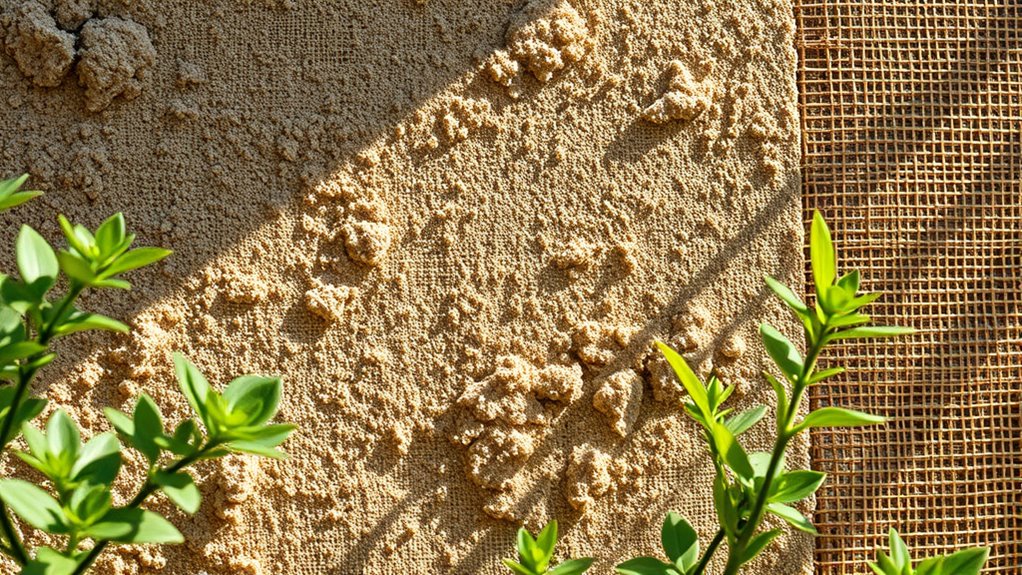

Earth-friendly materials like mycelium and hempcrete offer sustainable alternatives to traditional products by reducing environmental impact and supporting responsible sourcing. Mycelium can be molded into various shapes for insulation and packaging, while hempcrete is a breathable, carbon-sequestering building material. Exploring beyond these, you’ll find other options like cork, bamboo, and recycled metals that promote eco-conscious choices. Continue exploring to discover how these innovations can help you make more sustainable decisions.
Key Takeaways
- Mycelium is a biodegradable fungal root structure used in insulation, packaging, and furniture, offering a sustainable alternative to plastics.
- Hempcrete, made from hemp fibers and lime, is a renewable, carbon-sequestering building material promoting eco-friendly construction.
- Sustainable sourcing of materials like hemp and mycelium supports responsible harvesting and reduces environmental impact.
- Biodegradable composites combining natural fibers with eco-friendly polymers help minimize landfill waste and pollution.
- Emerging earth-friendly materials such as cork, bamboo, and recycled metals contribute to low-impact, sustainable industry practices.
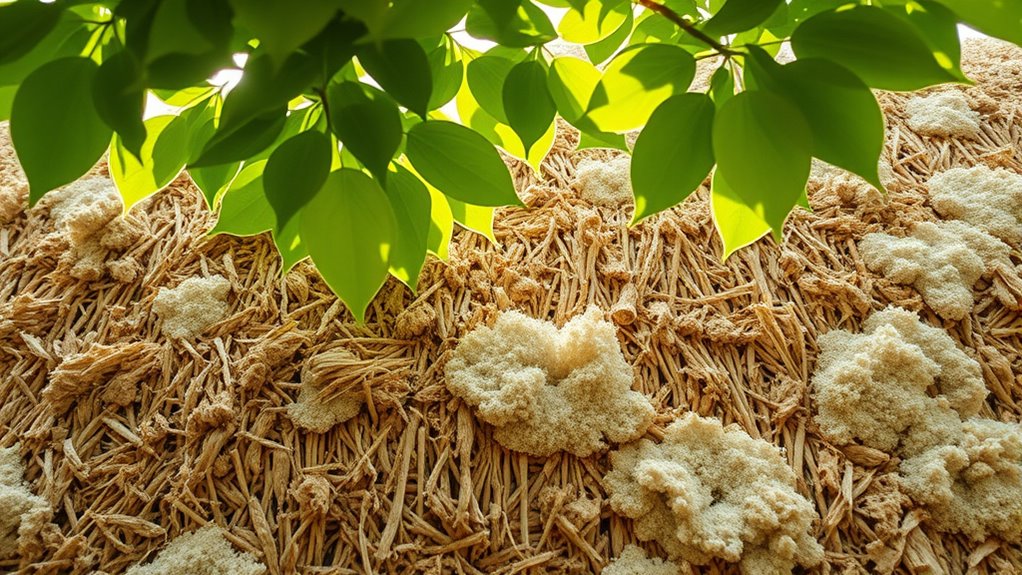
Choosing earth-friendly materials is one of the most effective ways to reduce your environmental impact. When you prioritize sustainable sourcing, you’re ensuring that the materials you use are harvested responsibly, without depleting natural resources or harming ecosystems. This approach supports renewable practices and often involves selecting materials that are locally sourced, reducing transportation emissions. For example, materials like hemp and mycelium are cultivated with minimal environmental footprint, making them excellent choices for eco-conscious projects. These sustainable options help you create buildings and products that are not only functional but also aligned with environmental values. Additionally, understanding the key components of sound design can enhance the way you present and communicate your sustainable projects through multimedia. Biodegradable composites are an innovative solution gaining popularity in eco-friendly construction and product design. They combine natural fibers with biodegradable polymers, resulting in materials that break down naturally after their lifecycle ends. This reduces landfill waste and minimizes pollution, making biodegradable composites a forward-thinking choice. When you incorporate such materials into your projects, you actively contribute to a circular economy, where waste is minimized, and materials are reused or decomposed safely. This shift away from traditional, non-degradable plastics and synthetics helps combat pollution and reduces reliance on fossil fuels. Mycelium, the root structure of fungi, is a prime example of a biodegradable composite that’s gaining traction. You can grow it into specific shapes and densities, making it suitable for insulation, packaging, or even furniture. Its rapid growth and ability to bind with other materials make it a sustainable alternative to foam or plastic-based products. Hempcrete, another eco-friendly material, combines hemp fibers with lime to create a lightweight, durable, and breathable building material. When you choose hempcrete, you’re opting for a product made from renewable resources that also sequester carbon during growth, further reducing your carbon footprint. Beyond these, many other earth-friendly materials are emerging that emphasize sustainable sourcing and biodegradability. Cork, bamboo, and recycled metals are just a few options that fit into a low-impact lifestyle. When you select these materials, you’re not only reducing environmental harm but also supporting industries committed to responsible practices. By incorporating earth-friendly materials into your projects, you demonstrate a commitment to sustainability, helping to slow climate change and preserve natural resources for future generations. Every choice you make in material selection contributes to a more sustainable world, proving that eco-conscious living is both achievable and rewarding.

TMOL Art Supplies, 175-Pack Deluxe Art Set Drawing Painting Kit with 2 Drawing Pads, Acrylic Paints, Colored Pencils, Crayons, Art Kit in Wooden Case, Gift for Artist, Adults, Teens and Kids
- Complete Art Supplies Set: 175 essential tools for all art styles
- Organized Wooden Storage Case: Sturdy mahogany case with removable drawer
- Includes Drawing and Acrylic Pads: 50-page drawing pad and 24-page acrylic pad
As an affiliate, we earn on qualifying purchases.
Frequently Asked Questions
How Do These Materials Compare in Cost to Traditional Building Materials?
You’ll find that earth-friendly materials like mycelium and hempcrete generally have a higher initial cost compared to traditional building materials. However, their material affordability improves over time because they often require less energy to produce and offer better insulation, reducing energy bills. The cost comparison varies depending on factors like availability and project size, but many see these sustainable options as worthwhile investments for their environmental benefits and long-term savings.
Are Earth-Friendly Materials Suitable for All Climate Conditions?
You might think earth-friendly materials are a one-size-fits-all solution, but their dance with climate varies like weather. While hempcrete and mycelium shine in moderate climates, they can struggle with extreme heat or cold, affecting material durability. Climate adaptability matters, so you need to take into account local conditions carefully. With proper design tweaks, these sustainable options can perform well, but understanding their limits ensures your building stands strong through every season.
What Is the Lifespan of Structures Built With These Eco-Friendly Materials?
Structures built with earth-friendly materials like mycelium and hempcrete typically last 30 to 50 years, but durability concerns can arise without proper maintenance. You need to regularly inspect for moisture or pests, as these factors affect lifespan. While these materials are sustainable, their longevity depends on installation quality and ongoing upkeep. Staying vigilant with maintenance requirements helps guarantee your eco-friendly structures remain resilient over time.
How Easily Can These Materials Be Integrated Into Existing Construction Practices?
You can integrate these eco-friendly materials into existing construction practices, but it requires overcoming modification challenges and managing supply chain logistics. You’ll need to adapt techniques, train workers, and source reliable suppliers. You’ll face challenges in standardization and acceptance, but with collaboration and innovation, these materials can seamlessly blend into current methods, promoting sustainability while maintaining quality and efficiency in construction projects.
Are There Any Health Risks Associated With Using Mycelium or Hempcrete?
You might wonder if there are health risks with mycelium or hempcrete. Generally, these materials pose low toxicity concerns, but some allergen risks exist, especially for sensitive individuals. While they’re considered safe for most, it’s wise to guarantee proper curing and ventilation during installation. Regularly check for any signs of allergic reactions, and consult with experts if you have respiratory conditions or allergies to minimize potential health issues.

Crayola Construction Paper Bulk Pack (480 Sheets) – 10 Assorted Colors, 9x12, Teacher School Supplies & Classroom Must Haves, Card Making Craft Supplies, Art Paper
- Bulk Pack of Construction Paper: 480 sheets in 10 colors
- Trusted Teacher Supplies: Ideal for classrooms and homeschooling
- Perfect for Arts and Crafts: Suitable for school projects and crafts
As an affiliate, we earn on qualifying purchases.
Conclusion
Embracing earth-friendly materials like mycelium and hempcrete gently guides us toward a more sustainable future. By choosing these natural options, you’re subtly steering away from less friendly choices, nurturing our planet with mindful decisions. Every small step you take helps weave a softer, greener world—one where innovation and nature dance in harmony. So, keep exploring these gentle alternatives; your thoughtful choices can quietly shape a brighter, healthier tomorrow.

Elmer's All Purpose School Glue Sticks, Acid-Free and Washable, Clear, 7 Grams, 30 Count - Craft Projects, Poster, Classroom Supplies, #1 Teacher Brand
- Versatile Bonding: Bonds paper, cardboard, foam, and more
- Safe and Washable: Non-toxic, acid-free, washable, photo safe
- Smooth Application: Applies smoothly without clumps
As an affiliate, we earn on qualifying purchases.
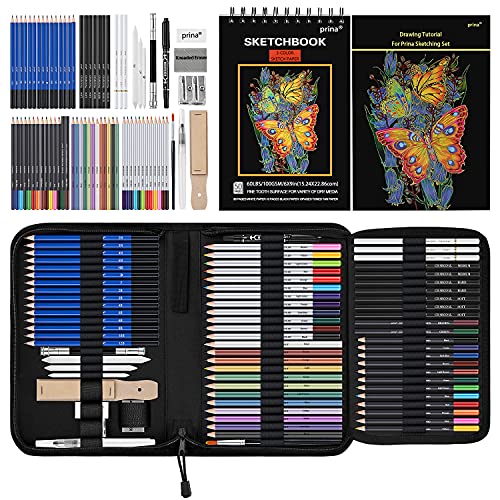
Prina 76 Pack Drawing Set Sketching Kit, Pro Art Supplies with 3-Color Sketchbook, Include Tutorial, Colored, Graphite, Charcoal, Watercolor & Metallic Pencil, for Artists Adults Teens Beginner
- Complete Drawing Set: 76-piece art pencil collection
- Variety of Drawing Supplies: Includes erasers, brushes, and accessories
- Multi-Color Sketchbook: 3-color, spiral-bound, 50 pages
As an affiliate, we earn on qualifying purchases.