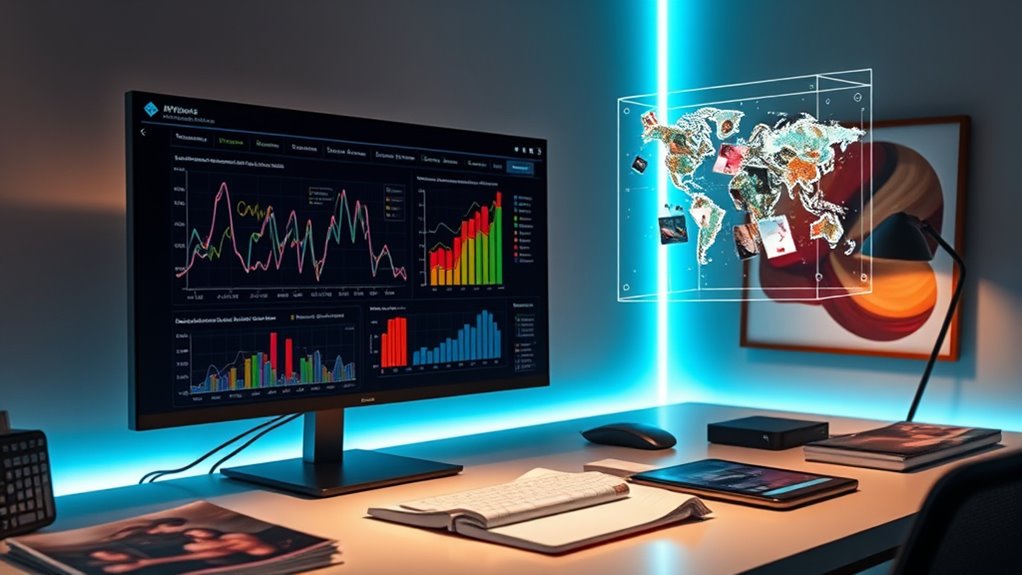

AI and data analytics are revolutionizing art valuation by making it faster, more accurate, and less subjective. You can now rely on algorithms that analyze market trends, provenance records, and artwork details in real time. These tools help you identify rising artists, ideal market timings, and authenticity with greater confidence. As you explore further, you’ll discover how these technologies are shaping a more transparent and data-driven art industry.
Key Takeaways
- AI accelerates art valuation by providing real-time, data-driven insights, reducing reliance on subjective expert opinions.
- Data analytics enhances accuracy and objectivity through analysis of vast datasets and market trends.
- Blockchain-based provenance systems ensure transparent, tamper-proof records, increasing market trust and reducing counterfeit risks.
- AI-powered authentication compares artworks to verified databases, detecting subtle stylistic and material details for precise valuation.
- Integrating provenance with market data helps optimize buying and selling decisions through comprehensive, timely insights.

Artificial intelligence and data analytics are transforming how we evaluate the worth of artworks, making the process faster, more accurate, and less subjective. By leveraging these advanced tools, you gain a deeper understanding of art market trends, allowing you to make more informed decisions about buying, selling, or investing in art. Traditional methods often relied on expert opinions and historical sales data, which, while valuable, could be influenced by personal biases or incomplete information. Now, with AI-driven insights, you have access to vast datasets that reveal patterns and market movements in real-time, giving you a competitive edge.
AI and data analytics enhance art valuation with faster, more accurate, and objective insights.
One of the key innovations in this field is the development of digital provenance systems. These systems utilize blockchain technology and data analytics to create secure, transparent records of an artwork’s history, including ownership, exhibition history, and authenticity. As a collector or dealer, you can verify the provenance of a piece quickly and confidently, reducing the risk of purchasing counterfeit or stolen artworks. Digital provenance also enhances market trust, as it provides a tamper-proof trail that buyers can access at any time. This transparency helps stabilize prices and fosters a more efficient art market, where buyers and sellers operate with confidence.
AI algorithms analyze images, styles, and signatures to assist in authentication and valuation. For example, using machine learning, you can compare a new artwork against a database of verified pieces to assess its originality and worth. These tools can identify subtle stylistic nuances, brushwork, or materials that may escape the human eye, giving you a more precise valuation. Additionally, data analytics can track fluctuations in art market trends—such as rising interest in contemporary art or declining demand for certain genres—so you can anticipate shifts and adjust your strategies accordingly. Incorporating vetting procedures and other verified data sources further improves the reliability of valuations.
Furthermore, integrating digital provenance with art market trends provides a thorough view of an artwork’s potential value trajectory. If an artist’s reputation is growing or if a particular style is gaining popularity, AI systems can highlight these trends, helping you decide when to buy or sell. By combining real-time market data with detailed provenance records, you streamline your decision-making process and reduce uncertainty. This fusion of technology and traditional expertise is reshaping how the art industry operates, making valuation more objective, data-driven, and aligned with current market dynamics.
In essence, AI and data analytics empower you to navigate the art world with greater confidence. You can evaluate artworks more thoroughly, verify authenticity efficiently, and stay ahead of market trends—all essential for making smarter, more profitable art investments in today’s digital age.

BIGASUO Digital Picture Frame Frameo 15.6" WiFi Electronic Photo Frames Large with 64GB Memory 1920x1080 IPS FHD Touch Screen Share Moments Instantly Anywhere Photo Gifts for Parents and Grandparents
【Instantly Share Moments & Bridge the Distance】Connect the 15.6" digital photo frame to WiFi and share precious photos...
As an affiliate, we earn on qualifying purchases.
Frequently Asked Questions
How Accurate Is AI in Predicting Future Art Market Trends?
AI can be quite effective in art market predictions, but its accuracy varies depending on data quality and market complexity. You should know that AI accuracy improves with more extensive data and advanced algorithms, helping you identify emerging trends and investment opportunities. However, it’s not foolproof—unexpected shifts and subjective factors still influence the art world. Use AI insights as guidance, but combine them with your own expertise for the best results.
Can Data Analytics Identify Emerging Art Styles Before They Become Popular?
You can spot emerging art styles before they hit the mainstream by analyzing data trends. Data analytics helps identify subtle shifts in artist techniques, themes, and collector preferences—key indicators of upcoming trends. It’s like reading between the lines. By focusing on emerging trends, you gain an edge in art style prediction, allowing you to invest early and stay ahead of the curve before styles become widely popular.
How Do AI Valuation Methods Account for the Subjective Nature of Art?
AI valuation methods account for the subjective nature of art through subjectivity quantification, which measures emotional influence and personal preferences. You can trust that these systems analyze patterns in artistic features, market trends, and emotional impact, balancing objective data with subjective factors. By integrating human insights and advanced algorithms, AI provides a more nuanced valuation, ensuring that emotional resonance and individual tastes are considered alongside market data.
What Are the Privacy Concerns When Using AI for Art Ownership Data?
When using AI for art ownership data, you should be aware of privacy concerns like data security and consent management. You need to make certain that the personal information of owners is protected through robust security measures. Additionally, clear consent management is essential, so owners agree to how their data is collected, stored, and used. Failing to address these issues could lead to data breaches or legal issues.
How Do AI Tools Handle Rare or One-Of-A-Kind Artworks?
Did you know that over 60% of AI tools struggle with unique artworks? When handling rare artifacts or one-of-a-kind pieces, AI relies on detailed, high-quality data, including provenance and expert input. It cross-references similar items and historical trends to estimate value. While it can’t replace expert judgment, AI helps identify patterns in these rare artifacts, making valuation more precise even when no direct comparisons exist.

Dragon Touch Large Digital Picture Frame 21.5 inch Screen WiFi Digital Photo Frame Display, 32GB Storage, Auto-Rotate, Share Photos via App, Email, Cloud, Classic 21(Not Touchscreen)
STAY TOGETHER WITH FAMILIY: This Wi-Fi cloud photo frame can quickly update your life moments with your loved...
As an affiliate, we earn on qualifying purchases.
Conclusion
Embracing AI and data analytics transforms art valuation into a clear lens through which you can see true worth. Just as a compass guides a traveler, these tools steer you through the complex art market landscape with precision and confidence. By harnessing technology, you’ll navigate the art world’s twists and turns more effortlessly, turning uncertainty into opportunity. Ultimately, embracing these innovations opens a new chapter where data becomes your most trusted guide in valuing art.

Large Digital Picture Frame 21.5"-Digital-Photo-Frame - 32GB Digital Frame, Wall Mounted, Remote Control, Auto Rotate, Share Photo Video via App Email, Free Cloud Storage, for Parents
Stunning Wall Art Display with 32GB Storage:Enjoy lifelike gallery-level images on this 21.5" WiFi digital picture frame with...
As an affiliate, we earn on qualifying purchases.

FANGOR 21.5" Large Digital Picture Frame 64GB, WiFi Photo Frame 1920x1080 FHD IPS Display with Remote Control, Auto-Rotate, Wall Mounted, Share Photos/Videos Via Uhale App/USB/SD (No Touch Screen)
【Easy And Quick】You can download the Uhale app and use it for free for life. The remote control...
As an affiliate, we earn on qualifying purchases.