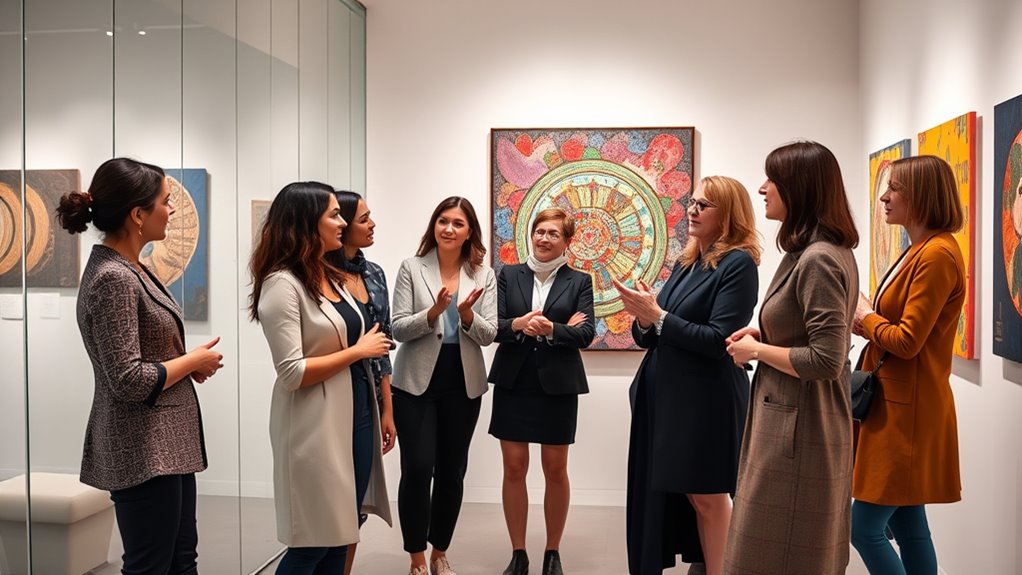

Women curators are transforming global exhibitions by bringing fresh perspectives, highlighting diverse and marginalized voices, and challenging traditional narratives. They expand the scope of artworks shown, fostering inclusive dialogues that reflect multiple cultural and gender experiences. Their collaborative approaches create engaging spaces for communities and audiences alike, promoting social change and understanding. If you stay curious, you’ll discover how these curators continue to shape the future of art and culture worldwide.
Key Takeaways
- Women curators introduce diverse narratives, challenge traditional exhibition structures, and expand global perspectives.
- They address gender and cultural representation by highlighting marginalized stories and correcting imbalances.
- Intersectional approaches integrate race, class, and sexuality, fostering inclusive and layered exhibitions.
- Collaborative, community-focused curating creates dialogue and democratizes the exhibition process.
- Their efforts transform art discourse, promoting equity, social change, and cultural dialogue worldwide.
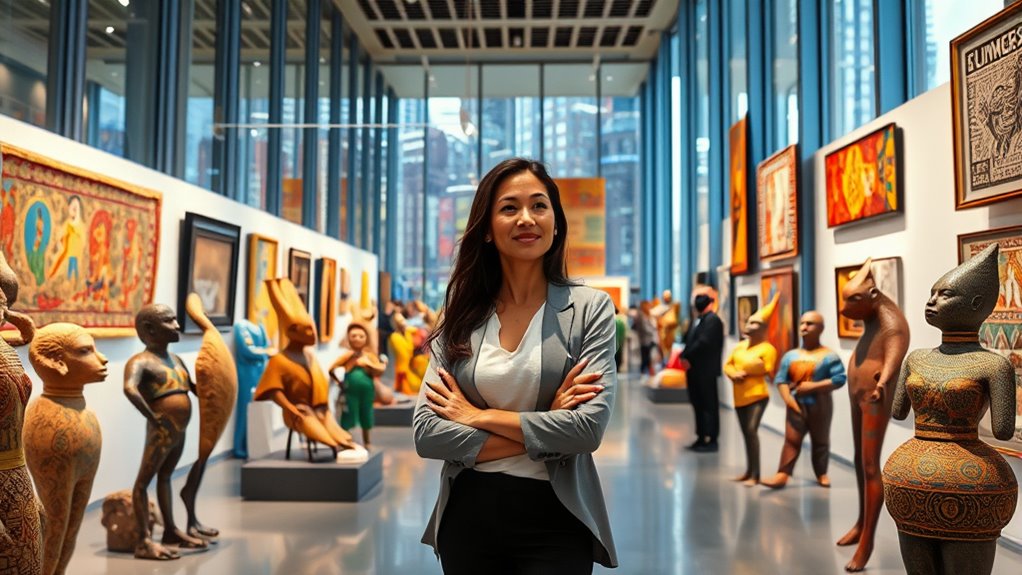
Women curators are increasingly redefining the landscape of global exhibitions, bringing fresh perspectives and diverse narratives to the forefront. By doing so, they challenge traditional structures and expand the scope of what’s showcased to audiences around the world. One of the most significant impacts they have is in addressing gender representation. Historically, exhibitions often marginalized or stereotyped women’s contributions, but today, women curators actively work to ensure this imbalance. They select works that highlight women’s experiences, achievements, and struggles, to ensure these stories are not only visible but celebrated. This shift encourages viewers to consider gender roles and appreciate the complexities of female identity across different cultures.
Women curators are reshaping exhibitions by highlighting women’s stories and challenging gender stereotypes worldwide.
At the same time, these curators are reshaping cultural narratives, moving beyond dominant, often Western-centric, perspectives. They prioritize stories that have been overlooked or marginalized, giving voice to communities and artists who have historically been silenced. In doing so, they foster a more inclusive understanding of history, identity, and artistic expression. This approach enriches exhibitions with layered, nuanced narratives that reflect a broader spectrum of human experience. As a result, audiences are exposed to perspectives that challenge stereotypes, deepen cultural understanding, and promote empathy.
Women curators also bring a conscious awareness of intersectionality to their work. They recognize that gender is intertwined with race, class, sexuality, and other social identities, and they curate exhibitions that reflect this complexity. By highlighting artists from diverse backgrounds, they dismantle monolithic cultural narratives and create spaces for multiple voices to coexist. This not only broadens the scope of exhibitions but also encourages viewers to think about how different identities intersect and influence artistic expression.
Furthermore, women curators are often more collaborative and community-focused in their approach. They build bridges between artists, institutions, and audiences, fostering dialogues that emphasize shared cultural experiences. Their leadership helps to facilitate the democratization of the curatorial process, making it more inclusive and representative of diverse perspectives. Additionally, their focus on emotional support can help create a more nurturing environment for artists and audiences alike, encouraging open dialogue and understanding. In doing so, they set new standards for what exhibitions can achieve—serving as catalysts for social change and cultural dialogue.
In essence, women curators are transforming the way exhibitions are conceived, curated, and experienced. Their focus on gender representation and cultural narratives not only enriches the art world but also promotes a more equitable and diverse cultural landscape. Through their work, they to make sure that exhibitions are not just displays of art but powerful platforms for dialogue, understanding, and change.

As an affiliate, we earn on qualifying purchases.
Frequently Asked Questions
What Challenges Do Women Curators Face in the Global Art Scene?
You face significant challenges like gender bias that can limit opportunities and recognition in the global art scene. Balancing work and personal life is tough, especially with demanding projects and expectations. You might also encounter stereotypes about women’s leadership abilities, which can hinder your progress. Despite these hurdles, your passion and resilience help you push forward, making a lasting impact on exhibitions worldwide and inspiring future generations of women in the arts.
How Do Women Curators Influence Contemporary Art Trends Worldwide?
You shape contemporary art trends worldwide like a master painter blending colors, influencing artistic innovation and cultural representation. Your curated exhibitions spotlight diverse voices, challenge norms, and open new dialogues. By selecting groundbreaking works and highlighting underrepresented artists, you steer global art forward, inspiring change and evolution. Your influence guarantees that art remains vibrant, inclusive, and reflective of our multifaceted world, making you a crucial catalyst in the art scene’s ongoing transformation.
What Strategies Help Women Curators Gain Leadership Roles Internationally?
You can gain leadership roles internationally by actively engaging in mentorship programs and expanding your network through dedicated platforms. Seek out mentors who can guide your career, and participate in networking events to connect with influential industry leaders. Building strong relationships and gaining visibility increases your chances of securing leadership positions. Consistent involvement in these strategies helps you establish authority and open doors to global opportunities in the art world.
How Does Gender Impact Curatorial Decision-Making Processes?
Gender acts as an invisible thread weaving through decision-making dynamics, shaping how you prioritize and interpret art. Bias can cloud your judgment, making you unconsciously favor certain narratives or choices. Recognizing this helps you break free from gender bias, allowing your decisions to flow more freely and authentically. By being aware, you can guarantee your curatorial process remains fair, inclusive, and truly reflective of diverse voices.
What Are Emerging Opportunities for Women in Curatorial Careers?
You can find emerging opportunities in curatorial careers through mentorship programs and networking events tailored to women. These platforms help you build valuable connections, gain mentorship, and develop your skills. By actively participating, you increase your visibility and access to new exhibitions, collaborations, and leadership roles. Staying engaged with professional communities empowers you to shape your career path and contribute to diversifying the global art scene.
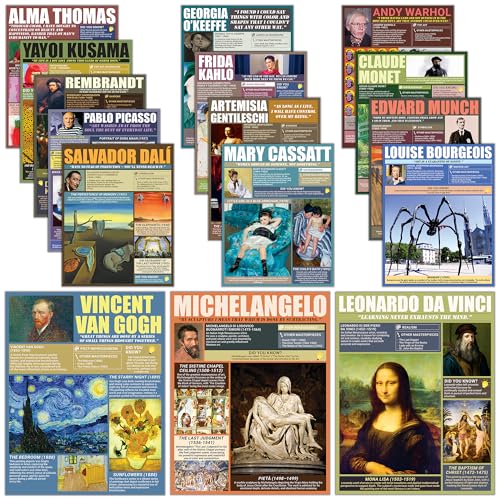
KING PRINT Famous Art Posters for Classroom, 16 Pack History Painting 11×14
- 16 Masterpieces from Rennaisance to Modern: Includes works by Da Vinci, Van Gogh, Picasso, and more
- Premium Matte-Laminated 250 GSM: Resists glare, tears, and curling for durability
- Diverse Art History Representation: Features 6 women artists and global voices
As an affiliate, we earn on qualifying purchases.
As an affiliate, we earn on qualifying purchases.
Conclusion
You can see how women curators are the guiding stars illuminating the path of global exhibitions. Their vision weaves a vibrant tapestry, blending diverse stories and perspectives into a compelling narrative. As trailblazers, they challenge the shadows of tradition, transforming galleries into blooming gardens of innovation. Their influence sparks a ripple effect, inspiring future generations to dream boldly and create without limits. In this vibrant dance, women curators are truly the heartbeat of a more inclusive, dynamic art world.
curatorial books on inclusive exhibitions
As an affiliate, we earn on qualifying purchases.
As an affiliate, we earn on qualifying purchases.

Glendan Picture Light for Wall, Professional Art Light for Museum & Gallery
- Vivid Viewing Experience: Anti-glare optics with high CRI 95+
- Adjustable Light Shaping: Customize aperture and shape freely
- Precise Artwork Illumination: Adjustable beam angle and smart control
As an affiliate, we earn on qualifying purchases.
As an affiliate, we earn on qualifying purchases.