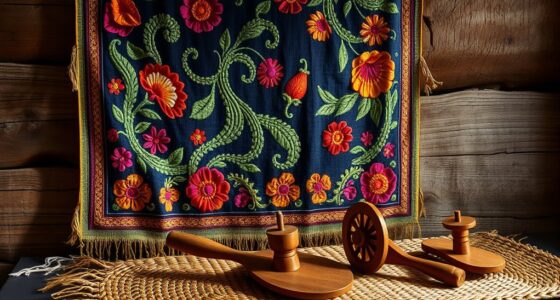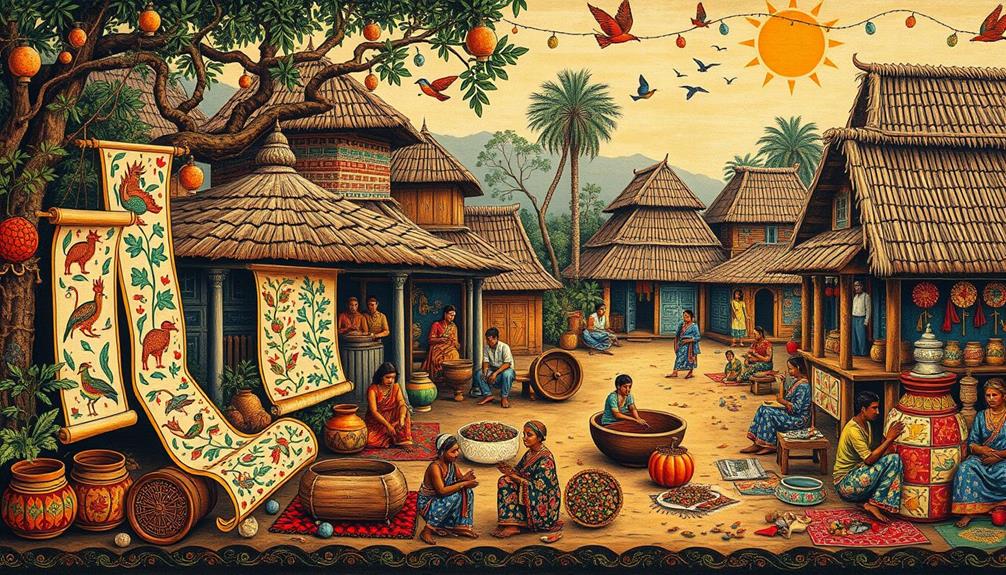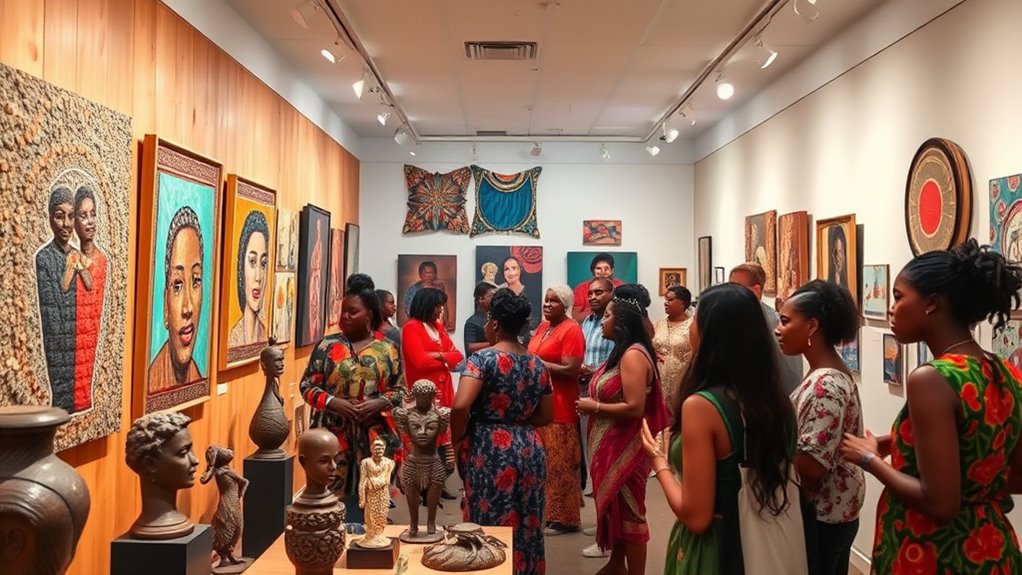

Diaspora artists play a key role in shaping and preserving cultural identity as they transform their migration stories into compelling artwork. Through music, dance, visual arts, and performances, they express shared experiences and safeguard traditions in new environments. Their work fosters pride, community, and continuity, helping people connect with their roots while maneuvering unfamiliar surroundings. If you continue exploring, you’ll discover how these artists keep cultural heritage alive and thriving across borders.
Key Takeaways
- Diaspora artists shape and express cultural identity beyond their homeland through various art forms.
- They use art to preserve traditions, customs, and languages amidst migration challenges.
- Artistic works serve as storytelling tools that connect personal experiences with cultural heritage.
- Community engagement through exhibitions and performances fosters cultural pride and continuity.
- Their creative efforts reinforce cultural identity and legacy across generations despite migration obstacles.
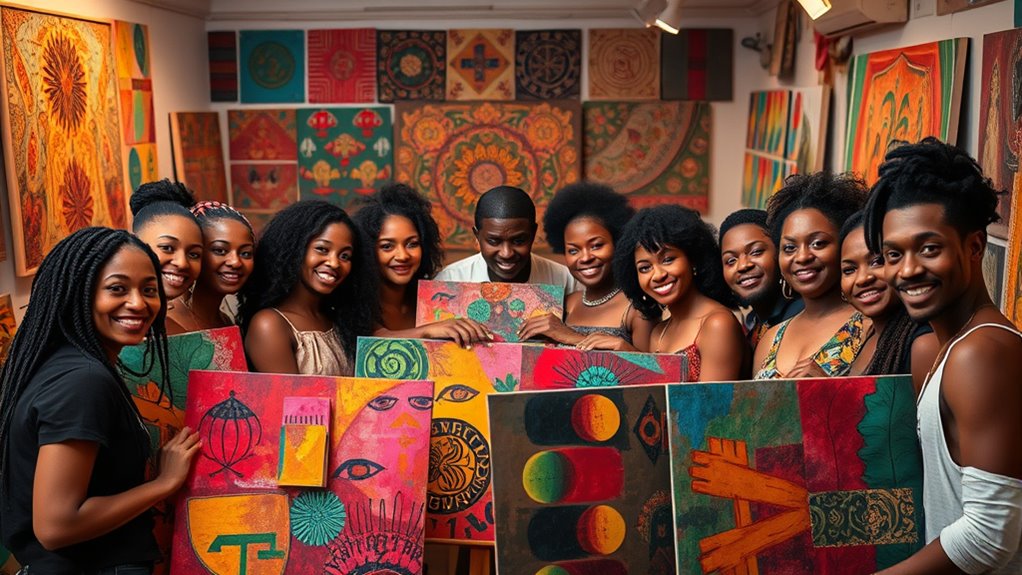
Diaspora artists play an essential role in shaping and expressing cultural identity beyond their homeland. They navigate the complexities of migration challenges while endeavoring to preserve the traditions, stories, and values that define their community. When you migrate, you often face obstacles like language barriers, unfamiliar environments, and societal misunderstandings. These challenges can threaten your connection to your cultural roots, making it crucial for you to find creative ways to maintain your heritage. Diaspora artists step into this space, transforming personal and collective experiences into powerful artwork that keeps cultural traditions alive. Through music, dance, visual arts, and performance, they communicate stories that might otherwise fade away, strengthening cultural preservation in new environments.
Migration challenges don’t just impact everyday life; they influence how you express your identity. As you adapt to a new country, you might feel caught between two worlds—holding onto your origins while trying to fit into a different society. Artists in the diaspora respond to this tension by creating work that embodies both your history and your present. Their art becomes a bridge, connecting past and present, ensuring that your culture isn’t lost amid the waves of change. In doing so, they serve as cultural custodians, safeguarding traditions and customs that might otherwise be diluted or forgotten over time. Their efforts foster a sense of pride and continuity, empowering communities to celebrate their unique identities despite physical distance from their homeland.
You also see diaspora artists actively engaging with their communities to foster cultural preservation. They organize exhibitions, performances, and workshops that invite others to explore and learn about their heritage. By doing so, they not only nurture a sense of belonging among community members but also challenge stereotypes and misconceptions outsiders might hold. Their work becomes a means of storytelling, offering authentic narratives that deepen understanding and appreciation of their culture. This active preservation process helps maintain linguistic dialects, traditional crafts, and rituals, ensuring they are passed down through generations. Additionally, their efforts often involve cultural expression as a vital tool for maintaining the continuity of traditions. In this way, diaspora artists become indispensable keepers of cultural memory, reminding everyone of the richness that their heritage brings to the broader society.
Diaspora artists foster cultural preservation through community engagement and storytelling, enriching society with authentic heritage and tradition.
Ultimately, by confronting migration challenges and championing cultural preservation, diaspora artists reinforce the importance of identity in a rapidly changing world. They turn personal struggles into powerful expressions that resonate across borders, reminding you and others that cultural roots are worth defending and celebrating. Through their creativity, they create a legacy that bridges the gap between past and future, ensuring that your cultural identity continues to thrive, no matter where life takes you.
As an affiliate, we earn on qualifying purchases.
Frequently Asked Questions
How Do Diaspora Artists Influence Their Homeland’s Cultural Revival?
You influence your homeland’s cultural revival by fostering cultural exchange and artistic collaboration. Through sharing your unique perspectives and creative work, you inspire new ideas and reconnect communities with their roots. Your efforts help preserve traditions while innovating, encouraging others to participate. By bridging cultures, you strengthen the cultural fabric of your homeland, ensuring its vibrant identity continues to evolve and thrive through your contributions.
What Challenges Do Diaspora Artists Face in Maintaining Authenticity?
You face challenges in maintaining cultural authenticity while striving for artistic visibility. Balancing your heritage with contemporary influences can be tough, as commercial pressures may push you to compromise your roots. You need to stay true to your cultural identity, which requires deliberate effort to avoid dilution. Maneuvering different audiences and expectations also tests your ability to authentically represent your culture without losing its essence, ensuring your work remains genuine.
How Does Migration Impact the Themes in Diaspora Art?
Migration profoundly influences the themes in your diaspora art by shaping migration narratives that reflect your personal and collective journeys. You blend cultural elements through hybridization, creating unique visuals and stories that express both your roots and new experiences. This process allows you to explore identity, displacement, and belonging, making your artwork a powerful reflection of the complex realities faced during migration. Your art becomes a voice for change and understanding across cultures.
Are Diaspora Artists Recognized Equally in Their Host Countries?
You might feel like a shadow in the spotlight, as recognition disparities often cast diaspora artists in the background. Despite your vibrant cultural expression, you struggle with cultural integration, making it harder for your work to gain equal acknowledgment. Host countries sometimes overlook your contributions, but your resilience keeps your art alive. Though recognition isn’t always equal, your voice enriches the cultural tapestry, demanding visibility and respect.
How Does Digital Media Affect the Dissemination of Diaspora Art?
Digital media greatly enhances how you share diaspora art. Virtual galleries let you showcase your work globally, reaching audiences without geographic limits. Social media engagement helps you connect directly with viewers, fostering conversations and expanding your influence. With these tools, you can amplify your voice, gain recognition, and build a vibrant community around your art, making it easier for your cultural expression to resonate worldwide.
traditional dance costumes for cultural events
As an affiliate, we earn on qualifying purchases.
As an affiliate, we earn on qualifying purchases.
Conclusion
You see, diaspora artists shape their identity through their art, express their culture through their work, and share their stories with the world. They bridge distances, break boundaries, and build connections. Their creativity preserves traditions, challenges stereotypes, and celebrates diversity. In doing so, they remind us that cultural identity isn’t static, but a living, breathing force. Through their art, they invite us to reflect, to learn, and to embrace the rich tapestry of our shared humanity.
art supplies for cultural crafts
As an affiliate, we earn on qualifying purchases.
As an affiliate, we earn on qualifying purchases.
musical instruments for cultural music
As an affiliate, we earn on qualifying purchases.
As an affiliate, we earn on qualifying purchases.