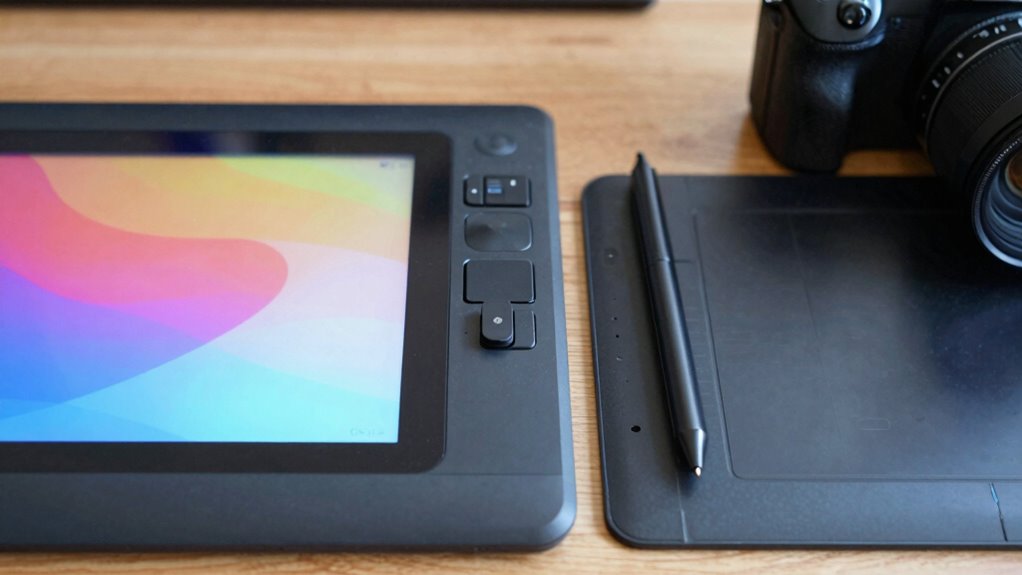

If you want to reduce wrist strain, a pen display might be your best choice because it supports natural hand positioning and rests on a surface, easing tension. Graphics tablets can also help if used correctly with ergonomic setups and accessories. Both options impact comfort, but your workspace setup, device features, and habits matter most. To protect your wrists long-term, choosing the right device and practicing good ergonomics is essential—explore more to find what suits you best.

Get art and craft supplies delivered free with Prime
- Fast, free delivery on millions of items
- Prime Video, Amazon Music and more included
- Member-only deals all year
Key Takeaways
- Pen displays promote natural wrist positioning by resting on the screen, reducing grip tension and strain.
- Graphics tablets often require more hand movement, which can increase fatigue without ergonomic setup.
- Pen displays typically offer better ergonomic features like adjustable stands and integrated wrist support.
- Proper workspace setup and ergonomic accessories are crucial for both devices to prevent wrist injuries.
- Long-term wrist health depends on device choice, ergonomic setup, and regular breaks, not just the device type.
ergonomic pen display for artists
As an affiliate, we earn on qualifying purchases.
As an affiliate, we earn on qualifying purchases.
Why Wrist Pain Happens When You Draw and How to Prevent It
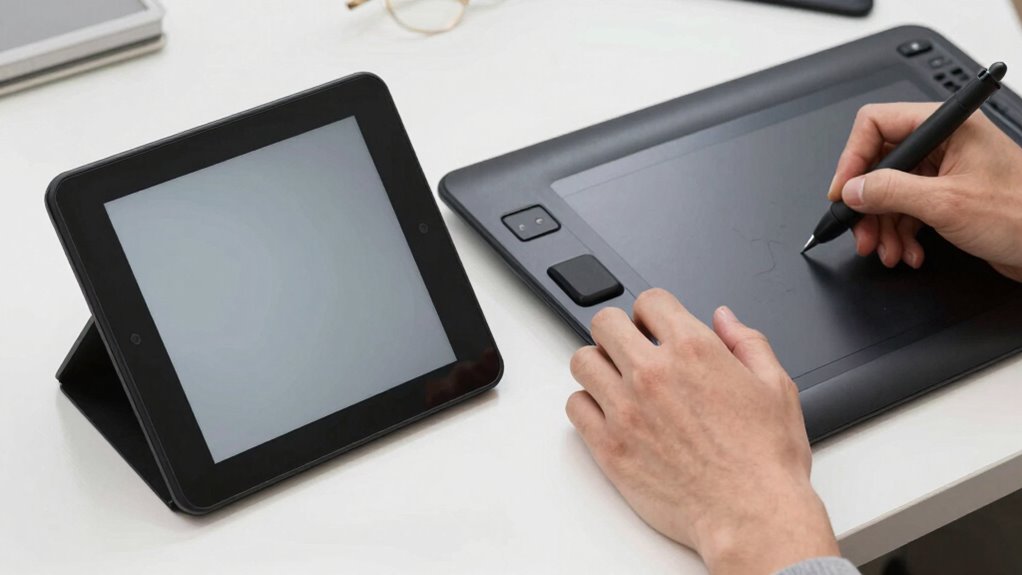
Wrist pain often occurs when you draw because many artists adopt poor posture or use improper techniques, putting unnecessary strain on their joints. To prevent this, consider using ergonomic accessories like supportive wrist rests or adjustable chairs that promote proper alignment. These tools help reduce tension and keep your wrist in a neutral position during long sessions. Additionally, incorporating wrist exercises into your routine can strengthen muscles and improve flexibility, decreasing the risk of pain. Simple stretches such as wrist circles or flexion and extension movements help maintain joint health. Paying attention to your posture and taking regular breaks also minimizes strain. Being aware of early warning signs for wrist strain can help you identify issues before they develop into pain. Furthermore, understanding ergonomic principles for drawing can aid in setting up your workspace to minimize discomfort. Optimizing your workspace with proper ergonomic setup ensures sustained comfort during extended drawing sessions. Incorporating ergonomic tools for artists can also provide additional support and reduce fatigue, making long drawing sessions more comfortable. Recognizing the importance of preventative measures in ergonomic design can further help you avoid long-term joint issues and maintain comfort over time. By combining ergonomic accessories with targeted wrist exercises, you can draw comfortably and protect your joints from long-term damage.
graphics tablet with wrist support
As an affiliate, we earn on qualifying purchases.
As an affiliate, we earn on qualifying purchases.
Pen Displays and Graphics Tablets: What’s the Difference for Your Wrists?
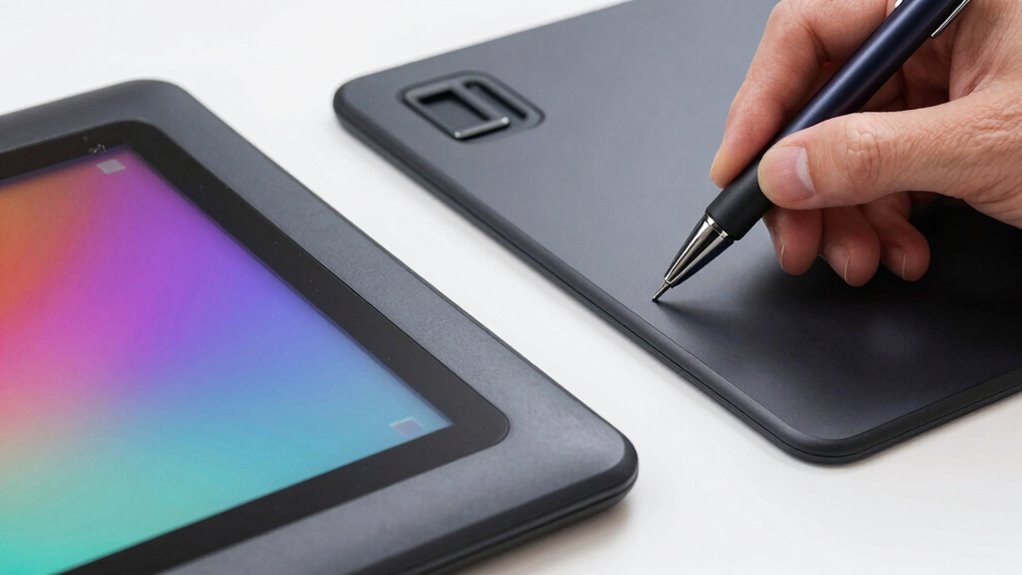
Your hand position can considerably impact comfort during long drawing sessions. Pen displays often promote better wrist alignment, reducing strain, while traditional tablets may require awkward angles. Considering ergonomic design benefits helps you choose the option that keeps your wrists happier and healthier. Additionally, understanding the art and culture intersections can inspire ergonomic choices that enhance your creative experience. Being aware of ergonomic principles can further guide you toward tools that support your well-being during extended artistic endeavors. Recognizing the influence of design and comfort on productivity can lead to more mindful setup choices that foster sustained creativity, especially when incorporating ergonomic awareness into your workspace setup. Exploring ergonomic design features in your tools can help prevent discomfort and improve your overall workflow.
Hand Position Comfort
While both pen displays and graphics tablets aim to provide a natural drawing experience, they differ considerably in how they support hand position comfort. With pen displays, your hand rests on a screen, reducing the need for excessive grip tension and helping prevent hand fatigue. The direct surface contact encourages a relaxed grip, making long drawing sessions more comfortable. In contrast, graphics tablets require you to hold a pen above a non-touch surface, often leading to increased grip tension as you compensate for less natural hand positioning. This tension can cause discomfort over time, especially if you draw for hours. Choosing a device that encourages a relaxed grip and minimizes hand fatigue is essential for maintaining comfort and avoiding strain during extended creative sessions. Additionally, understanding net+ certification benefits can help artists advance their careers and access better tools and resources for their craft. Being mindful of ergonomic design in your drawing tools can further enhance comfort and prevent repetitive strain injuries, especially when considering hand posture and proper support. Incorporating devices with ergonomic features can significantly reduce the risk of long-term discomfort and injury. Using adjustable stands can also help optimize hand position and reduce strain during prolonged use.
Wrist Strain Reduction
Because of their design differences, pen displays generally reduce wrist strain more effectively than traditional graphics tablets. With a pen display, you can maintain a more natural hand position, which minimizes hand fatigue and lessens the need for awkward wrist movements. The integrated wrist support options and smooth, built-in surface help stabilize your wrist, reducing unnecessary strain during extended use. Unlike traditional tablets, which often require you to hold your hand at an angle or elevate it, pen displays encourage a relaxed posture. This ergonomic advantage helps prevent discomfort and repetitive strain injuries. Additionally, ergonomic design features of pen displays contribute to improved comfort during long drawing sessions. Furthermore, proper cabling solutions and secure mounting can help maintain a stable workspace, supporting better posture during extended creative sessions. Overall, the design of pen displays promotes better wrist health by supporting a more ergonomic, less fatiguing drawing position.
Ergonomic Design Benefits
The ergonomic design of pen displays offers noticeable advantages over traditional graphics tablets, especially when it comes to comfort and reducing strain. With a well-designed pen display, you benefit from better wrist support, encouraging a more natural hand position. This reduces fatigue during long drawing sessions and helps prevent repetitive strain injuries. Unlike some graphics tablets that require you to angle your hand awkwardly, pen displays typically allow you to work at a more comfortable, upright posture. The ergonomic design minimizes unnecessary wrist movement, promoting healthier habits. Additionally, ergonomic design benefits are increasingly recognized as essential features in professional-grade gear, ensuring that long-term use does not compromise your health. Incorporating ergonomic considerations into your setup can further enhance comfort and productivity, making the choice of equipment more aligned with healthy work practices. Proper workspace setup also plays a crucial role in maintaining ergonomic health during extended use.
A focus on ergonomic features can help prevent discomfort and support sustained creativity over time.
As an affiliate, we earn on qualifying purchases.
How Ergonomics Affects Your Drawing Comfort and Long-Term Health
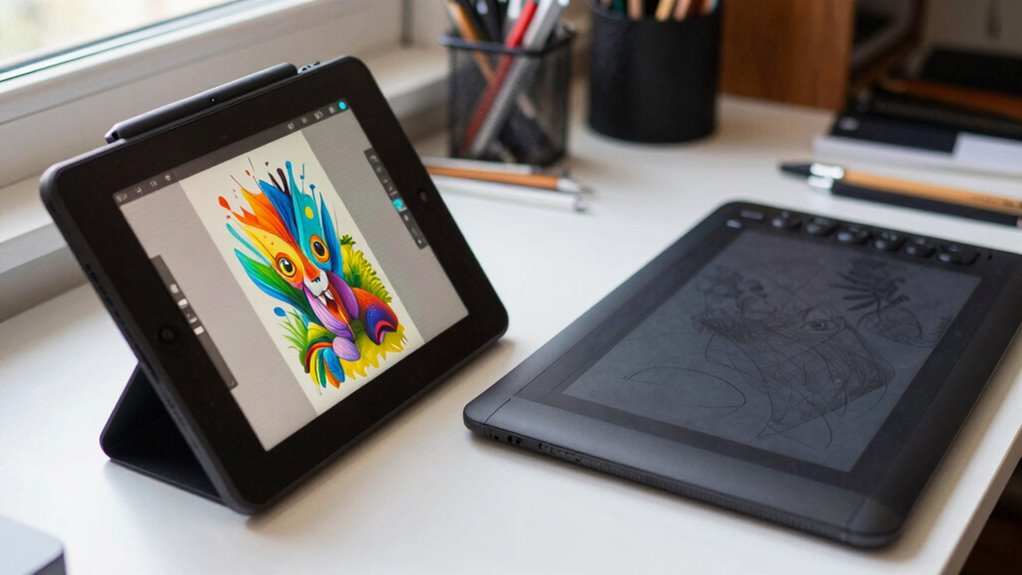
Your drawing setup directly impacts your comfort and health over time. Poor wrist positioning can cause strain, while proper posture helps prevent long-term injuries. Paying attention to ergonomics makes a big difference in how you feel during and after your creative sessions. Incorporating lifestyle products designed for comfort can further improve your workspace and reduce fatigue. Additionally, adjusting your workspace with ergonomic tools can promote better positioning and support your health during extended drawing periods.
Wrist Strain Reduction
Maintaining proper ergonomics is essential for reducing wrist strain during extended drawing sessions. When your wrist stays flexible and relaxed, you prevent tension that leads to discomfort and injury. To minimize hand fatigue, consider adjusting your workspace to keep your wrist in a neutral position and avoid overextension. Using tools that promote natural movement helps preserve wrist flexibility over time.
- Take regular breaks to stretch and shake out tension
- Use an adjustable stand or arm to keep your device at eye level
- Practice wrist exercises to strengthen and increase flexibility
Focusing on these habits helps reduce strain, making your drawing sessions more comfortable and sustainable. Proper ergonomics not only improve your immediate comfort but also protect your long-term wrist health. Keep your wrist relaxed and aligned to enjoy consistent, pain-free creativity.
Posture and Alignment
Proper posture and alignment are essential for ensuring drawing comfort and preventing long-term health issues. When using a pen display or graphics tablet, pay attention to your ergonomic accessories, such as adjustable stands and supportive chairs, to maintain proper positioning. Keep your shoulders relaxed, wrists straight, and elbows close to your body to reduce strain. Developing posture awareness helps you recognize when you’re slouching or overreaching, which can lead to discomfort or injury over time. Regularly adjusting your workspace setup ensures your screen is at eye level and your drawing surface is at a comfortable height. Prioritizing good posture and using ergonomic accessories can make a significant difference in your long-term health, allowing you to draw comfortably for hours without risking chronic pain.
As an affiliate, we earn on qualifying purchases.
What to Consider When Choosing a Drawing Device to Protect Your Wrists
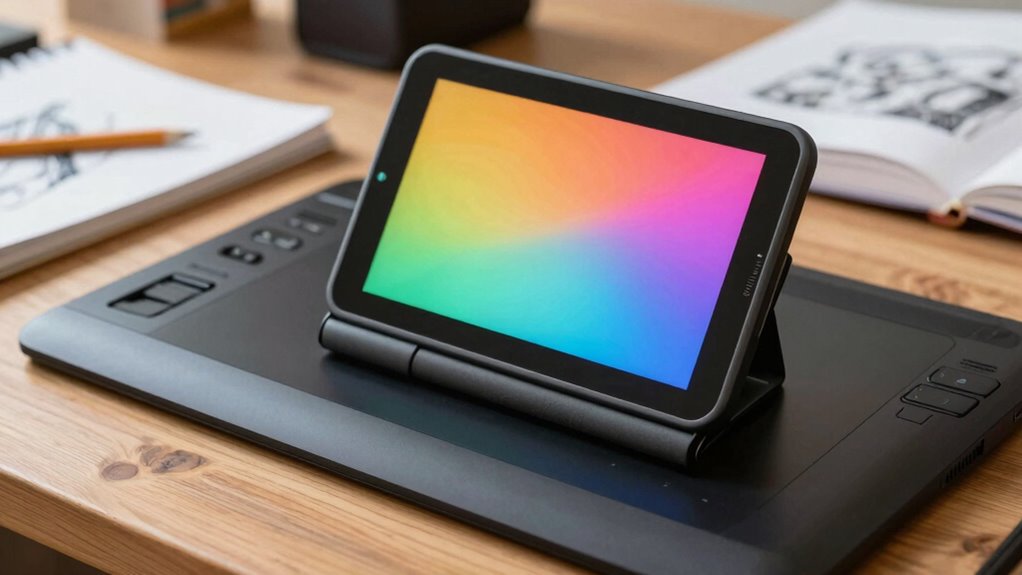
Choosing a drawing device that minimizes wrist strain is essential for long-term comfort and health. When selecting your device, consider features that support ergonomic accessories and promote wrist strengthening. Look for devices with adjustable angles or stands to reduce awkward wrist positions. Prioritize tools with smooth, responsive surfaces to lessen repetitive strain. Incorporate ergonomic accessories like wrist rests or support cushions to enhance comfort during extended sessions. Additionally, dedicating time to wrist strengthening exercises can help prevent injury and improve endurance.
- Adjustable angles or stands for better wrist positioning
- Compatibility with ergonomic accessories and wrist supports
- Emphasis on wrist strengthening through exercises
Are Pen Displays Better for Reducing Wrist Strain? Pros and Cons
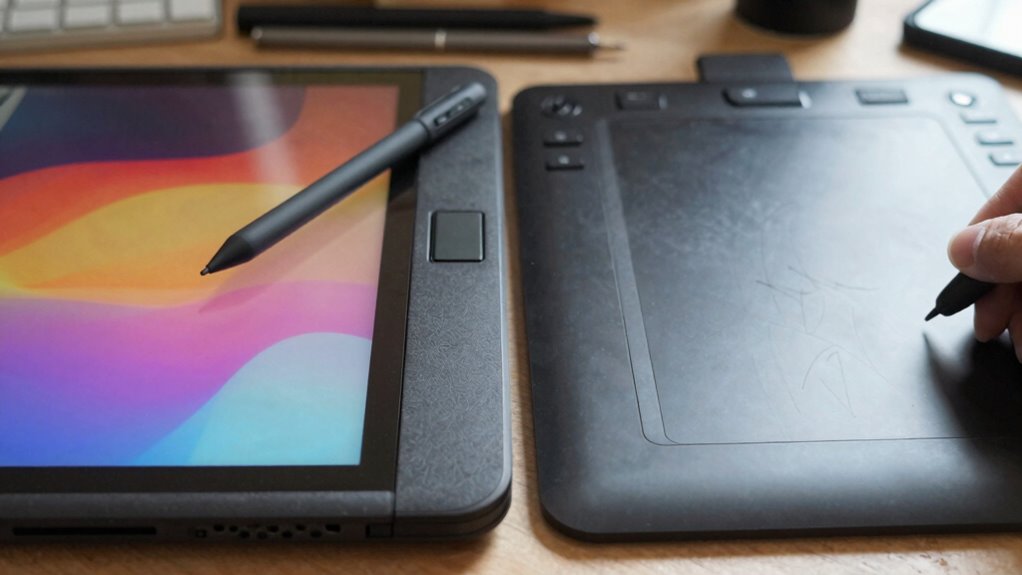
Pen displays are often praised for their natural drawing experience, but when it comes to reducing wrist strain, they offer both advantages and drawbacks. Using a digital stylus directly on the screen can improve comfort because you maintain a more ergonomic posture, reducing the need for awkward hand positions. However, screen glare from reflections or poor screen coatings can cause eye strain and force you to adjust your posture repeatedly, potentially increasing wrist discomfort. While the direct contact with the screen feels intuitive, some users find that the weight of the display or its positioning leads to fatigue over long sessions. Whether pen displays are better depends on your workspace setup, lighting conditions, and personal comfort preferences.
Do Graphics Tablets Help Prevent Wrist Pain? Advantages and Disadvantages

Graphics tablets are designed to offer a more flexible drawing experience, which can influence how your body feels during extended use. They can help reduce wrist fatigue by allowing you to adopt more natural, ergonomic hand positions. However, they don’t automatically prevent wrist pain; your posture and digital ergonomics remain essential. Using a tablet on a stable surface and taking regular breaks minimizes strain. Keep in mind:
- Proper hand positioning reduces repetitive stress
- Adjustable stands improve wrist alignment
- Extended sessions still pose a risk of fatigue
While graphics tablets can aid in preventing wrist pain, they’re not a cure-all. Your overall ergonomic setup and drawing habits play key roles in avoiding discomfort during long creative sessions.
Simple Workspace Tips to Keep Your Wrists Happy While Drawing
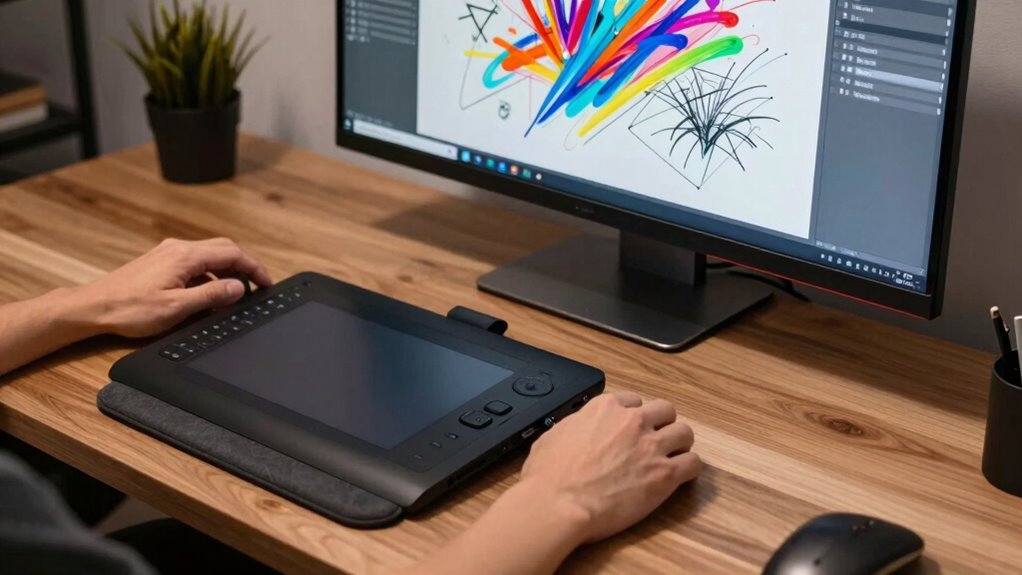
To keep your wrists comfortable while drawing, setting up your workspace thoughtfully is essential. Use ergonomic accessories like adjustable wrist rests and supportive chairs to reduce strain. Maintain a neutral wrist position and keep your monitor at eye level to prevent awkward postures. Incorporate regular stretching routines, such as wrist circles and finger stretches, into your breaks to relieve tension. Here’s a simple setup to inspire you:
| Ergonomic Tips | Emotional Benefits |
|---|---|
| Use an adjustable chair | Feel supported and confident while working |
| Keep your monitor at eye level | Avoid neck and wrist strain |
| Employ wrist rests | Experience comfort every stroke |
| Take frequent stretch breaks | Stay energized and pain-free |
Small adjustments make a big difference — prioritize your wrist health today.
Frequently Asked Questions
Can Adjustable Stand Options Improve Wrist Comfort During Long Drawing Sessions?
Yes, adjustable stand options can improve your wrist comfort during long drawing sessions. By customizing your tablet or display’s angle, you create an ergonomic desk setup that reduces strain. Pairing this with wrist support accessories offers additional relief, preventing fatigue. Using adjustable stands helps maintain a natural wrist position, minimizing discomfort and promoting healthier habits during extended creative work.
How Does Screen Size Influence Wrist Strain When Using Pen Displays?
Larger screen sizes can reduce wrist strain because they promote a more natural drawing posture, aligning your arm and wrist ergonomically. An ergonomic design that prioritizes comfortable hand positioning and a high screen resolution helps you work longer without discomfort. While bigger screens might seem overwhelming, they actually minimize repetitive movements and awkward angles, making your creative process smoother and more comfortable over extended periods.
Are There Specific Grip Techniques to Minimize Wrist Fatigue With Tablets?
To minimize wrist fatigue, you should adopt ergonomic grips that promote natural hand positioning and reduce strain. Keep your wrist straight and relaxed while using your tablet, avoiding gripping too tightly. Additionally, incorporate regular wrist stretches during breaks to prevent stiffness. These techniques help maintain comfort, reduce fatigue, and improve your overall drawing experience, making it easier to work for longer periods without discomfort.
What Role Does Hand Positioning Play in Preventing Repetitive Strain Injuries?
Did you know proper hand positioning can substantially prevent strain? You should focus on ergonomic hand positioning and wrist alignment techniques to reduce fatigue and injury. Keep your wrist straight, avoid bending it sharply, and use a relaxed grip. Moving your hand naturally and maintaining a neutral wrist position helps prevent repetitive strain injuries, allowing you to work comfortably longer and protect your wrist health.
Do Different Pen Nib Types Affect Wrist Comfort During Extended Use?
Different pen nib types can substantially impact your wrist comfort during extended use. Softer nibs require less pressure, reducing strain, while firmer nibs may cause you to squeeze more, increasing fatigue. Pairing the right nib with proper wrist support helps prevent discomfort. Experiment with various nibs to find what feels most natural, and guarantee your wrist remains relaxed and well-supported to minimize strain during long creative sessions.
Conclusion
So, whether you choose a pen display or a graphics tablet, remember: your wrists aren’t auditioning for a contortionist act. Pick the device that feels right, optimize your workspace, and keep those tendons happy. After all, the true masterpiece isn’t just your art—it’s your ability to create without pain. Because nothing says “professional artist” like a pain-free wrist, right? Happy drawing, and may your wrists stay as graceful as your sketches.
Halloween Picks
halloween
As an affiliate, we earn on qualifying purchases.