African masks are both spiritual objects and artistic icons, deeply woven into cultural ceremonies and community identities. They serve as symbols that connect the physical world with spirits, ancestors, and deities, often used in rites that mark life’s essential events. Crafted with skill and traditional techniques, these masks embody powerful meanings and cultural stories. If you explore further, you’ll uncover more about their rich symbolism and craftsmanship that make them so crucial to African heritage.
Key Takeaways
- African masks serve spiritual purposes, facilitating communication with ancestors, spirits, or deities during sacred ceremonies.
- They embody cultural values and beliefs, acting as symbols that convey social messages and community identity.
- Crafted with traditional techniques from natural materials, masks hold deep cultural and spiritual significance.
- Their intricate designs and vibrant features reflect artistic craftsmanship and cultural storytelling.
- While also admired as artistic icons, masks primarily function as sacred objects integral to spiritual and ritual practices.
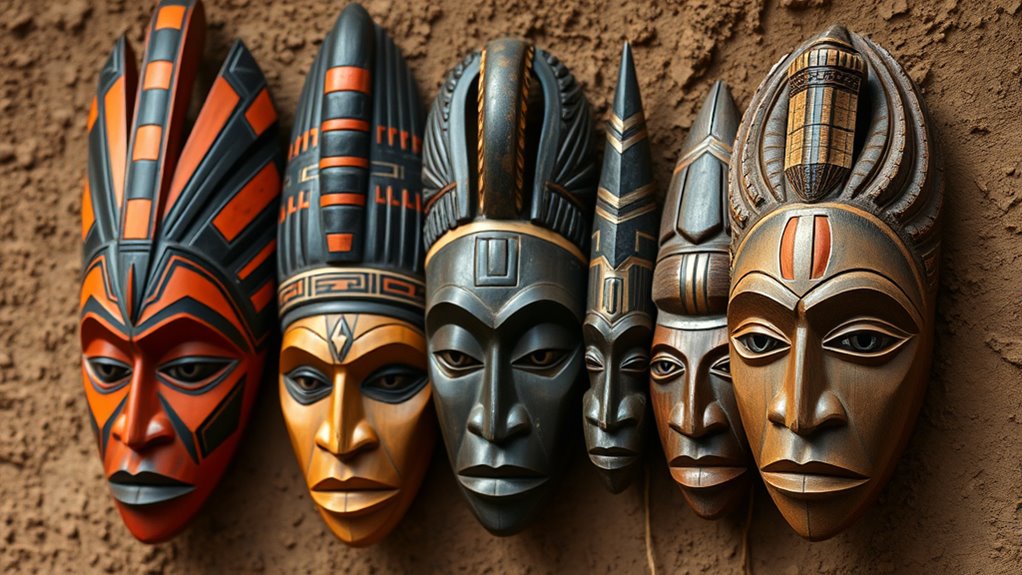
Have you ever wondered what stories and traditions are told through African masks? These compelling objects are more than just striking pieces of art; they serve as powerful symbols woven into the cultural fabric of countless African communities. When you observe an African mask, you’re witnessing a vessel of ritual significance—each design, color, and form carefully chosen to convey specific spiritual meanings or social messages. These masks are often integral to ceremonies that mark important life events, such as initiation rites, harvest festivals, or funerals. Their purpose goes beyond mere decoration; it’s an essential connection between the physical world and the spiritual domain, helping to communicate with ancestors, spirits, or deities. This spiritual function underscores their importance in maintaining cultural continuity and collective identity.
The artistic craftsmanship behind these masks is equally remarkable. Every detail reflects the skill, creativity, and cultural knowledge of the artisans who craft them. You’ll notice the intricate carvings, vibrant paints, and carefully selected materials—each chosen to enhance the mask’s symbolic power. Skilled artisans spend hours, sometimes days, meticulously shaping wood, applying natural pigments, and adding adornments like beads, shells, or fabric. Their craftsmanship isn’t just about aesthetics; it’s a deliberate act that imbues the mask with its intended spiritual or social significance. The process itself often involves traditional techniques passed down through generations, ensuring that each mask remains rooted in its cultural context. When you look at an African mask, you’re witnessing the result of a profound artistic tradition that balances form and meaning with remarkable precision. Additionally, the preservation of traditional techniques ensures that these cultural practices are transmitted and sustained across generations. Recognizing the cultural significance of these masks deepens appreciation for their role beyond artistry. Moreover, many masks are imbued with symbolic meanings that reflect the values and beliefs of their communities, making each piece a storytelling artifact. These masks also serve as cultural identifiers, helping to distinguish different groups and their unique histories during communal ceremonies. The design elements—whether sharp, exaggerated features or subtle details—are carefully chosen to communicate particular messages or evoke certain emotions during ceremonies. This blend of spiritual purpose and artistic mastery makes African masks unique, transcending simple decoration to become sacred objects that uphold and celebrate community identity. When you appreciate these masks, you’re engaging with a rich heritage of craftsmanship and spiritual symbolism, recognizing their essential role in shaping cultural narratives and spiritual beliefs across Africa. The use of natural materials and traditional techniques ensures authenticity and connects present generations to their ancestral artistic practices.
Top picks for "african mask spiritual"
Open Amazon search results for this keyword.
As an affiliate, we earn on qualifying purchases.
Frequently Asked Questions
How Are African Masks Traditionally Used in Ceremonies?
You see that African masks are traditionally used in ceremonies to embody ritual symbolism and connect with spiritual forces. During these events, you might observe masks representing ancestors, spirits, or deities, playing a essential role in rituals that reinforce cultural significance. Wearing and dancing with masks helps you honor traditions, communicate with the spiritual domain, and maintain community bonds, making these objects central to many cultural ceremonies.
What Materials Are Commonly Used to Craft African Masks?
You’ll find that materials and craftsmanship are essential in making African masks, often reflecting their symbolic significance. Common materials include wood, which provides a sturdy base, along with beads, shells, metal, fabric, and natural pigments for decoration. Skilled artisans carefully carve and paint these masks, ensuring each piece embodies cultural stories and spiritual meanings, making them both artistic icons and deeply meaningful objects within their communities.
How Do African Masks Vary Across Different Regions?
You’ll notice that African masks vary across regions, reflecting unique regional styles and cultural significance. In West Africa, masks often feature bold geometric patterns and vibrant colors, symbolizing ancestral spirits. In Central Africa, masks might incorporate natural materials like wood and raffia, emphasizing community rituals. These regional differences highlight how each culture uses masks to express identity, history, and spiritual beliefs, making each piece uniquely meaningful within its local context.
Are African Masks Considered Sacred or Purely Decorative?
You might think African masks are just beautiful decorations, but their cultural significance runs deep. While their aesthetic appeal captivates, these masks often hold sacred meaning, used in rituals and ceremonies. Ironically, their artistry can overshadow their spiritual importance, yet it’s this blend that elevates them beyond mere decoration. So, yes, they’re both sacred objects and artistic icons, embodying tradition, spirituality, and craftsmanship all at once.
How Has the Western Fascination Influenced African Mask Traditions?
You see that Western fascination has markedly shaped African mask traditions through colonial impact and commercialization trends. As interest grew globally, masks became more marketable, often prioritizing aesthetic appeal over traditional spiritual meanings. This shift led to the creation of masks aimed at tourists and collectors, sometimes stripping away their cultural significance. While this increases awareness, it risks commodifying sacred objects and diluting their authentic spiritual roles.
Conclusion
Imagine holding an African mask, feeling its intricate carvings and vibrant colors—it’s like holding a gateway to ancient spirits and stories. These masks are not just art; they’re living symbols that bridge worlds, blending spirituality and creativity. Just as a single bead can tell a thousand tales, each mask embodies centuries of tradition. So, when you see one, remember—it’s both a sacred object and a masterpiece, revealing the soul of a culture.