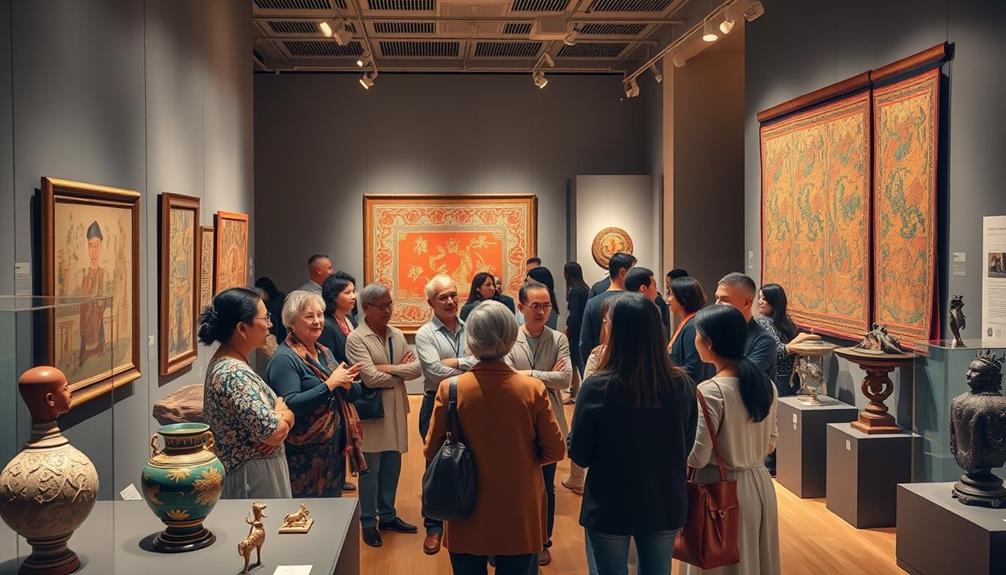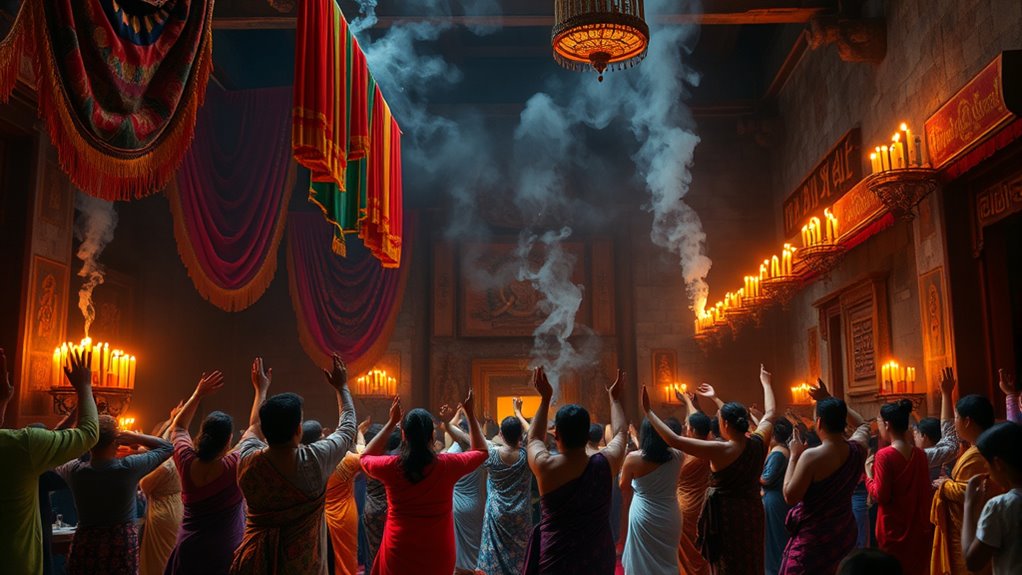

Art plays a essential role in spiritual rituals across cultures by serving as a universal language that communicates complex divine truths through symbols, colors, and forms. It helps you connect deeply, fostering mindfulness, emotional responses, and a sense of community. Sacred symbols and aesthetic elements shape sacred spaces and enhance your spiritual experience. Keep exploring to discover how artistic expressions intertwine with rituals worldwide, guiding you on a journey of divine connection and cultural understanding.
Key Takeaways
- Sacred symbols in art serve as visual languages that communicate spiritual truths across diverse cultures.
- Ritual aesthetics, including colors and textures, enhance spiritual connection and facilitate transcendence.
- Cultural artifacts like mandalas and masks embody spiritual narratives and promote mindfulness during rituals.
- Artistic elements such as icons and sacred objects deepen individual and communal spiritual practices.
- Art fosters active participation in rituals, bridging physical and spiritual experiences across various traditions.

Art has long served as a powerful bridge to spirituality, allowing individuals to explore and express their innermost beliefs and experiences. When you engage with sacred symbolism in art, you tap into a universal language that transcends words, communicating complex spiritual truths through images, colors, and forms. Sacred symbols—whether a cross, an Om, or an Ankh—carry layers of meaning that connect you to a larger spiritual reality. These symbols serve as visual anchors, guiding your focus during rituals and prayers, helping you transcend everyday consciousness and enter a sacred space. They evoke a sense of continuity with tradition and serve as reminders of divine presence, fostering a feeling of belonging within a spiritual community.
Ritual aesthetics are equally essential in shaping spiritual experiences through art. The way a ritual space is designed—its colors, textures, and overall atmosphere—can enhance your sense of connection to the divine. Think of the vibrant, intricate patterns of a Tibetan thangka or the solemnity of a Christian altar adorned with candles and icons. These aesthetic choices aren’t random; they’re carefully crafted to evoke specific emotional and spiritual responses. As you participate in such rituals, the aesthetic elements help you focus your attention, deepen your meditation, or elevate your prayer. They create an environment that invites you to step outside ordinary reality and enter a domain imbued with sacred energy. Additionally, incorporating specialized materials in ritual art can amplify these spiritual effects, connecting physical objects with divine energies.
You might notice how different cultures incorporate sacred symbolism into their ritual aesthetics to reflect their spiritual worldview. For example, the use of mandalas in Hindu and Buddhist practices symbolizes cosmic harmony and the journey toward enlightenment. The symmetry and intricate detail encourage mindfulness and contemplation, reinforcing your connection to universal truths. In African spiritual traditions, vibrant textiles and carved masks serve as conduits for ancestral spirits, turning the ritual space into a living, breathing manifestation of spiritual beliefs. Each element—be it a symbol, color, or material—acts as a visual language that communicates and sustains spiritual narratives across generations.
Through art’s integration of sacred symbolism and ritual aesthetics, you find a means to participate actively in spiritual practices. These artistic elements aren’t just decorative; they’re essential tools that deepen your experience, helping you access transcendent states and forge a personal connection with the divine. Whether you’re lighting candles, meditating before a sacred image, or engaging in communal ceremonies, you’re engaging with art’s timeless power to bridge the physical and spiritual dimensions. In this way, art becomes not just an expression of spirituality but a crucial part of your ongoing spiritual journey.
sacred symbol wall art
As an affiliate, we earn on qualifying purchases.
As an affiliate, we earn on qualifying purchases.
Frequently Asked Questions
How Do Ritual Art Forms Evolve Over Time Within Cultures?
You see that ritual art forms evolve over time through evolutionary symbolism and cultural adaptation. As cultures interact and change, their art reflects new meanings, techniques, and influences. You might notice traditional symbols shift to incorporate modern ideas or materials, ensuring the art remains relevant. This ongoing process allows rituals to stay meaningful, blending ancestral traditions with contemporary expressions, and keeps cultural identity alive across generations.
What Role Does Personal Spirituality Play in Community Rituals?
Your personal spirituality is the heartbeat of community rituals, like a lighthouse guiding ships safely home. It shapes how you connect through shared symbols and actions, reflecting your individual spiritual experiences and belief systems. When you bring your inner faith into these practices, it deepens the collective meaning, creating a tapestry of diverse yet unified spiritual expressions that nourish both your soul and your community’s sense of identity.
How Do Secular Societies Incorporate Spiritual Art Practices?
In secular societies, you often see spiritual art practices incorporated through secular symbolism and art therapy. These methods help you express inner emotions and foster community connection without religious connotations. You might participate in murals, installations, or workshops that use symbolic imagery to explore personal or collective identity. Art therapy becomes a tool for healing and reflection, blending spiritual elements with secular contexts to enrich societal well-being.
Are There Universal Symbols Recognized Across Different Spiritual Arts?
You’ll find that some universal motifs and cross-cultural symbols gently weave through spiritual arts worldwide, subtly resonating regardless of origin. These symbols, like circles representing wholeness or the lotus signifying purity, act as quiet bridges connecting diverse spiritual practices. While interpretations may vary, their recognition across cultures hints at shared human symbolism, fostering a sense of unity and understanding beyond individual traditions.
How Does Technology Influence Contemporary Spiritual Art Rituals?
Technology transforms your spiritual art rituals by enabling digital mediums and virtual ceremonies. You can participate in or create rituals online, reaching a global community and sharing sacred practices beyond physical boundaries. Virtual ceremonies foster a sense of connection, bringing together diverse traditions through live streams or interactive platforms. This influence makes spiritual rituals more accessible, innovative, and adaptable, blending ancient symbolism with modern digital tools to deepen your spiritual experience.
mandala meditation tapestry
As an affiliate, we earn on qualifying purchases.
As an affiliate, we earn on qualifying purchases.
Conclusion
You see how art and spirituality swirl seamlessly, shaping sacred spaces and stirring souls. Through timeless traditions and transformative rituals, you witness the wonder of worlds woven with wonder, wisdom, and worship. Embrace this eternal exchange, where creativity and consciousness collide, cultivating connection and clarity. Let this luminous language of ritual resonate within you, reminding you that art isn’t just visual — it’s vibrantly essential, a vivid vessel for the very spirit of our shared human story.
religious ritual altar decor
As an affiliate, we earn on qualifying purchases.
As an affiliate, we earn on qualifying purchases.
spiritual icon figurines
As an affiliate, we earn on qualifying purchases.
As an affiliate, we earn on qualifying purchases.