Art and sports come together as a vibrant form of creative expression, capturing athletic moments full of motion, emotion, and beauty. Through stunning photography, dynamic performances, and thoughtfully designed gear, you see sports as more than just competition—they become visual stories that inspire and evoke feelings. This blend of movement and artistry transforms athletic achievements into mesmerizing experiences. Keep exploring how these creative efforts elevate sports into inspiring works of art that celebrate human potential.
Key Takeaways
- Sports photography captures fleeting athletic moments, transforming them into artistic images that evoke emotion and showcase motion, power, and elegance.
- Athletic design, including uniforms and gear, merges aesthetics with function, serving as visual symbols of identity and inspiration.
- Athletes’ movements and performances are choreographed like art, turning physical skill into visual poetry and artistic expression.
- The intersection of art and sports elevates athletic endeavors into cultural and creative expressions, emphasizing beauty, innovation, and storytelling.
- Visual elements like lighting, composition, and branding enhance the artistic impact of sports, highlighting their creative and aesthetic dimensions.
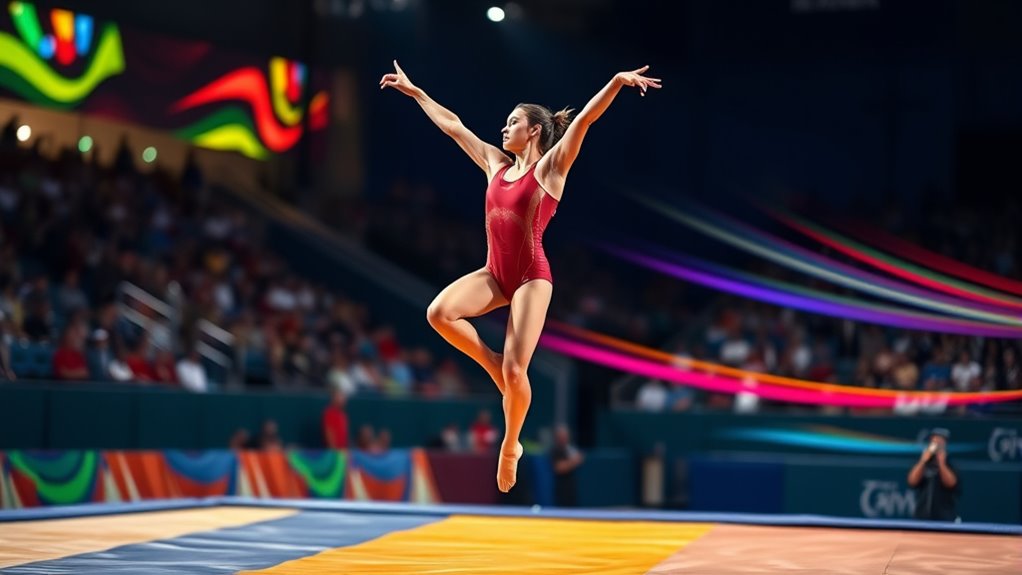
Have you ever wondered how art and sports intersect, inspiring creativity and expression in both fields? It’s a fascinating blend where the visual language of art elevates athletic moments, capturing the intensity and grace of sports in ways words alone can’t describe. Sports photography, for example, is a powerful form of artistic expression that freezes fleeting moments of athleticism, turning them into stunning images that evoke emotion and tell a story. When you look at a high-speed shot of a runner mid-stride or a gymnast executing a flawless flip, you’re witnessing more than just a sport—you’re experiencing a moment of raw beauty and skill that borders on art. These images aren’t simply documentation; they’re crafted to highlight the motion, power, and elegance of the athlete, often emphasizing lighting, composition, and timing to create compelling visuals. Additionally, the use of visual appeal in athletic gear and branding enhances the overall artistic impact of sports, making them not only functional but also visually inspiring.
Sports photography captures raw beauty and emotion, turning fleeting athletic moments into compelling works of art.
Athletic design also plays a significant role in this creative crossover. The uniforms, equipment, and branding associated with sports are meticulously crafted, blending functionality with artistic ingenuity. When you see a team’s jersey or a sleek pair of running shoes, you’re observing a form of athletic design that balances aesthetics with performance. Designers think about colors, patterns, and materials that not only look good but also enhance the athlete’s experience. This fusion of art and sports pushes boundaries, transforming functional gear into symbols of identity and inspiration. It’s not just about looking good; it’s about fostering a sense of pride and motivation through visual storytelling.
Engaging with sports as an art form allows you to appreciate the creativity behind athletic performance. Athletes themselves often serve as living canvases, their movements choreographed by training and instinct. Choreographers and trainers work together to develop routines that seem to defy gravity and convention, turning physical capabilities into artistic displays. Whether it’s a gymnast’s routine or a dancer’s routine inspired by sports, the artistry lies in translating athletic talent into visual poetry. This artistic perspective encourages you to see sports not just as competitions but as a form of cultural expression, where innovation and imagination thrive.
Ultimately, the intersection of art and sports invites you to view athleticism through a more creative lens. It’s a reminder that behind every game, every race, or every performance, there’s a world of artistic effort—whether through photography, design, or movement—that elevates sports into a captivating, expressive art form. When you embrace this view, you’ll find beauty and inspiration in the dynamic, colorful, and powerful world of athletics.
Frequently Asked Questions
How Do Artistic Trends Influence Athletic Performance and Training Methods?
Artistic trends influence your athletic performance and training by emphasizing visual aesthetics and innovative choreography. You adopt new styles that enhance your movement, making routines more engaging and efficient. These trends inspire you to push creative boundaries, improving flexibility, coordination, and overall skill. As you incorporate artistic elements, your performance becomes more expressive, capturing audiences and judges alike, fueling your motivation to innovate and excel in your sport.
Can Sports Architecture Be Considered a Form of Public Art?
Yes, sports architecture can be seen as public art because it integrates urban design and cultural symbolism, transforming functional structures into iconic landmarks. You’ll notice that stadiums and arenas reflect local identity and artistic innovation, making them more than just sports venues. They serve as visual symbols that celebrate community pride, inspiring spectators and residents alike, elevating sports architecture into a form of cultural and artistic expression.
What Role Does Music Play in Enhancing Athletic Events’ Artistic Appeal?
Music plays a essential role in enhancing an athletic event’s artistic appeal by creating engaging musical choreography that energizes the crowd. You can’t ignore stadium acoustics, which amplify sound and make performances more immersive. When you combine powerful music with well-designed acoustics, the event becomes a sensory experience that elevates the atmosphere, capturing the spirit of competition and celebration, and making the entire experience more memorable and emotionally impactful.
How Do Athletes Express Creativity During Live Performances or Competitions?
You express creativity during live performances or competitions through visual improvisation and choreographed routines. You adapt your movements spontaneously, showcasing your originality and flair, while carefully designed routines highlight your skill and artistry. This blend of spontaneity and planning allows you to captivate audiences, demonstrating athleticism as a form of artistic expression. Your ability to innovate within structured routines makes your performance both dynamic and memorable.
Are There Specific Art Forms That Historically Depict Sports More Vividly?
You’ll notice that historical murals and sports sculptures vividly depict athletic scenes, capturing dynamic movement and emotion. Murals often decorate ancient walls, illustrating legendary sports events, while sculptures freeze athletes mid-action, showcasing strength and agility. These art forms celebrate athleticism and history, making sports visually powerful and accessible across eras. Their vivid portrayals inspire viewers, connecting past athletic feats with ongoing cultural appreciation for sports.
Conclusion
As you stand at the crossroads of art and sports, you see their shared heartbeat—vivid colors and swift movements blending seamlessly. The canvas of the field pulses with energy, brushstrokes of strength and grace dancing in harmony. You realize that both ignite passion, painting moments of glory and emotion. In this vibrant dance, you become part of a living masterpiece, where athleticism and creativity intertwine, forever echoing in the rhythm of your own heartbeat.