
Contemporary art powerfully weaves climate change narratives by turning scientific data and emotional responses into vivid visual stories that raise awareness and inspire action. You’ll see artists use symbols, layered imagery, and innovative techniques like augmented reality to make environmental issues tangible and urgent. Through striking visuals, they evoke feelings of responsibility, hope, and urgency, influencing perceptions and inspiring change. If you explore further, you’ll uncover how these stories shape public attitudes and mobilize action on climate issues.
Key Takeaways
- Explores how contemporary artists use visual storytelling to communicate climate change issues and evoke emotional responses.
- Highlights innovative techniques and materials, such as multimedia and augmented reality, to deepen audience engagement.
- Emphasizes art’s role in raising awareness, inspiring activism, and mobilizing viewers for environmental action.
- Showcases how art juxtaposes thriving ecosystems with damaged ones to provoke responsibility and hope.
- Demonstrates art’s influence in shaping public perception and policy through powerful visual narratives.
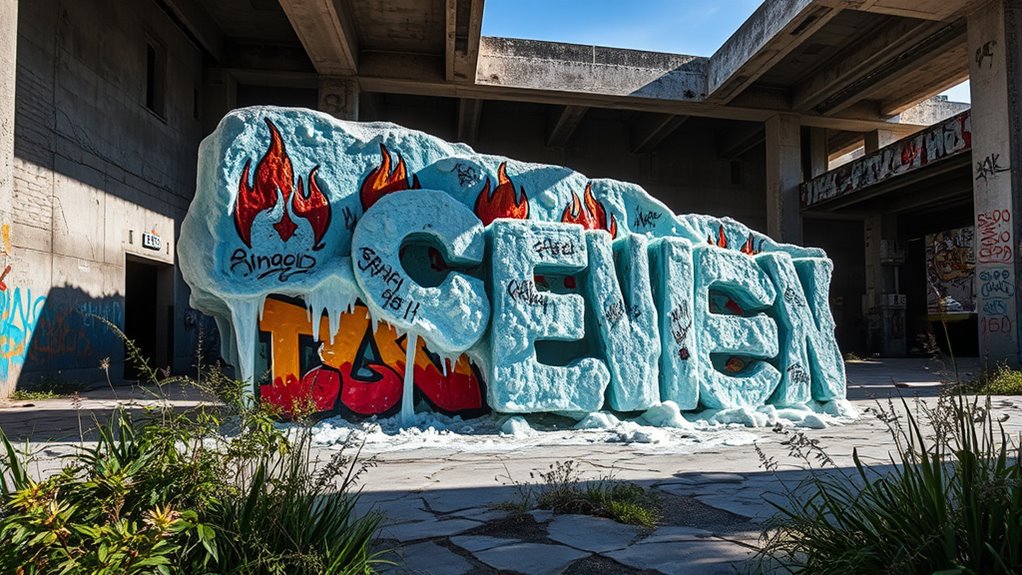
Contemporary artists are increasingly using their work to confront the urgent reality of climate change, transforming complex scientific data and emotional responses into powerful visual narratives. This movement, rooted in eco activism, aims to raise awareness and inspire action through compelling imagery and innovative techniques. By harnessing visual storytelling, artists make abstract environmental issues tangible and immediate, encouraging viewers to engage emotionally and intellectually. You might notice how these artworks go beyond traditional boundaries, blending art and activism into a unified voice that demands attention and sparks dialogue.
Contemporary artists transform scientific data into compelling visual stories to confront climate change and inspire action.
In this context, visual storytelling becomes a crucial tool for communicating the intricacies of climate change. Artists don’t just depict bleak images of melting glaciers or devastated landscapes; they craft stories that connect personal experiences to global phenomena. Their work often incorporates symbols, layered imagery, and multimedia elements to evoke a sense of urgency and hope simultaneously. Through these narratives, you can see how individual actions contribute to broader environmental impacts, making the issue personal and relatable. The power of eco activism in these works lies in their ability to mobilize viewers, turning passive observers into active participants in the fight against climate change.
Many contemporary artists take a direct approach, using their platforms to call out environmental injustices and challenge complacency. They employ visual storytelling to highlight issues like deforestation, pollution, and loss of biodiversity, often collaborating with scientists and environmental groups to ensure accuracy and impact. Their art serves as a catalyst for conversations that might otherwise remain confined to academic or political circles. You might find yourself moved by a piece that juxtaposes thriving ecosystems with those ravaged by human activity, stirring feelings of responsibility and hope. This emotional resonance is central to eco activism, as it motivates viewers to reconsider their relationship with nature and advocate for sustainable practices.
Furthermore, these artworks often utilize innovative materials and techniques to emphasize the fragility of our planet. From biodegradable sculptures to augmented reality experiences, artists push boundaries to make their messages more immersive. By doing so, they deepen your understanding of climate change’s immediacy and complexity. Visual storytelling in this domain is not just about creating beautiful images; it’s about fostering a collective consciousness that recognizes the urgency of ecological preservation. As you engage with these pieces, you participate in a broader movement where art becomes a powerful voice in shaping environmental policy and public perception.
Ultimately, the use of visual storytelling in eco activism empowers you to see climate change not just as distant statistics but as a personal story unfolding around you. It reminds you that art can be a force for change—an evocative, urgent call to action that resonates deeply and inspires hope amid crisis.
augmented reality art kits
As an affiliate, we earn on qualifying purchases.
As an affiliate, we earn on qualifying purchases.
Frequently Asked Questions
How Do Artists Choose Specific Climate Change Themes?
You choose specific climate change themes based on their visual symbolism and emotional impact. By focusing on topics that evoke strong feelings, you can connect with viewers more deeply. You consider how imagery can symbolize broader issues like rising sea levels or pollution, making your message more powerful. This deliberate selection helps you create art that not only raises awareness but also resonates emotionally, inspiring action and reflection.
What Funding Sources Support Climate-Focused Artworks?
Did you know that over 60% of climate-focused art projects are funded by grants? You can access grant opportunities from organizations like the National Endowment for the Arts or environmental foundations. Donor influence plays a role, so aligning your work with their priorities can boost your chances. Seek out these sources actively, prepare compelling proposals, and highlight your project’s environmental impact to secure the funding you need.
How Is Audience Engagement Measured in Climate Art Projects?
You measure audience engagement in climate art projects by observing interactions with interactive installations and analyzing social media metrics. When visitors participate actively, like touching or moving through displays, it indicates strong engagement. Additionally, tracking likes, shares, comments, and hashtag use on social media helps you gauge broader reach and impact. These tools provide tangible evidence of how effectively your climate message resonates and prompts viewers to reflect or act.
Are There Notable Differences in Climate Narratives Across Regions?
You might think climate narratives are universal, but regional cultural influences and artistic stylistic variations tell a different story. These differences shape how communities perceive and address climate issues, making each region’s approach uniquely vibrant or stark. So, while climate change is global, your experience of its narrative depends heavily on local traditions and artistic expressions, proving that even a shared crisis can be artistically diverse.
What Are the Ethical Considerations in Depicting Climate Disasters?
You need to take into account environmental responsibility and artistic integrity when depicting climate disasters. It’s essential to avoid sensationalism that might cause unnecessary fear or despair, while also accurately representing the reality of these crises. Be mindful of cultural sensitivities and the impact your work has on affected communities. Balancing honesty with compassion ensures your art raises awareness without exploiting suffering, respecting both ethical standards and your responsibility as an artist.
eco activism art supplies
As an affiliate, we earn on qualifying purchases.
As an affiliate, we earn on qualifying purchases.
Conclusion
As you explore these climate change narratives in contemporary art, you’ll realize how subtly art whispers the importance of care and awareness. While the messages may seem gentle, they carry a profound call to nurture our planet’s delicate balance. By engaging with these works, you’re invited to embrace a more mindful perspective—one that encourages hope and collective responsibility. Sometimes, the quietest voices can inspire the most meaningful change, guiding us toward a brighter, more sustainable future.
biodegradable sculpture materials
As an affiliate, we earn on qualifying purchases.
As an affiliate, we earn on qualifying purchases.

Climate Change Facts – New Environmental Awareness POSTER
As an affiliate, we earn on qualifying purchases.
As an affiliate, we earn on qualifying purchases.