
Art creates a safe space for you to express feelings and explore emotions that may be hard to verbalize. Engaging in creative activities can reduce stress, boost self-awareness, and foster resilience. Exhibitions and healing spaces shaped by art offer opportunities for self-discovery and emotional relief, making mental health support accessible and inspiring. If you keep exploring, you’ll find how art’s healing power can transform your well-being in meaningful ways.
Key Takeaways
- Art therapy creates healing spaces that facilitate emotional expression and self-awareness for mental health recovery.
- Exhibitions showcasing art as a therapeutic tool promote awareness of art’s role in mental well-being.
- Art in public and community spaces fosters inclusion and reduces stigma around mental health issues.
- Healing art spaces integrate creative practices to support stress reduction and emotional resilience.
- Artinaction.org highlights initiatives that use art exhibitions to advocate for mental health awareness and healing.
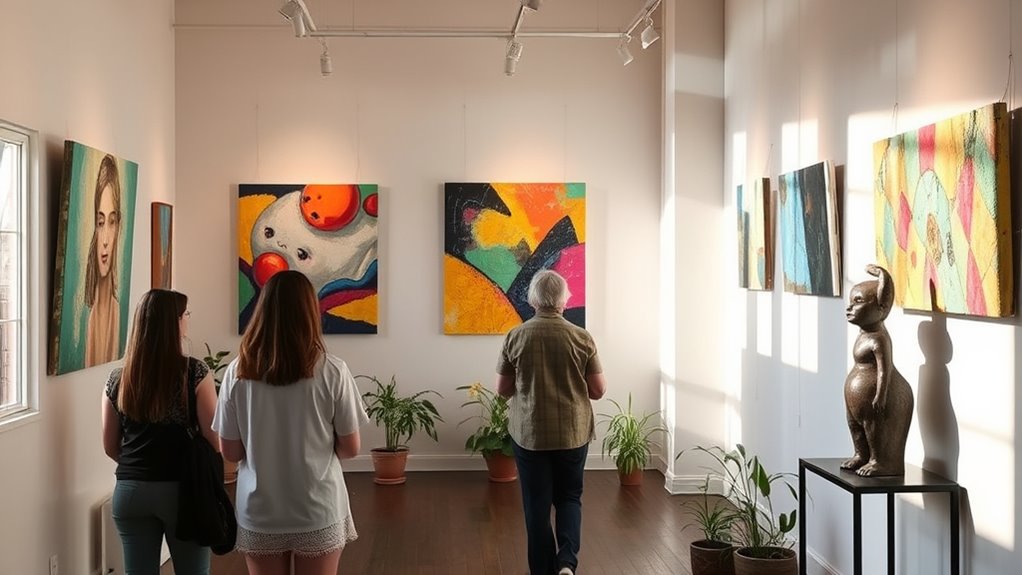
Art has long been recognized as a powerful tool for improving mental health, offering a creative outlet to express emotions that might be difficult to put into words. When you engage in creative therapy, you’re tapping into a process that allows you to explore your feelings through various art forms—painting, drawing, sculpture, or even mixed media. This kind of emotional expression isn’t just about creating something beautiful; it’s about connecting with your innermost thoughts and feelings in a safe, non-judgmental way. By translating complex emotions into visual or tactile forms, you can gain clarity, reduce stress, and foster a sense of relief. Creative therapy can serve as a mirror, helping you understand yourself better and process experiences that may be overwhelming or confusing.
As you immerse yourself in art-making, you might find that your mind begins to quiet, giving space for reflection and insight. This process encourages emotional expression that’s often hard to access through conversation alone. For many, putting feelings onto a canvas or into a sculpture becomes a form of catharsis, releasing pent-up emotions without the need for words. It’s a direct and visceral way to confront pain, anxiety, or grief, and transform these feelings into something tangible. When you engage in this kind of creative expression, you’re not just creating art—you’re nurturing your mental health. It becomes a form of self-care, offering comfort and a sense of achievement.
Furthermore, participating in art therapy sessions or individual creative projects can help you develop resilience. As you create, you learn to tolerate ambiguity and uncertainty, which mirrors real-life challenges. The act of making art, especially when driven by emotional expression, also encourages mindfulness, helping you stay present and grounded. This awareness can reduce symptoms of depression and anxiety, promoting a more balanced mental state. Art-based approaches are increasingly integrated into mental health treatment because they are accessible, adaptable, and capable of reaching people who might struggle to communicate verbally.
art therapy supplies for mental health
As an affiliate, we earn on qualifying purchases.
As an affiliate, we earn on qualifying purchases.
Frequently Asked Questions
How Can Art Therapy Be Integrated Into Traditional Mental Health Treatments?
You can integrate art therapy into traditional mental health treatments by collaborating with mental health professionals to develop treatment plans that include creative activities. Incorporate art therapy sessions alongside therapy or medication, encouraging patients to express emotions visually. This treatment integration helps clients process feelings more effectively, enhances engagement, and provides a holistic approach to healing. By blending these methods, you create a supportive environment that promotes mental well-being through creative expression.
What Are the Most Effective Types of Art for Emotional Healing?
You’ll find that expressive arts and creative expression are most effective for emotional healing because they allow you to process feelings non-verbally. Studies show that 75% of participants report improved mood after engaging in art therapy. Techniques like painting, drawing, and dance encourage self-discovery and emotional release, making them powerful tools for healing. These art forms help you connect with your emotions in a safe, supportive space, fostering resilience and growth.
How Do Cultural Differences Influence Art-Based Mental Health Approaches?
Cultural differences shape your art-based mental health approaches by influencing how you interpret cross-cultural symbolism and follow artistic expression norms. You might find that certain symbols or styles resonate deeply within your culture, offering comfort and understanding. Conversely, unfamiliar symbols may challenge or inspire you to explore new perspectives. Recognizing these cultural influences helps you create more inclusive, meaningful healing spaces that honor diverse artistic expressions and emotional needs.
Can Virtual Art Exhibitions Provide Similar Therapeutic Benefits as Physical Ones?
Yes, virtual art exhibitions can offer similar therapeutic benefits as physical ones, especially through virtual engagement and digital accessibility. You can explore artworks, connect with others, and find comfort from home, which helps reduce stress and promote healing. While the physical presence provides unique sensory experiences, virtual platforms allow broader access and continuous engagement, making art therapy more inclusive and adaptable to your needs.
What Training Do Artists Need to Work Effectively in Mental Health Settings?
Imagine a delicate balance on a tightrope—this is what you maintain when working in mental health settings. You need specialized training in emotional resilience to handle sensitive situations, along with a strong understanding of ethical considerations to protect clients’ well-being. This training equips you to create safe, meaningful art experiences that foster healing, ensuring you navigate these spaces with empathy, professionalism, and respect.
creative expression art kits
As an affiliate, we earn on qualifying purchases.
As an affiliate, we earn on qualifying purchases.
Conclusion
You walk into a gallery where chaos gently transforms into calm, colors echoing your emotions. Art becomes your sanctuary, a place where wounds soften and hope blooms. In these healing spaces, the brushstrokes and sculptures serve as quiet allies, contrasting the turmoil outside. As you leave, you carry more than art—you carry resilience, a reminder that even in darkness, creativity can light the way toward healing.
art therapy painting set
As an affiliate, we earn on qualifying purchases.
As an affiliate, we earn on qualifying purchases.
therapeutic art supplies
As an affiliate, we earn on qualifying purchases.
As an affiliate, we earn on qualifying purchases.