
Your brain finds symmetry pleasing because it signals safety, health, and order—traits linked to survival. Symmetrical shapes activate neural pathways that create feelings of harmony, calm, and emotional satisfaction. Evolution has wired us to prefer balanced forms, making art with symmetry more attractive and easier to appreciate. This natural preference enhances your emotional connection and sense of coherence in art. Keep exploring, and you’ll discover even more about the powerful pull of symmetry in our perception.

Get art and craft supplies delivered free with Prime
- Fast, free delivery on millions of items
- Prime Video, Amazon Music and more included
- Member-only deals all year
Key Takeaways
- Symmetry activates neural pathways that signal pleasure, making symmetrical art inherently satisfying to the brain.
- Our evolutionary wiring associates symmetry with health, stability, and positive traits, increasing aesthetic appeal.
- Symmetry simplifies visual processing, creating a sense of order and calm that enhances emotional connection.
- The perception of symmetry evokes feelings of harmony and coherence, leading to stronger emotional responses.
- Recognizing symmetry aligns with the brain’s preference for predictability, reducing cognitive effort and increasing aesthetic enjoyment.
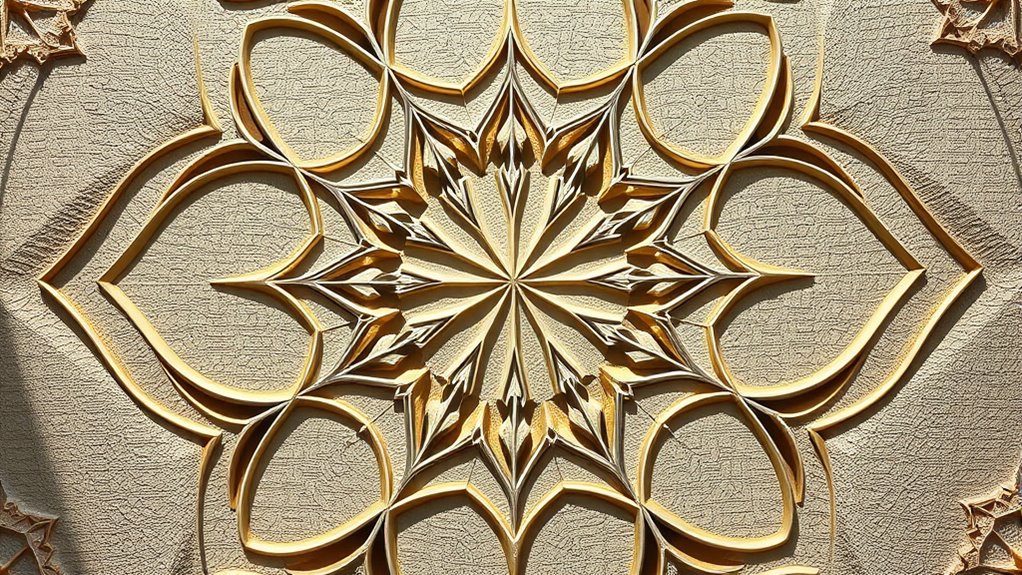
Symmetry in art taps into fundamental aspects of human psychology, shaping how you perceive beauty and harmony. When you look at symmetrical images, your brain preference for balance activates neural pathways that signal pleasure and satisfaction. Your brain is wired to seek patterns that are predictable and organized because they reduce cognitive effort and increase feelings of safety. This preference isn’t just a fleeting taste; it’s rooted in evolutionary biology. Symmetric forms often indicate health, stability, and good genes—traits that were essential for survival. As a result, your mind instinctively finds symmetry appealing because it subconsciously associates it with positive qualities. This preference helps explain why you’re naturally drawn to artworks, faces, and landscapes that display symmetry.
Aesthetic harmony, which refers to the balanced arrangement of visual elements, plays a vital role in your appreciation of art. When you encounter symmetry, your brain effortlessly processes the visual information, leading to a sense of equilibrium. This ease of processing is satisfying because it requires less mental effort, reinforcing your positive emotional response. You might notice that symmetrical compositions tend to evoke feelings of calm, order, and stability—emotions that are universally comforting. Because your mind craves this harmony, artworks that embody symmetry often evoke a stronger emotional connection. It’s not just about liking the way something looks; it’s about your brain’s natural tendency to seek out and enjoy patterns that promote aesthetic harmony. Additionally, the contrast ratio in visual elements can influence how prominently symmetry is perceived and appreciated.
Furthermore, symmetry enhances the perceived beauty of an artwork by creating a sense of unity and coherence. When the elements in a piece mirror each other, your brain perceives a complete, well-organized whole. This sense of wholeness is satisfying because it aligns with your innate desire for order in the chaos of the world. In fact, studies have shown that faces and objects that are symmetrical are often rated as more attractive—your brain’s preference for symmetry amplifies your aesthetic judgment. This isn’t purely superficial; it’s deeply embedded in your neural circuitry, influencing your emotional response to art in subtle but powerful ways. So, next time you find yourself captivated by a symmetrical painting or sculpture, remember that your brain is actively seeking and rewarding that harmony, making beauty not just a matter of taste but a reflection of your neurological wiring.
As an affiliate, we earn on qualifying purchases.
Frequently Asked Questions
Does Cultural Background Influence Preference for Symmetrical Art?
You might notice that cultural variances influence your aesthetic preferences, including your liking for symmetrical art. Different cultures emphasize various artistic styles and values, shaping what you find appealing. Your background can lead you to prefer symmetry because it resonates with cultural symbols or traditional patterns. So, yes—your cultural background plays a role in your preference for symmetrical art, as it impacts how you perceive beauty and balance.
How Does Symmetry Affect Emotional Responses to Artwork?
Ever wonder why symmetry makes you feel more at ease when viewing art? It’s because symmetry taps into your brain’s facial recognition process, creating a sense of familiarity. This visual harmony triggers positive emotional responses, making you feel calmer and more connected to the piece. Symmetrical art appeals to your innate desire for order, fostering feelings of comfort and satisfaction through balanced, harmonious visuals.
Are There Neurological Differences in Perceiving Symmetrical Versus Asymmetrical Art?
You might notice that your neural pathways process symmetric art more efficiently than asymmetrical pieces. When you view symmetry, your brain’s visual processing centers quickly recognize balance, engaging neural pathways optimized for pattern detection. This rapid processing creates a pleasing experience, making symmetric art feel more harmonious. In contrast, asymmetrical art involves more complex neural activity, requiring your brain to work harder to interpret the visual information.
Can Learning or Exposure Change One’S Preference for Symmetry?
Your taste for symmetry can evolve like a river’s course, shaped by learning adaptation and exposure influence. The more you see symmetrical art, the more your preference may grow, as your brain adapts to recognize beauty in balance. Repeated exposure can strengthen your appreciation, showing that taste isn’t fixed but fluid, molded by experience. So, yes, learning and exposure can subtly steer your preference toward or away from symmetry.
Is There an Evolutionary Basis for Our Attraction to Symmetry in Art?
You might wonder if evolution influences your preference for symmetry in art. It’s believed that evolutionary cues, like facial symmetry indicating health and genetic fitness, shape your attraction. Visual harmony, created by symmetry, signals reproductive success and stability. This deep-rooted bias helps you quickly assess qualities in others, making symmetry naturally appealing. So, your preference likely stems from these evolutionary cues that promote survival and reproduction.
As an affiliate, we earn on qualifying purchases.
Conclusion
So, next time you’re staring at a perfectly balanced masterpiece, remember—your brain is practically throwing a celebration! Symmetry isn’t just pleasing; it’s like a secret code that makes your mind do a happy dance. You might not realize it, but your love for symmetry is so strong, it could probably power a small city! Keep loving those perfectly mirrored images—your brain’s biggest fan club is cheering you on every time!
As an affiliate, we earn on qualifying purchases.
As an affiliate, we earn on qualifying purchases.
Fall Picks
fall essentials
As an affiliate, we earn on qualifying purchases.