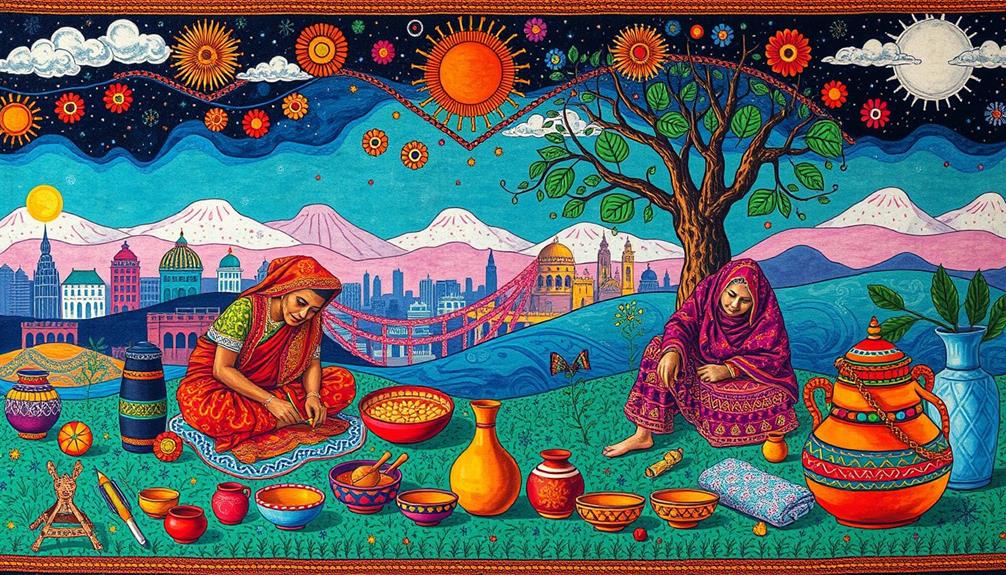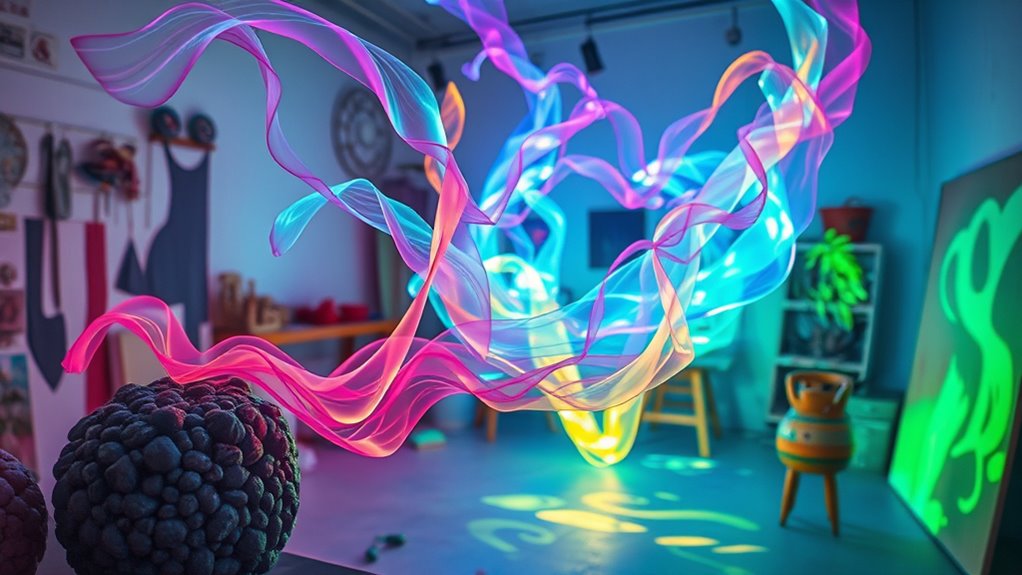

Artists use synesthesia to craft immersive experiences by blending sight, sound, and touch into one cohesive journey. They intentionally combine colors, shapes, and textures to evoke specific emotions and represent sound visually. This approach taps into how our brains naturally link sensory inputs, creating powerful, multisensory reactions. If you want to explore how these techniques transform perception and deepen emotional connections, keep exploring this fascinating art form.
Key Takeaways
- Artists blend senses by representing sounds visually through colors, shapes, and textures to evoke multisensory perceptions.
- They utilize color palettes and visual elements to express emotions and mimic auditory experiences.
- Artists intentionally design works that trigger specific sensory and emotional responses based on perception science.
- They depict musical qualities visually, such as rhythm and pitch, to create a “seeing sound” experience.
- The goal is to challenge ordinary perception and foster immersive, emotionally resonant multisensory encounters.
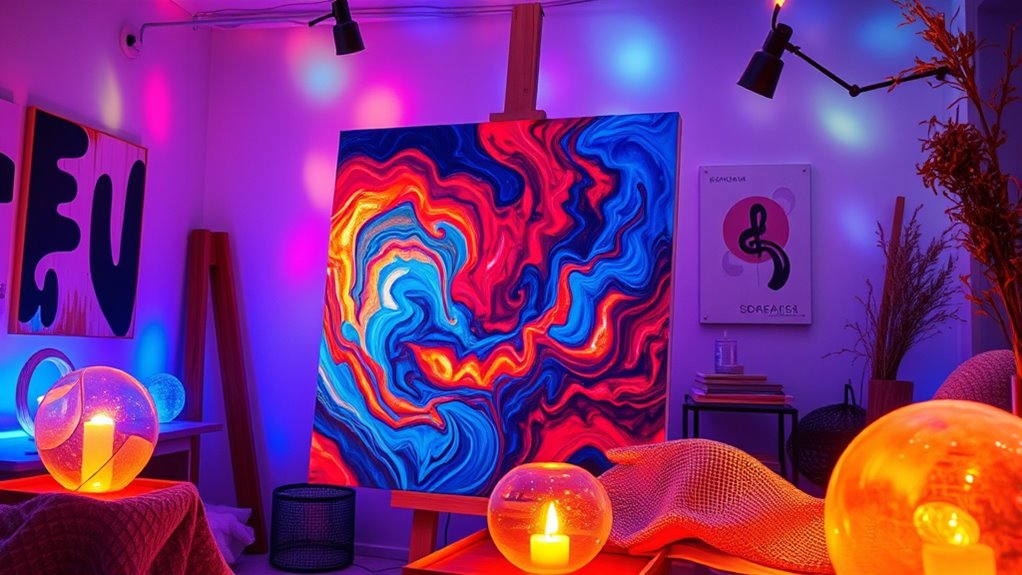
Many artists are harnessing synesthesia to craft immersive experiences that blur the lines between senses. They tap into how the brain naturally links different sensory inputs, allowing viewers or listeners to see colors when they hear music or feel textures through visual art. By doing this, they transform traditional art forms into multisensory journeys that engage not just your sight or hearing but your entire perception. This approach opens up a new domain where color perception becomes a tool for emotional expression, making each piece more personal and impactful. Additionally, understanding the neuroscience of perception helps artists intentionally design works that evoke specific multisensory responses.
Artists harness synesthesia to create immersive, multisensory experiences that transform perception and evoke deep emotional connections.
When artists use synesthesia, they often think about how colors can evoke specific feelings. For example, vibrant reds might symbolize passion or anger, while cool blues evoke calmness or sadness. By carefully choosing color palettes that correspond to particular emotional states, they communicate feelings without words. This method allows viewers to experience the artwork on a deeper emotional level, as the colors aren’t just visual elements—they’re carriers of mood and meaning. The connection between color perception and emotional expression becomes a powerful language in the artist’s toolkit, making the artwork resonate more profoundly.
Many creators also translate auditory experiences into visual forms, allowing you to see music or sound in vivid color. They might paint or design installations that visually represent the pitch, tone, or rhythm you hear. For example, a fast-paced song could be depicted with sharp, bright streaks of color that seem to pulse with the beat. This technique invites you to feel the music through your eyes, enhancing emotional engagement. When you experience this, it’s as if the artist is inviting you to step into their sensory world, where sound and sight are seamlessly intertwined.
You don’t need to have synesthesia yourself to appreciate its effects. Artists who use this phenomenon intentionally create works that evoke multisensory reactions. They challenge you to see beyond ordinary perception, encouraging a more holistic experience where colors, sounds, and emotions blend together. Their goal is to make you feel something visceral—whether it’s joy, longing, or excitement—by leveraging the natural links between senses. This approach not only deepens your connection to the art but also expands your understanding of how human perception can be playfully and powerfully manipulated.
Ultimately, these artists aren’t just creating pretty pictures or catchy tunes—they’re crafting immersive worlds where senses collide, emotions run free, and perception is elevated. They remind you that art isn’t confined to a single sense; it’s a multisensory experience waiting to be fully explored.
Frequently Asked Questions
Can Synesthesia Be Developed Intentionally or Only Is It Innate?
You might wonder if synesthesia can be developed intentionally or if it’s innate. While it’s often considered innate, evidence suggests that with practice, your neuroplasticity potential allows you to enhance sensory connections through sensory training. By engaging in activities that challenge your perceptions and cross-modal experiences, you can improve your ability to create multisensory links. So, with dedication, you can develop synesthetic-like traits over time.
How Does Synesthesia Influence an Artist’S Creative Process?
Did you know nearly 4% of the population experiences synesthesia? It profoundly influences your creative process by blending senses, like color perception and musical inspiration. This crossover allows you to visualize sounds as vibrant colors or feel textures through music, sparking unique ideas. With synesthesia, your artistry becomes more immersive, enabling you to craft multisensory works that resonate deeply and stand out as truly innovative.
Are There Specific Art Forms Better Suited for Synesthetic Expression?
You might find that visual art and musical composition are especially suited for synesthetic expression. In visual art, you can translate colors and shapes into sounds or feelings, creating vivid multisensory pieces. Similarly, musical composition allows you to evoke colors, textures, or tastes through sound. These art forms naturally lend themselves to blending senses, making it easier for you to explore and express your synesthetic perceptions creatively.
What Neurological Mechanisms Underlie Synesthesia in Artists?
You might wonder what neurological mechanisms underlie synesthesia in artists. It involves neural cross activation, where brain regions responsible for different senses, like vision and sound, connect more strongly. Sensory integration processes allow these connections to blend experiences, enabling artists to perceive and express multiple senses simultaneously. This heightened neural activity fosters unique creativity, helping them craft multisensory works that engage audiences on deeper, more immersive levels.
Can Non-Artists Experience Multisensory Perceptions Similar to Synesthesia?
Ever notice how sometimes a song makes you see colors or a taste sparks a memory? That’s sensory overlap and perceptual blending at play, showing that non-artists can indeed experience multisensory perceptions similar to synesthesia. While it’s less common, these experiences happen naturally, revealing how our brains can merge senses unexpectedly. So, you might just find yourself perceiving the world in a more interconnected, multisensory way than you realized.
Conclusion
By embracing synesthesia, you tap into a world where colors sing, sounds shimmer, and tastes dance. You blend senses to craft immersive experiences that captivate and inspire. You break boundaries, ignite imagination, and invite others to see, hear, and feel in new ways. Through this multisensory journey, you transform art into a vibrant symphony of sensations, where every perception becomes a doorway to wonder, and every moment becomes a masterpiece waiting to be felt.