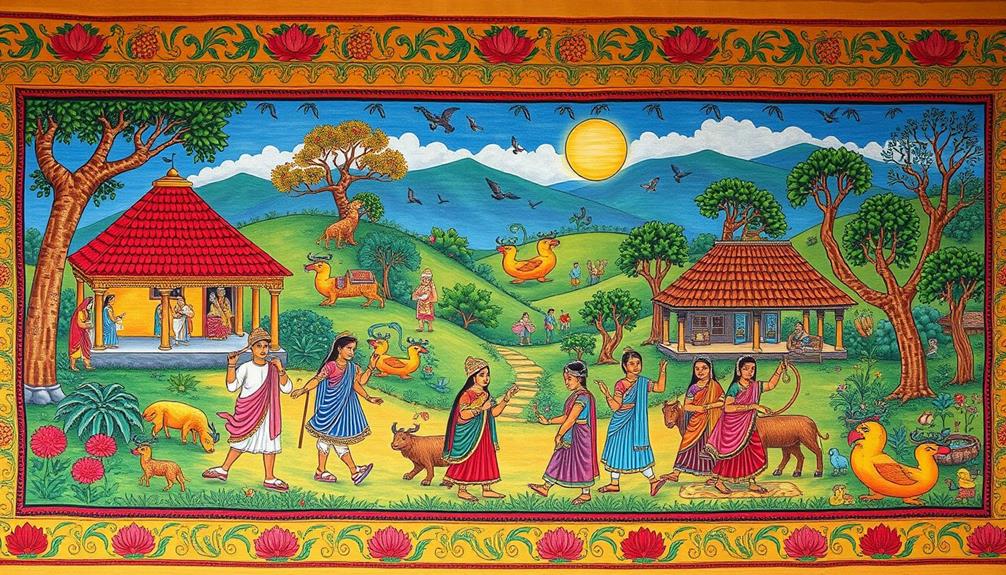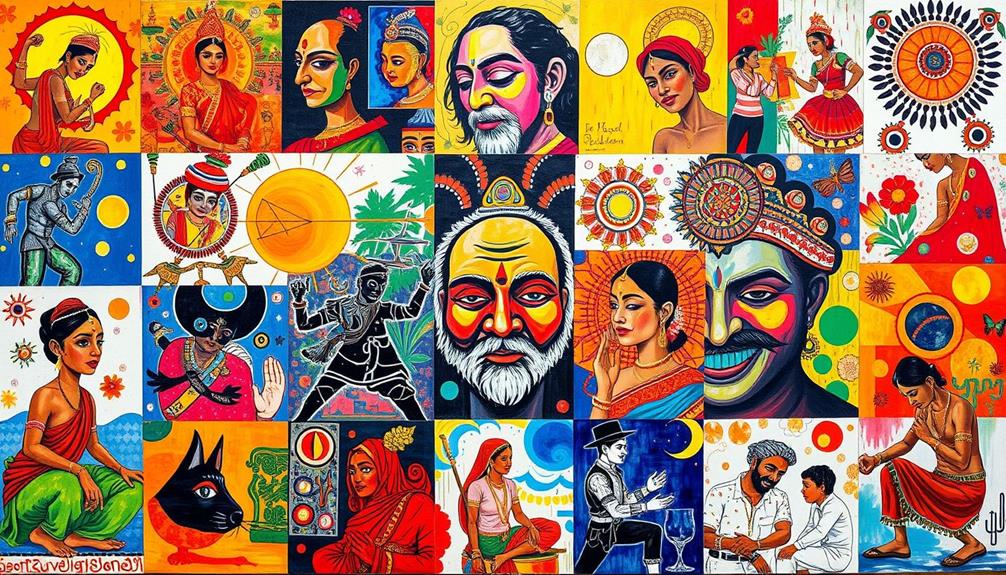

Western art movements have deeply influenced Indian artists, merging traditional styles with contemporary techniques. You'll see how figures like Amrita Sher-Gil integrated Post-Impressionism into her works, tackling social issues through an Indian lens. Raja Ravi Varma introduced Western realism to depictions of Hindu deities, making them resonate globally. Meanwhile, the Bombay Progressive Artists Group and the Bengal School sought to establish a modern Indian identity. This rich interplay of influences not only transformed artistic practices but also defined cultural expressions. As you explore this fascinating journey, you'll uncover even more about the dynamic evolution of Indian art.
Key Takeaways
- Western art movements, such as Post-Impressionism, influenced Amrita Sher-Gil's fusion of techniques with Indian themes and social commentary.
- Raja Ravi Varma's integration of Western realism allowed for a global resonance in his portrayals of Hindu deities.
- F.N. Souza's abstract works drew from Western modernism, challenging societal norms and redefining artistic expression in India.
- The Bombay Progressive Artists Group embraced modernism, blending Western styles with Indian aesthetics to modernize the art landscape.
- M.F. Husain's dynamic paintings merged traditional Indian iconography with Western influences, showcasing a cross-cultural dialogue in his art.
InSimSea Framed Canvas Wall Art Western Cowboy Decor Rustic Vintage Cowboy Oil Paintings Horse Riders of Mid-Century Art Prints Ranch Lunar Landscape Wall Pictures Antique Wall Decor Aesthetic Posters
RETRO WESTERN WALL DECOR: This framed cowboys wall art depicts the essence of the Wild West, mounted on…
As an affiliate, we earn on qualifying purchases.
As an affiliate, we earn on qualifying purchases.
Historical Context of Indian Art
The historical context of Indian art reveals a dynamic interplay between tradition and innovation, particularly during the pre-Independence era. Under colonial rule, Indian artists began blending traditional techniques with Western art styles, fostering the development of modern art forms.
This period saw the emergence of art schools, like the Madras School of Art, which introduced Western academic styles while working to preserve indigenous practices. The influence of natural materials and vintage aesthetics in modern art can be paralleled with contemporary modern farmhouse decor trends, exemplifying how diverse influences can shape artistic expression.
Artists such as Amrita Sher-Gil and Raja Ravi Varma skillfully navigated the intersection of Eastern and Western aesthetics. Their hybrid artworks addressed both local themes and global trends, reflecting the complex cultural and artistic landscape of the time.
The Bengal School, led by Nandalal Bose, emphasized regional influences and aimed to establish a distinct Indian modernism, moving away from European ideals.
As the 20th century progressed, movements like the Progressive Artists Group emerged, showcasing a critical engagement with Western art movements. These artists promoted an exploration of Indian identity and traditions, creating a rich dialogue that continued to evolve.
This historical context not only shaped the trajectory of Indian art but also laid the foundation for future artistic endeavors.

Chinese Painting Brushes Set, 3 Sizes Chinese Calligraphy Brush Set Flower Bird Line-Drawing Brushes Writing Brush, Painting with Bamboo Pen Holder, Traditional Art Sumi
Package List: You will receive 3 brushes (large, medium and small), all with a pen length of 23…
As an affiliate, we earn on qualifying purchases.
As an affiliate, we earn on qualifying purchases.
Key Artists and Their Contributions

Amidst the rich tapestry of Indian art, several key artists have made significant contributions that reflect the interplay between tradition and modernity.
Amrita Sher-Gil stands out as a pioneering figure, skillfully fusing Post-Impressionist techniques with Indian themes, while addressing pressing social issues like women's rights through her evocative works. Her art often evokes a sense of natural wellness that resonates with the viewer's emotions.
Raja Ravi Varma gained international acclaim by integrating Western realism into his naturalistic portrayals of Hindu deities, creating a unique narrative that resonates with both Indian folklore and global audiences.
Jamini Roy revitalized traditional pat paintings, merging indigenous styles with contemporary influences, and effectively bridging the gap between modern and traditional art.
F.N. Souza, as a founding member of the Progressive Artists Group, challenged societal norms with his abstract works, drawing heavily from Western modernism.
Meanwhile, M.F. Husain also emerged as a key figure in this group, blending traditional Indian iconography with Western styles, gaining fame for his dynamic and provocative paintings.
These artists not only reflect the influence of Western art movements but also highlight the vibrant dialogue between Indian cultural heritage and modern artistic expression.

NIHO-JIUMA Van Gogh Starry Night 5D Diamond Painting Kits, DIY Full Drill Diamond Art Gift for Adults & Teens, Home Wall Decoration (20 X 30 cm / 8 X 12 inches)
Van Gogh – Starry Night, June 1890. This is one of Van Gogh's most iconic works; The inspiration…
As an affiliate, we earn on qualifying purchases.
As an affiliate, we earn on qualifying purchases.
Indian Identity in Art

Indian identity in art emerges as a vibrant tapestry that weaves together historical influences, cultural narratives, and personal expressions. You'll see this clearly in the works of Nandalal Bose and Abindranath Tagore, who played pivotal roles in shaping modern Indian artistic traditions.
The Bengal Art School, which they were associated with, emphasized integrating regional influences like Pahari, Mughal, and Deccani styles to establish a distinct Indian identity in art during the late 19th and early 20th centuries. Additionally, the evolution of contemporary art trends in India reflects a fusion of traditional practices and innovative approaches, reminiscent of movements seen in global art inspired by contemporary styles.
As you explore this period, notice how artists navigated the delicate balance between Western influences and traditional Indian art. Nandalal Bose's work at Kala Bhavana became a hub for promoting cultural identity through modern expression.
Tagore's contributions highlighted the importance of blending diverse cultural representations in his compositions, reflecting the complexities of Indian identity.
In the early modernist period, artists like Amrita Sher-Gil tackled social issues while remaining grounded in their cultural identity. The institutionalization of art movements and schools reduced reliance on European academic ideals, allowing a unique Indian artistic identity to flourish, rich in both tradition and modernity.

Indian Botanical Art: An Illustrated History
As an affiliate, we earn on qualifying purchases.
As an affiliate, we earn on qualifying purchases.
Artistic Movements and Cultural Impact

Art movements in India reflect a dynamic interplay of cultural expression and social commentary, shaped considerably by both local traditions and global influences. As you explore these artistic movements, you'll notice how they respond to Western influence while emphasizing Indian identity. Each movement brings unique perspectives and techniques, enriching the landscape of Indian art.
The evolution of these movements often aligns with effortless topic idea generation, highlighting how artists adapt to their environments and audience expectations.
- The Bengal School of Art revitalized traditional Indian aesthetics, infusing elements from Japanese and Chinese art to counter colonial styles.
- The Progressive Artists Group embraced modernism, celebrating India's cultural diversity and connecting with international trends.
- The Feminist Art Movement challenged social norms, focusing on women's resilience through the works of artists like Amrita Sher-Gil.
The Kerala Radicals advocated for socially relevant art that highlighted justice and equality, while the Madras Art Movement experimented with regional Modernism, blending traditional Indian practices with contemporary aesthetics.
Through these movements, you can see how Indian artists navigate cultural impact, creating a rich tapestry that reflects both their heritage and the echoes of Western artistic dialogues.
Legacy and Evolution of Indian Art

The legacy of Indian art is a fascinating tapestry woven from diverse influences, including significant Western movements. As you explore this evolution, you'll notice how Indian artists have adopted styles like Surrealism, Cubism, and Modernism, intertwining them with traditional art forms to create something distinctly unique.
| Influence | Artistic Movement | Key Group |
|---|---|---|
| Western Techniques | Oil Painting | Bombay Progressive Artists Group |
| Indigenous Traditions | Hybrid Art Forms | Contemporary Artists |
| Post-Colonial Themes | Identity and Freedom Exploration | Modern Art Collectives |
| Eastern Aesthetics | Fusion of Eastern and Western Styles | Various Exhibitions |
The Bombay Progressive Artists Group, formed in 1947, was instrumental in this modernizing shift, pushing boundaries and blending indigenous traditions with Western techniques. The introduction of oil painting allowed for greater experimentation with perspective, shading, and depth. Today, the influence of Western art movements continues to provoke introspection among artists in India, sparking crucial discussions about freedom, identity, and authenticity in their creative expression. This ongoing dialogue guarantees that the legacy and evolution of Indian art remain dynamic and relevant.
Frequently Asked Questions
What Is Indian Art Influenced By?
Indian art's influenced by various factors, including religious themes, cultural traditions, and historical events. You'll find it reflects the diversity of India, integrating local styles with modern techniques while expressing societal values and individual identities.
What Was the European Influence on the Paintings in India?
Imagine a vibrant garden where European techniques bloom alongside Indian traditions. You see oil paints enriching the canvas, realism capturing divine figures, and social narratives merging, creating a rich tapestry that speaks to both cultures' hearts.
What Is Western Style of Painting in India?
Western style of painting in India blends techniques like oil painting, realism, and perspective. You'll notice artists using these methods to create vibrant, dynamic works that merge traditional themes with contemporary aesthetics, enriching India's artistic landscape.
What Inspired Indian Artists to Create National Art?
You'll find inspiration in India's rich heritage and the Swadeshi movement, which ignited a passion for indigenous themes. Artists embraced their cultural roots, merging traditional styles with modern techniques to create a vibrant national art narrative.
Conclusion
In exploring the influence of Western art movements on Indian artists, you see a vibrant dialogue between cultures. This interaction not only enriches Indian identity but also sparks innovation in artistic expression. By blending traditional techniques with modern philosophies, artists create a unique visual representation of their heritage and contemporary life. The legacy of this fusion continues to evolve, reminding you of the dynamic nature of art and its power to transcend boundaries while celebrating diversity.