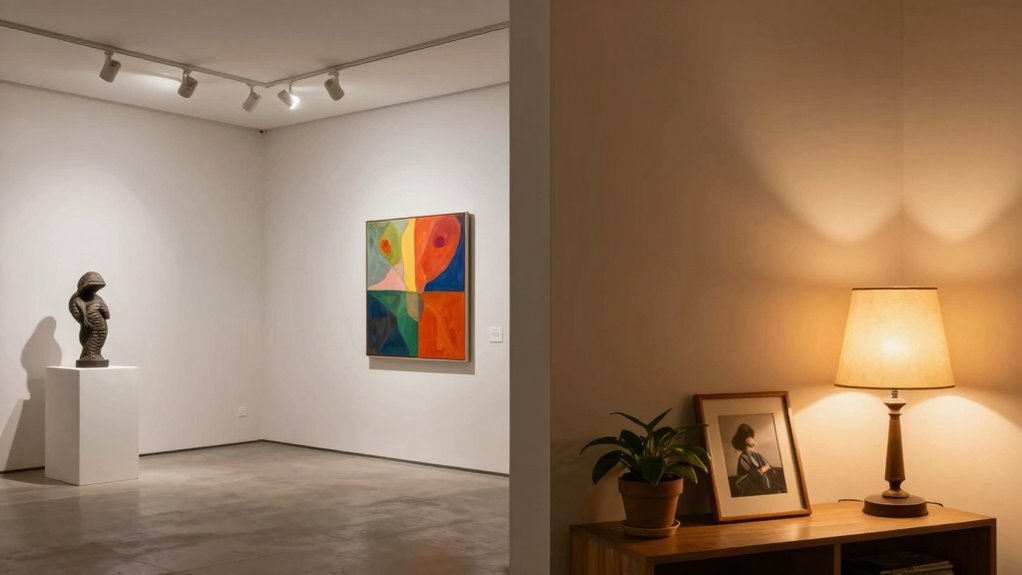

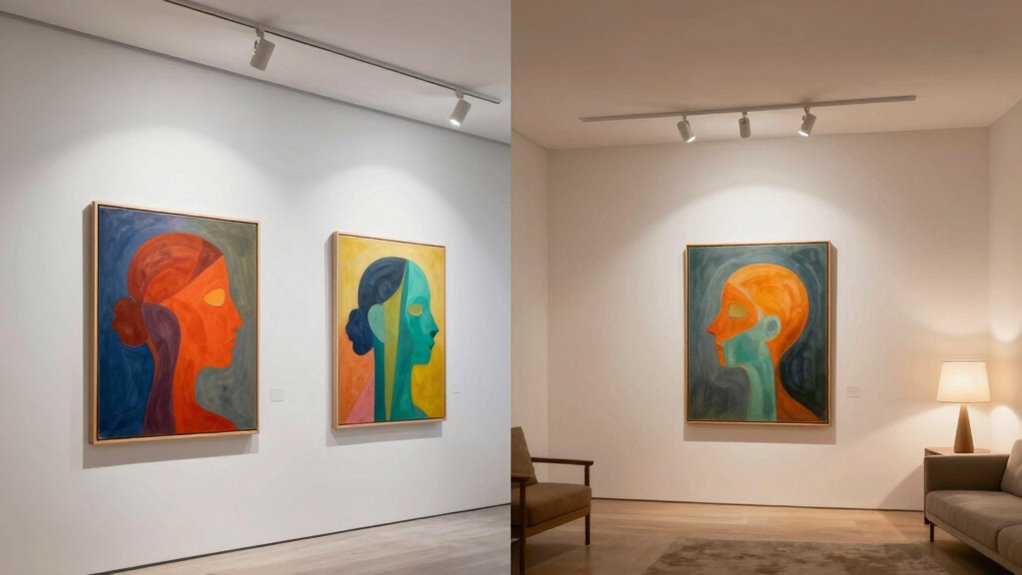
Gallery lighting is designed to highlight artwork using adjustable fixtures, focused angles, and precise color temperatures, making colors pop and textures stand out. Home lighting, however, prioritizes creating a cozy atmosphere with layered and softer illumination that blends with décor. These differences cause art to look quite distinct in each setting—colors may appear warmer or cooler, shadows vary, and details are emphasized differently. Exploring these variations will help you understand how to optimize your space for better art presentation.
Key Takeaways
- Gallery lighting emphasizes artwork details with adjustable fixtures and high color accuracy, while home lighting prioritizes ambiance and comfort.
- Differences in color temperature (warm vs. cool light) significantly alter how art’s colors and textures appear.
- Proper calibration and specialized tools ensure consistent, accurate lighting in galleries, unlike more variable home setups.
- Fixture placement, diffusion, and shadow control are optimized in galleries to highlight textures, whereas homes focus on creating a cozy atmosphere.
- Light quality, UV protection, and maintenance practices prevent damage and ensure art looks its best in both environments.

EZVALO Picture Light for Wall, 4800mAh Rechargeable Wireless Remote, 16in Dimmable Magnetic LED Art Display Light with 3 Color Temperatures, for Gallery, Living Room, Bedroom, Hallway (Gold)
Powerful 4800mAh Rechargeable Battery: Say goodbye to battery swaps and messy cords! Built-in 4800mAh battery offers 11 hours…
As an affiliate, we earn on qualifying purchases.
As an affiliate, we earn on qualifying purchases.
How Gallery and Home Lighting Differ in Design and Purpose
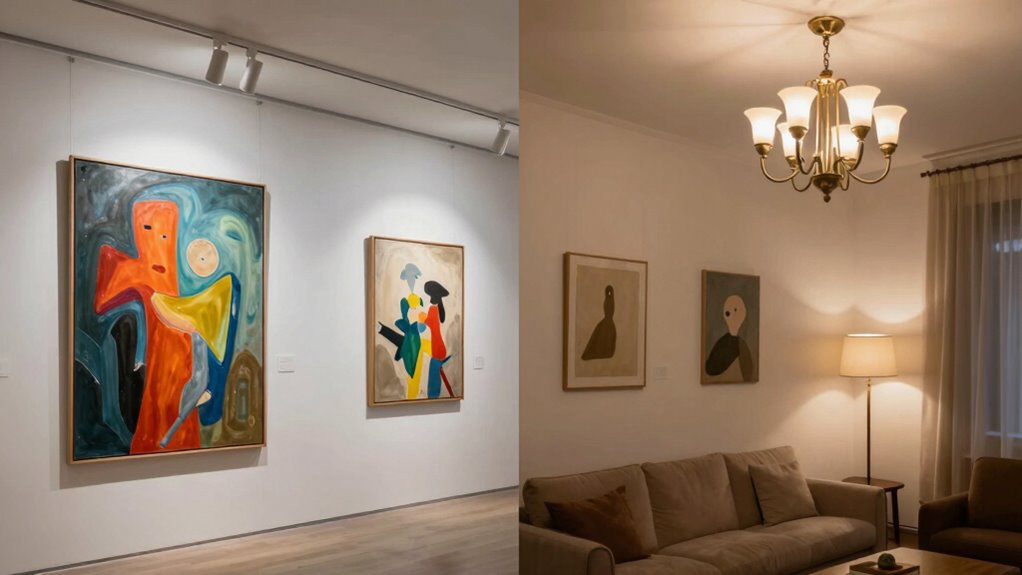
While gallery and home lighting both aim to illuminate spaces, they serve very different design and functional purposes. In galleries, lighting fixtures are carefully selected to highlight artwork without causing damage or glare. The focus is on creating ideal display arrangements that emphasize detail, color, and texture. You’ll notice the lighting is often adjustable, allowing curators to fine-tune each piece’s presentation. In contrast, home lighting emphasizes comfort and ambiance, using fixtures that blend seamlessly with your décor. The goal is to create a welcoming environment rather than showcase art. Your display arrangements in a home are more flexible, often layered with ambient, task, and accent lighting to suit your lifestyle. Incorporating specialized lighting tools can help achieve the precise effects needed in gallery environments. Additionally, understanding lighting color temperature is essential for creating the desired mood and appearance in both settings. Proper lighting design can significantly enhance the visual impact and functionality of each space, especially when considering lighting placement to optimize overall aesthetics and effectiveness. Good lighting control systems also play a crucial role in managing different lighting needs efficiently.

AUQUEE 8 Light Track Lighting Fixtures Ceiling, Matte Black Kichen Track Lighting Fixtures, Rotatable Light Heads, Adjustable Modern LED Track Lights for Kitchen/Hallway, No GU10 Bulb
Black 8 Light track lighting fixures ceiling with Long Size: The 55.3'' length allows this kitchen track lighting…
As an affiliate, we earn on qualifying purchases.
As an affiliate, we earn on qualifying purchases.
How Lighting Quality and Calibration Affect How Your Art Looks
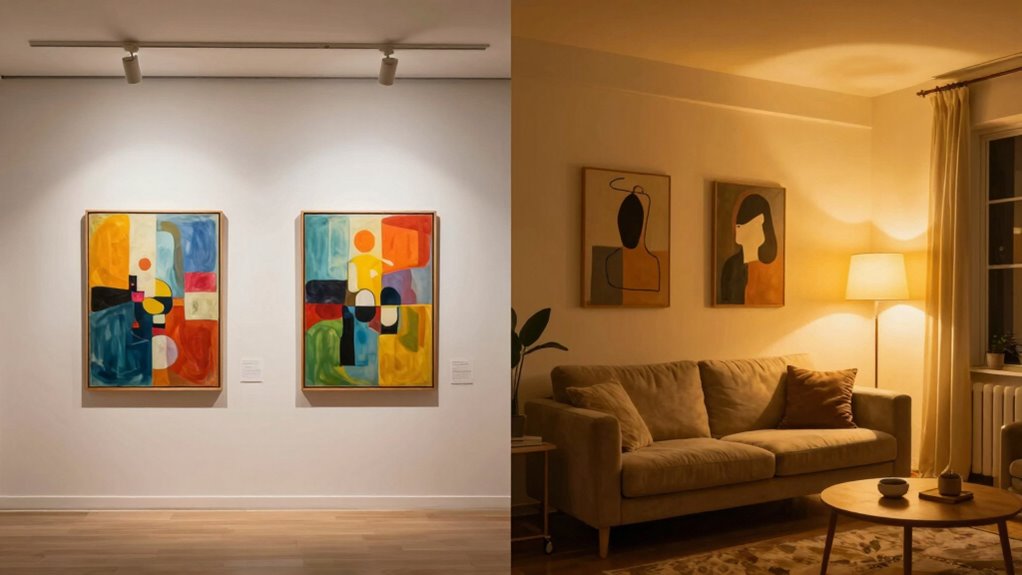
The quality and calibration of your lighting play a crucial role in how your artwork appears. High-quality lighting ensures accurate color rendering, helping your art look true to its original hues and details. Poor lighting can distort colors, making them appear dull or overly warm. Proper calibration techniques, such as using light meters or color calibration devices, help you achieve consistent lighting conditions across your space. This consistency prevents color shifts and highlights the subtle nuances in your artwork. When your lighting is well-calibrated, you’ll notice your art’s textures, shadows, and colors come to life, creating a more authentic viewing experience. Additionally, understanding lighting calibration and its impact on color perception can help you optimize your display setup. Mastering lighting quality ensures that your art is showcased in the best possible light, revealing all its intricate features. Investing in good lighting setup can also reduce eye strain and improve overall viewing comfort, making your space more enjoyable. Properly selecting lighting fixtures with appropriate color rendering indices can significantly enhance your artwork’s appearance. Moreover, choosing the right lighting design can influence how viewers engage with your art and create a more inviting atmosphere. Ultimately, investing in quality lighting and proper calibration makes a significant difference in how your art is perceived and appreciated.

M MayJazz 3 Color Temperature LED Light Bulb A19 2700K-5000K-4000K,3CCT Color Changing Light Bulbs,Energy Saving 9W(60W Equivalent) LED Bulb,810LM,e 26 Base for Bedroom,Living Room,2 Pack
【3 Color Temperature Light Bulb】Compared with traditional light bulbs that use dials to adjust color temperature, this light…
As an affiliate, we earn on qualifying purchases.
As an affiliate, we earn on qualifying purchases.
How Color Temperature Changes the Look of Your Art
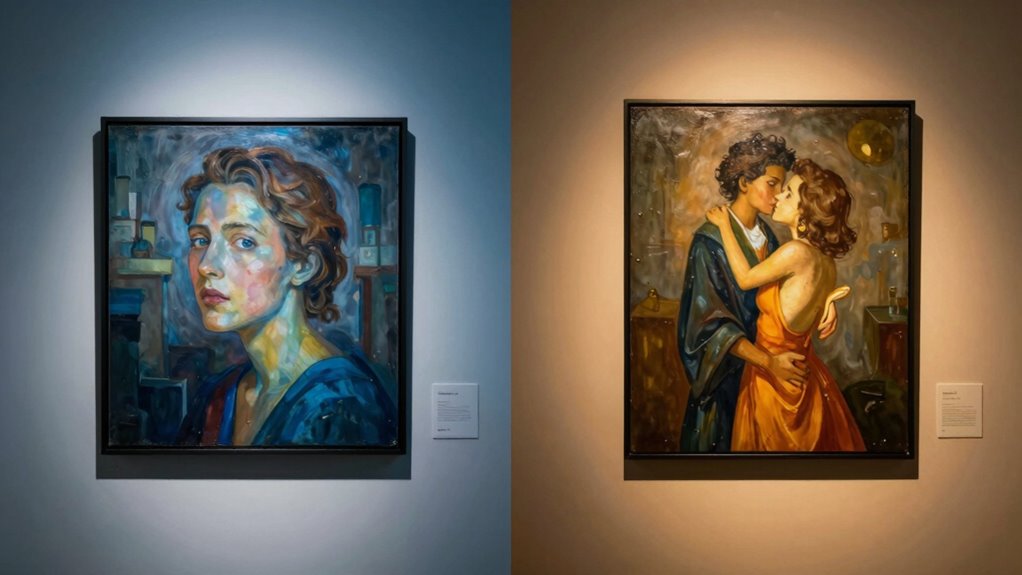
The color temperature of your lighting can dramatically alter how your art appears, with warm tones creating a cozy feel and cool tones offering a crisp, modern look. Choosing the right temperature impacts the colors and details your artwork displays, shaping the viewer’s perception. Understanding Indigenous wellness essentials can also help ensure your art is enjoyed by everyone under different lighting conditions. Additionally, selecting appropriate lighting categories can enhance the visual experience of your artwork, whether aiming for vibrancy or subtlety. Properly managing heat buffering during lighting setup can prevent damage and preserve the integrity of your art over time. Being aware of potential microplastics in dust is also important, as they can settle on artwork and affect its longevity. Ultimately, it also sets the mood, whether you want to highlight vibrancy or evoke a calm atmosphere.
Warm vs. Cool Tones
Choosing the right color temperature for your lighting can dramatically influence how your art appears. Warm tones (around 2700K-3000K) create a cozy, inviting atmosphere, emphasizing emotional connection through color psychology. Cool tones (around 5000K-6500K) offer a crisp, modern look, highlighting details and textures in your artwork. Here are four key points to contemplate:
- Warm lighting enhances reds, oranges, and yellows, making art feel intimate.
- Cool lighting accentuates blues, greens, and subtle details, ideal for contemporary pieces.
- Your choice of lighting fixtures impacts the overall tone and ambiance.
- Understanding color temperature helps you select fixtures that complement your art style.
- Properly lighting your artwork can also help protect it from damage caused by UV rays and heat, which is essential for art preservation over time. Additionally, choosing the right lighting can prevent unnecessary art damage, extending the lifespan of your collection. Being aware of the lighting’s spectral output can further enhance your ability to choose the most suitable fixtures for your space.
Impact on Art Colors
Color temperature directly influences how your artwork’s hues appear under different lighting conditions. Warmer lights tend to enhance reds, yellows, and earthy tones, creating a cozy, inviting feel that can alter your artistic interpretation of the piece. Conversely, cooler lighting emphasizes blues and greens, giving artworks a more clinical or modern appearance. These variations can shift the emotional impact and perceived depth of colors. Cultural influences also play a role—certain societies might prefer warm lighting to evoke tradition, while others favor cooler tones for a contemporary aesthetic. Understanding how color temperature affects art helps you appreciate these subtle changes and choose lighting that aligns with your desired visual message and cultural context. Additionally, recognizing the lighting quality can help optimize the viewing experience and preserve the integrity of the artwork over time. Being aware of lighting standards can further guide you in selecting appropriate illumination for different settings and purposes.
Setting the Right Mood
Adjusting the color temperature of your lighting can dramatically set the mood for your artwork. Warmer tones create an inviting, cozy ambiance, while cooler tones produce a clean, modern feel. To optimize this effect, consider these key points:
- Use warm light (around 2700K) for a relaxed, intimate atmosphere.
- Incorporate cooler light (around 5000K) for a crisp, vibrant display.
- Pay attention to fixture placement to avoid unwanted shadows and glare.
- Create an ambient glow by strategically spacing fixtures to evenly illuminate the artwork.
Proper fixture placement enhances the overall mood, ensuring the ambient glow highlights the art’s details without overpowering it. Adjusting color temperature and fixture positioning helps you craft the perfect environment for your art to resonate.

Fine Art Lighting 55W UV Light with Remote Control and Motion Sensor
15/30/45/60min time settings. Remote control and delay start allows user to safely leave area before disinfection begins
As an affiliate, we earn on qualifying purchases.
As an affiliate, we earn on qualifying purchases.
The Role of Light Intensity and Direction in Highlighting Art
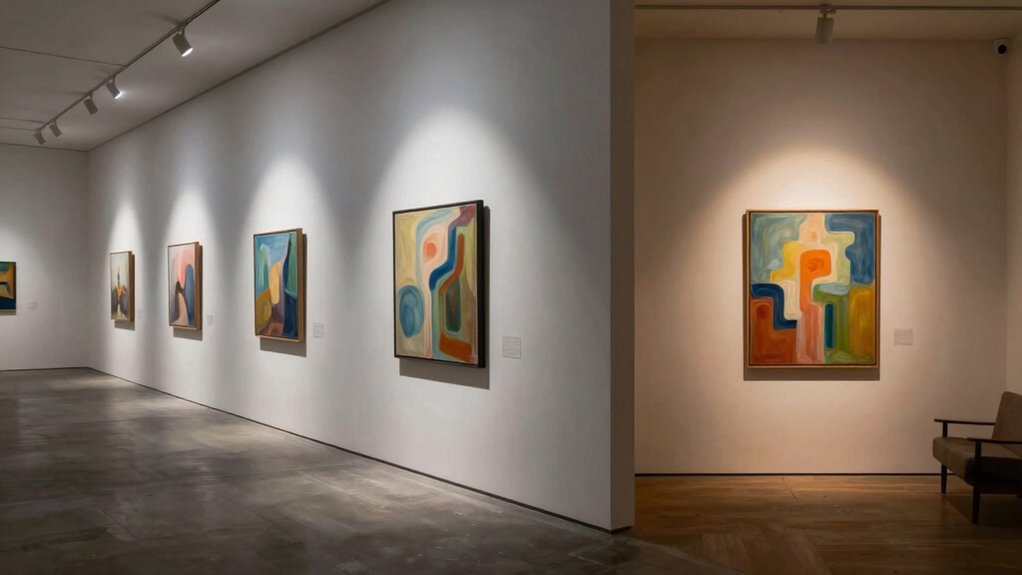
The intensity of your lighting can make or break how your art is perceived, emphasizing details or washing out colors. The direction from which light hits your pieces influences shadows and highlights, adding depth or flattening the image. Striking the right balance between shadow and highlight guarantees your art stands out beautifully and accurately.
Light Intensity’s Impact
Light intensity plays a crucial role in how artwork is perceived, as brighter illumination can make details pop and create a sense of vibrancy. Too much light can cause glare, while too little dulls the art’s impact. When choosing lighting, consider these factors:
- LED efficiency ensures bright, energy-saving illumination without excess heat.
- Panel design influences how evenly light disperses across the artwork.
- Adjusting light intensity highlights textures and colors effectively.
- Proper lighting prevents damage, especially with sensitive materials.
In galleries, higher intensity brings out fine details, while in homes, softer lighting creates a cozy atmosphere. Balancing light intensity and design ensures your art looks its best, whether in a museum or living room.
Directional Lighting Effects
When considering how artwork is showcased, the direction of lighting plays a pivotal role in emphasizing specific features. By using spotlighting techniques, you can direct focus precisely where you want it, highlighting textures, brushstrokes, or details that might otherwise go unnoticed. Properly aimed light creates a sense of depth and dimension, making your art stand out. Light diffusion also matters; diffused lighting softens shadows and reduces glare, ensuring even illumination without harsh contrasts. Adjusting the light’s direction and intensity allows you to control the visual impact, making certain areas pop while maintaining subtlety elsewhere. Understanding these directional lighting effects helps you craft an environment where each piece’s unique qualities are maximized, whether in a gallery or at home.
Shadow and Highlight Balance
Have you ever noticed how the balance of shadows and highlights can dramatically transform an artwork’s appearance? Achieving the right contrast depends on light intensity and direction. Here’s what to contemplate:
- Use diffuse illumination to soften shadows, creating a gentle shift between light and dark areas.
- Adjust light intensity to highlight details without washing out subtle textures.
- Position lights to control shadow creation, emphasizing depth and form.
- Vary the direction of light to produce dynamic highlights and shadows that enhance the artwork’s dimensionality.
Common Mistakes in Art Lighting at Home and Galleries: And How to Fix Them
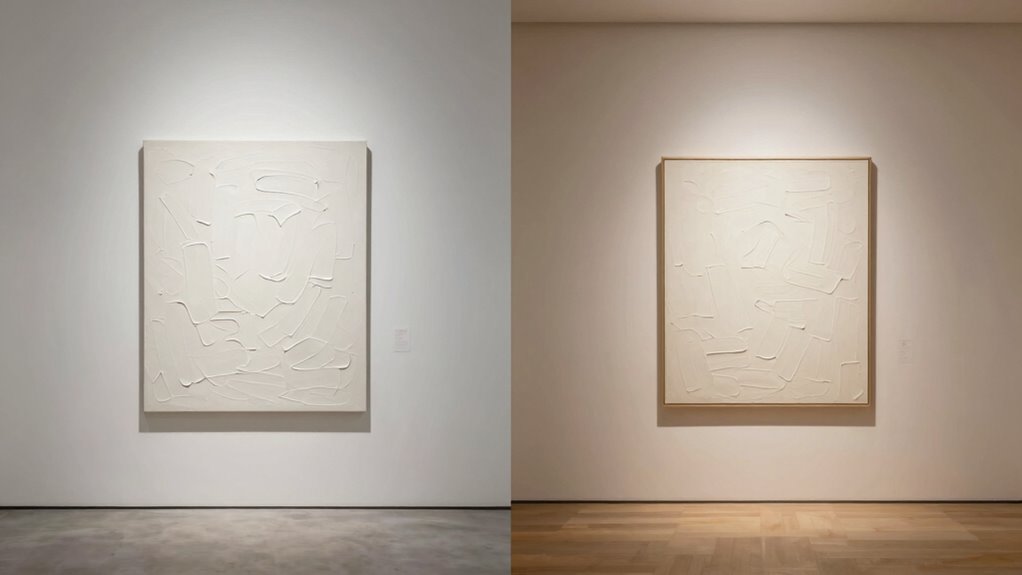
Many people make common mistakes when lighting their artwork, whether at home or in galleries, which can diminish the piece’s impact and longevity. One mistake is using harsh, uneven lighting that causes glare or uneven color perception, threatening art conservation over time. Another error is neglecting proper placement, which can cast damaging shadows or expose artwork to damaging UV rays. Additionally, poor lighting can compromise gallery security by making pieces less visible or easier to tamper with. To fix these issues, you should choose appropriate lighting fixtures that diffuse light evenly and use UV-filtering bulbs. Regularly adjusting and maintaining your lighting setup helps protect your art’s integrity and ensures it remains visually striking without risking damage or security breaches.
Tips for Improving Art Lighting in Your Space
Improving your art lighting starts with understanding how to highlight your pieces effectively while minimizing potential damage. Proper lighting enhances visual impact and supports art conservation. Here are four tips to boost your art lighting:
- Use LED lights with adjustable color temperature to match the artwork’s needs and prevent fading.
- Implement lighting automation to control brightness and timing, reducing unnecessary exposure.
- Avoid direct sunlight; instead, diffuse light to prevent UV damage and glare.
- Position lights at a 30-degree angle to reduce reflections and shadows, ensuring even illumination.
Frequently Asked Questions
How Does Ambient Light Influence the Perception of Artwork?
Ambient light considerably influences how you perceive artwork by affecting its color and mood. Natural light, with its changing color temperature throughout the day, can make colors appear warmer or cooler, altering your perception. When you view art under different ambient lighting, it can seem vibrant or subdued. Adjusting the room’s overall lighting helps you see details and color nuances more accurately, enhancing your appreciation of the artwork.
Can Smart Lighting Systems Enhance Art Display Quality?
Imagine your walls come alive with a gentle glow—smart lighting transforms your space into an artful sanctuary. Yes, smart lighting can markedly enhance art display quality, acting like a painter’s brush that highlights every detail. With precise control, this technology adapts to different artworks, bringing out their true colors and textures. It’s an effortless way to elevate your art, making each piece resonate like a masterpiece in a gallery.
What Are the Best Lighting Options for Preserving Artwork Longevity?
You should choose lighting materials like LED or halogen bulbs with UV filtering to preserve artwork longevity. Opt for a color temperature around 3000K to 3500K to prevent fading and maintain color accuracy. Avoid harsh, direct lighting, and guarantee your fixtures minimize heat and UV exposure. Properly selected lighting enhances your art’s lifespan while showcasing it beautifully, keeping it vibrant and intact for years to come.
How Do Shadows Affect the Viewing Experience of Art Pieces?
Shadows substantially impact how you experience art, as shadow depth can add drama or obscure details. If shadows are too harsh, they distract from the artwork’s true colors and textures. Proper light diffusion helps soften shadows, creating a balanced viewing environment. By controlling shadow depth and using diffuse lighting, you enhance visibility, allowing you to appreciate the piece’s full detail and nuance without distractions.
Are There Specific Lighting Techniques for Different Art Styles?
You might think all art should be lit the same, but surprisingly, art style specific lighting makes a huge difference. Decorative illumination techniques are tailored to highlight textures in impressionism or emphasize bold lines in modern art. For classical paintings, soft, warm lighting enhances detail, while for contemporary pieces, sharper, contrasting lights create drama. So, yes, specific lighting techniques are essential to truly bring out the personality of each art style.
Conclusion
In mastering your masterpiece’s mood, remember that proper placement, precise calibration, and perfect positioning are paramount. By blending brilliance with balance, you can banish dullness and deliver dazzling displays. With thoughtful tweaking and testing, transform your space into a stunning sanctuary where art appears authentic and alluring. So, seize the strategies, stay savvy about settings, and let your lighting elevate every piece—making your home a haven that highlights your unique art collection.