AR and VR integration in online art sales, like on prominentpainting.com, allows you to visualize artworks in your space or explore virtual galleries from anywhere. With these technologies, you can see how a piece fits in your home, examine textures, and understand scale more accurately. This creates a more realistic, interactive experience that helps you make confident choices. Keep exploring to discover how these innovations are transforming the way you buy art online.
Key Takeaways
- ProminentPainting.com can incorporate AR to visualize artworks in real home settings via smartphones or tablets.
- VR integration allows virtual gallery visits and interactive exploration of art collections remotely.
- Enhanced emotional engagement through contextual visualization improves customer connection and purchase confidence.
- Educational features like artist info and artwork history can be embedded within AR/VR experiences.
- Implementing AR and VR boosts platform interactivity, accessibility, and differentiation in the online art market.
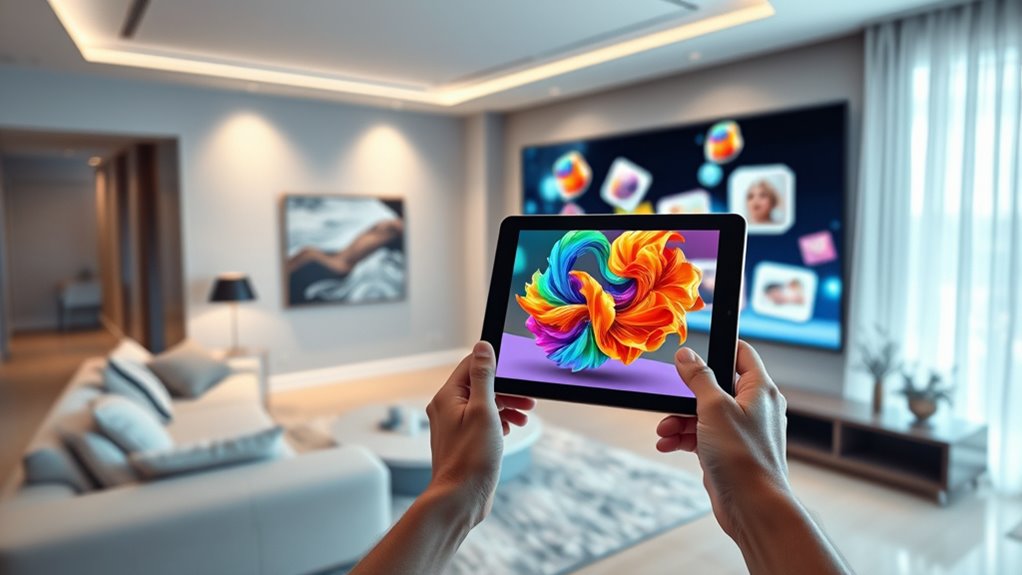
As online art sales continue to grow, integrating augmented reality (AR) and virtual reality (VR) technologies is transforming how you experience and purchase art. These innovations allow you to step beyond traditional browsing and into a digital gallery where art feels tangible and real. Instead of just viewing images on a screen, you can immerse yourself in an environment that replicates the feeling of being physically present in a gallery. This immersive experience helps you understand the scale, texture, and ambiance of a piece, making your decision to buy more confident and satisfying.
Using AR, you can project artworks directly into your living space through your smartphone or tablet. Imagine pointing your device at a blank wall and seeing a painting or sculpture appear in that exact spot. This feature helps you visualize how a piece will look in your home, considering factors like size, lighting, and decor. It’s a powerful tool for narrowing down choices and eliminating uncertainty. The digital gallery interface makes this process seamless, giving you a curated, interactive experience that bridges the gap between virtual and physical art collections.
VR takes this experience even further, creating a fully immersive environment where you can walk through a virtual gallery or art exhibition. With a headset, you can explore different rooms, view artworks from various angles, and even interact with the pieces in some cases. This level of engagement offers a sense of presence not possible with traditional online browsing. You can spend time appreciating details, viewing art from different perspectives, or comparing works side by side, all from your own space. The technology removes geographical barriers, giving you access to world-class galleries and exhibitions without leaving your home.
The integration of AR and VR doesn’t just enhance viewing; it also facilitates a more emotional connection to art. When you can see how a piece fits into your environment or experience it in a simulated gallery setting, you’re more likely to feel a genuine connection. This emotional resonance often leads to more meaningful purchases. Plus, these tools provide educational opportunities, such as detailed information about the artist or the artwork’s history, enriching your overall experience.
In essence, AR and VR are reshaping online art sales by turning passive browsing into an active, engaging journey. They empower you to make more informed choices, see artworks in context, and enjoy a richer, more interactive connection with art. As these technologies continue to evolve, expect your online art experience to become increasingly realistic, personalized, and immersive, making the digital gallery a compelling space for discovering and investing in art. Moreover, as digital gallery platforms adopt these innovations, the accessibility and diversity of available artworks will significantly expand.
Frequently Asked Questions
How Secure Is My Personal Data With AR and VR Features?
Your personal data stays secure because the site uses data encryption to protect your information during transmission. Plus, they follow strict privacy policies that clearly explain how your data is collected and used. You can feel confident that your privacy is a priority, and the platform takes necessary steps to safeguard your details while you explore art through AR and VR features.
Can I Customize Virtual Art Displays to Match My Home Decor?
Yes, you can customize virtual art displays to match your home decor. ProminentPainting.com offers various customization options, allowing you to choose frame styles, colors, and sizes that complement your space. Using AR features, you can preview how different artworks and decor matching options look in your home before making a decision. This personalized approach guarantees your virtual art displays seamlessly fit your style and environment.
What ARe the Device Requirements for Experiencing AR and VR ARt?
You need compatible devices with good hardware specifications to experience AR and VR art. For AR, your smartphone or tablet should have device compatibility with AR apps and a camera. For VR, you’ll require a VR headset that meets hardware specifications like sufficient processing power, compatible sensors, and a display. Make sure your device’s software is up-to-date to guarantee smooth integration and peak virtual art experiences.
How Do AR and VR Impact Traditional ARt Valuation Methods?
AR and VR transform traditional art valuation by emphasizing digital authenticity, making provenance more transparent and secure. They influence the market by offering immersive experiences, which can increase perceived value and demand. As a collector or seller, you’ll find that these technologies shape how artworks are assessed, traded, and appreciated, ultimately impacting market influence and setting new standards for evaluating both physical and digital art pieces.
Are There Accessibility Options for Users With Disabilities?
Yes, there are accessibility options for users with disabilities. You can use assistive technology like screen readers, voice commands, or alternative navigation tools to explore art collections easily. Many platforms incorporate these features to guarantee everyone can enjoy the experience. By offering customizable controls and accessible interfaces, you make art more inclusive, allowing users with diverse needs to engage fully with online art sales.
Conclusion
By embracing AR and VR, you can transform your online art sales experience. Imagine a buyer placing a stunning painting on their living room wall through virtual reality, feeling connected and confident in their choice. For example, a gallery integrated AR tools saw a 30% increase in sales as customers visualized art in their homes before buying. These technologies make your art more accessible and personal, creating an emotional connection that turns browsers into buyers.