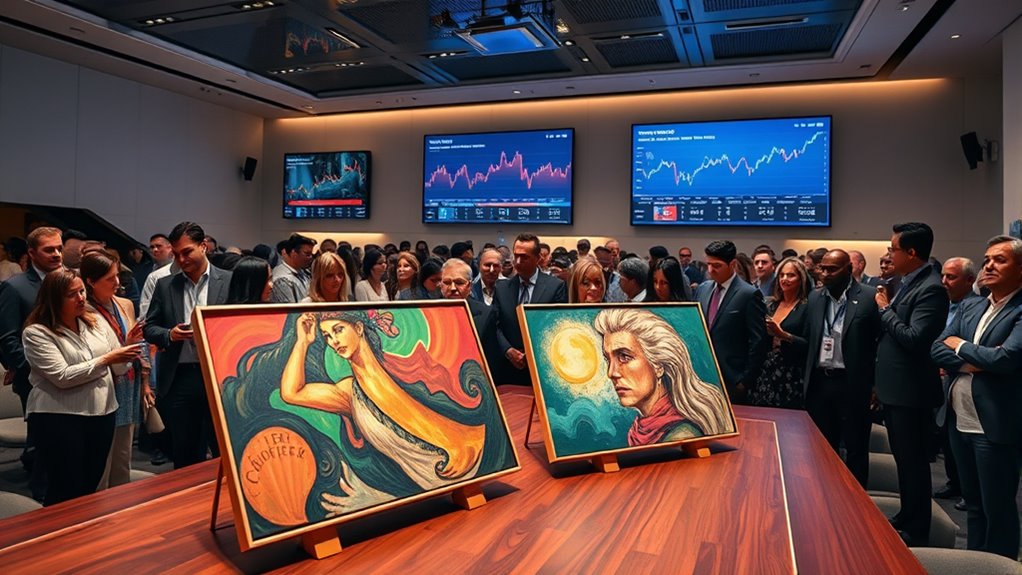

Currently, the art auction market is stabilizing after recent ups and downs, creating strategic opportunities for you to optimize sales. By monitoring emerging trends and data, you can time your sales during steadier periods and target high-value artworks. Diversifying offerings and leveraging online platforms expand your reach and bidding potential. Staying alert to market signals and buyer behavior will help you make smarter decisions. Continue exploring to discover how to capitalize on this promising market phase.
Key Takeaways
- Recent auction data shows signs of market stabilization and gradual sales recovery.
- Emerging trends indicate increased buyer confidence and interest in well-performing categories.
- Digital platforms and online bidding are expanding market reach and influencing auction dynamics.
- Market insights and data analytics enable strategic timing and pricing for optimal results.
- Diversifying offerings and leveraging market trends can enhance success during the stabilization phase.
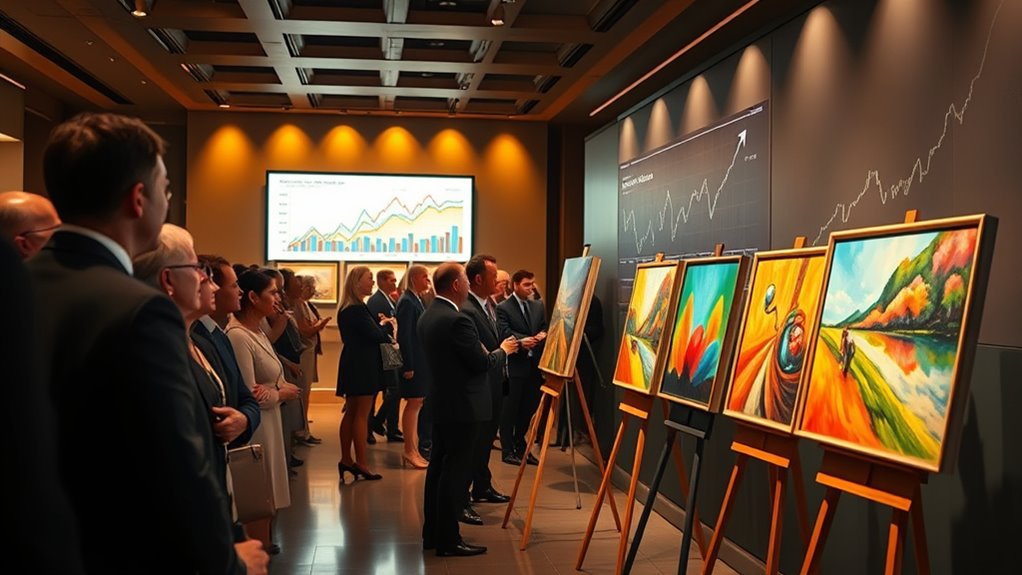
While auction markets have experienced fluctuations in recent months, recent data indicates signs of stabilization. If you’re involved in the art market, this could be a pivotal moment for refining your auction strategies. The art market, known for its volatility, has shown resilience as sales figures gradually firm up and buyer confidence reemerges. Understanding these trends can help you better position yourself, whether you’re a collector, dealer, or investor. As market dynamics shift, adopting effective auction strategies becomes more essential than ever. You should focus on timing sales during periods of market steadiness and leverage emerging data to predict which artworks will attract competitive bidding.
Market stabilization offers a prime opportunity to refine auction strategies and maximize sales success.
In the current landscape, auction strategies hinge on a deep understanding of market sentiment. You’re encouraged to monitor recent auction results closely, noting which categories or artists perform well and which tend to lag. This insight allows you to tailor your approach—whether it’s setting realistic reserve prices, choosing ideal auction houses, or deciding when to consign. With stabilization, there’s also an opportunity to diversify your offerings, presenting works that appeal to a broader audience and increase the likelihood of successful sales. Remember, auction strategies are not only about pricing but also about understanding buyer behavior, timing, and presentation.
Another key aspect involves leveraging technology and data analytics. You can use online auction platforms and digital marketing tools to reach a wider audience, especially as buyer habits shift towards digital engagement. The art market is increasingly influenced by online bidding, so incorporating these strategies into your overall approach can boost your results. Additionally, staying informed about upcoming auction events and preview periods helps you identify prime opportunities to introduce your artworks or participate in high-profile sales.
Furthermore, staying current with market trends and how collectors’ preferences evolve can give you a competitive edge in planning your sales. As the market stabilizes, it’s also wise to build relationships with auction houses and art advisors. Their expertise can guide you through the nuances of auction strategies, ensuring you maximize your results. Keep a close eye on global economic indicators, as these can influence bidder confidence and overall market health. Being adaptable and well-informed positions you to capitalize on the current stabilization, setting the stage for more consistent and profitable outcomes in the future. Ultimately, understanding the evolving art market and refining your auction strategies will serve you well in this promising period of market recovery.

Sell Your Crafts Online: The Handmaker's Guide to Selling from Etsy, Amazon, Facebook, Instagram, Pinterest, Shopify, Influencers and More
As an affiliate, we earn on qualifying purchases.
As an affiliate, we earn on qualifying purchases.
Frequently Asked Questions
How Do Global Economic Shifts Influence Auction Prices?
Global economic shifts directly impact auction prices because economic fluctuations can reduce buyers’ spending power, making them more cautious. Currency fluctuations also play a role, as a weaker local currency can increase the cost of international art, lowering demand. You might notice that during economic downturns or currency instability, auction prices tend to decline, reflecting decreased confidence and financial ability among collectors worldwide.
What Emerging Art Categories Are Gaining Popularity in Auctions?
You’ll notice contemporary sculpture and emerging photography are gaining popularity in auctions. These categories attract new collectors with their innovative styles and fresh perspectives. As these genres grow, you’ll see more vibrant bids and rising prices, reflecting their increasing demand. Embracing contemporary sculpture and emerging photography allows you to invest in the forefront of art trends, making your collection more dynamic and aligned with evolving tastes.
How Are Digital and NFT Artworks Impacting the Traditional Art Market?
Digital disruption and the NFT impact are transforming the traditional art market by making digital and NFT artworks more accessible and desirable. You’ll notice more collectors valuing these pieces for their uniqueness and blockchain authenticity. This shift challenges conventional art sales, encourages new platforms, and broadens audience reach. As a result, digital and NFT artworks are reshaping how art is bought, sold, and appreciated in the modern market landscape.
What Are the Key Factors Driving Auction House Consolidations?
You notice that auction house mergers are mainly driven by industry consolidation, as companies aim to strengthen their market position and expand global reach. These consolidations help reduce competition, cut costs, and attract high-profile consignments. As a result, you see fewer independent auction houses, with larger entities dominating the market. This trend allows for more streamlined operations, increased efficiency, and a more unified approach to handling valuable artworks and collectibles.
How Does Art Provenance Affect Auction Value and Market Stability?
Art provenance considerably influences auction value and market stability, acting like a trusted map guiding collectors through a treasure hunt. When you verify art authentication and maintain detailed provenance records, you enhance the artwork’s credibility and desirability. This clarity reassures buyers, minimizes risks, and fosters confidence in the market. Ultimately, strong provenance creates a stable environment where genuine pieces flourish, and the art market’s reputation remains resilient and appealing.
Casio HR-170RC Plus – Mini Desktop Printing Calculator | Check & Correct, Cost/Sell/Margin, Dual-Color Print | Ideal for Taxes, Bookkeeping & Accounting Tasks, Assorted Colors
FAST TWO-COLOR PRINTING – Prints at 2.0 lines per second with dual-color output (black/red) for easy distinction between…
As an affiliate, we earn on qualifying purchases.
As an affiliate, we earn on qualifying purchases.
Conclusion
As you navigate the shifting landscape of art auctions, remember that each bid is a ripple shaping the tide of market stability. Like a steady lighthouse guiding ships through foggy waters, understanding these trends helps you stay grounded amid change. Embrace the ebb and flow, knowing that patience and insight are your brightest beacons. In this dance of values, you hold the key to opening future treasures, steering toward a more stable and vibrant market.

Marketing Strategy: Based on First Principles and Data Analytics
As an affiliate, we earn on qualifying purchases.
As an affiliate, we earn on qualifying purchases.
digital bidding paddle for art auctions
As an affiliate, we earn on qualifying purchases.
As an affiliate, we earn on qualifying purchases.