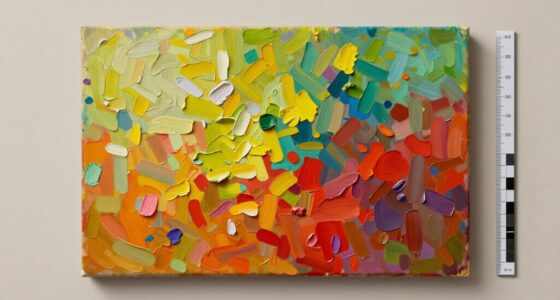
Diversity and inclusion in the art market help you see a wider range of stories, voices, and perspectives, enriching the cultural landscape. By supporting underrepresented artists and breaking down systemic barriers, you contribute to a more fair, innovative, and authentic art scene. This approach not only values all backgrounds but also sparks new creativity and relevance. Keep exploring how embracing these values shapes a more vibrant, equitable art community that truly reflects everyone’s experiences.
Key Takeaways
- Promoting diverse cultural narratives broadens artistic representation and enriches the overall art market.
- Supporting underrepresented artists fosters innovation and challenges traditional artistic boundaries.
- Ensuring equitable access dismantles systemic barriers related to race, gender, and socioeconomic status.
- Advocacy for inclusive practices encourages authentic expressions and fair opportunities within galleries and institutions.
- Embracing diversity enhances societal understanding and builds a more just, vibrant cultural ecosystem.
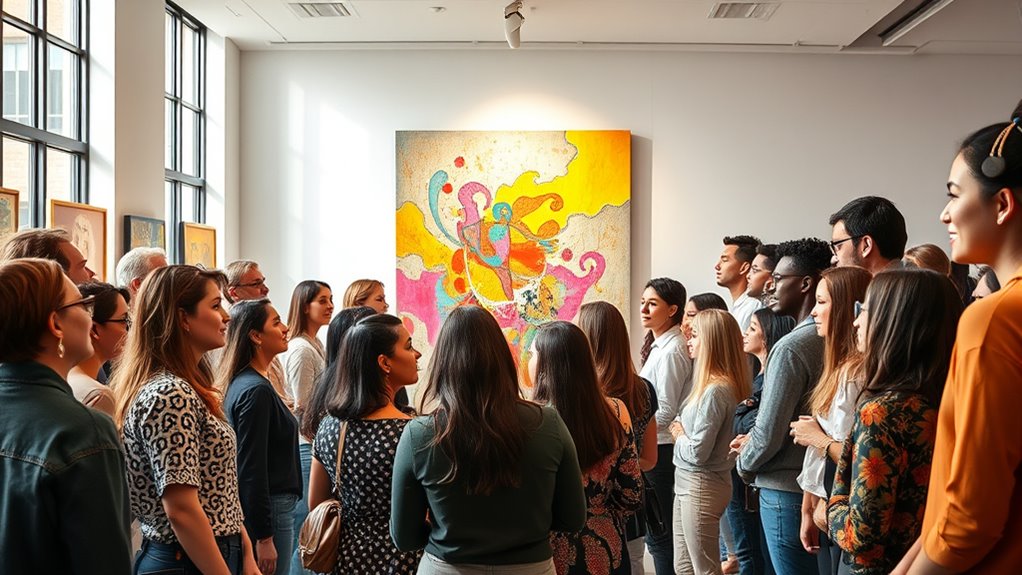
Why does diversity and inclusion matter in the art market today? Because, as someone invested in the art world, you recognize that a truly vibrant and authentic art market reflects the full spectrum of human experience. When cultural representation is prioritized, it opens doors for artists from diverse backgrounds whose voices have historically been marginalized or overlooked. This isn’t just about fairness; it’s about enriching the entire cultural landscape, giving audiences access to a broader range of stories, perspectives, and artistic expressions. When you support diversity and inclusion, you help dismantle barriers that prevent talented artists from gaining recognition simply because they belong to underrepresented groups. Equitable access becomes a critical component in this effort, ensuring that opportunities to create, exhibit, and sell art aren’t limited by race, gender, socioeconomic status, or geography. It’s about making sure that everyone has a fair shot at participating meaningfully in the art market, regardless of their background. Promoting artistic diversity also encourages innovation and the development of new styles and narratives that reflect our increasingly interconnected world.
You might wonder how this impacts the value and authenticity of art. When diverse voices are amplified, it challenges traditional narratives and expands the definition of what art can be. This leads to a more dynamic, innovative, and relatable art scene that resonates with a wider audience. You play an essential role in promoting this change by supporting galleries, institutions, and initiatives that prioritize cultural representation. By doing so, you help validate the importance of varied artistic expressions and foster an environment where all artists, regardless of their origin, can thrive. Equitable access also means breaking down systemic barriers, such as limited funding, lack of mentorship, or exclusionary networks, that often hinder artists from underrepresented communities. Your advocacy for policies and practices that level the playing field encourages a more inclusive market where talent, not privilege, determines success.
Furthermore, embracing diversity and inclusion leads to a richer cultural dialogue. It invites you to experience art that challenges your perspectives and broadens your understanding of the world. When you support equitable access, you contribute to a more just art ecosystem where everyone’s voice matters. This not only benefits individual artists but also enhances the cultural fabric of society as a whole. By championing these values, you help ensure that the art market evolves into a space where authenticity, representation, and fairness are at its core. Ultimately, fostering diversity and inclusion isn’t just a moral imperative; it’s a strategic move toward a more innovative, representative, and sustainable art world for everyone involved.
art gallery display lighting
As an affiliate, we earn on qualifying purchases.
As an affiliate, we earn on qualifying purchases.
Frequently Asked Questions
How Can Emerging Artists Access Diverse Opportunities in the Art Market?
You can access diverse opportunities in the art market by actively seeking mentorship programs and engaging in community outreach. These connections help you build your network, gain valuable insights, and showcase your work to broader audiences. Attend local events, join artist groups, and pursue mentorships that focus on diverse perspectives. By doing so, you’ll open doors to exhibitions, collaborations, and platforms that prioritize inclusivity and support emerging artists like you.
What Role Do Art Institutions Play in Promoting Inclusion?
Art institutions play a essential role in promoting inclusion by prioritizing art education and community outreach programs. You can see them creating accessible spaces, offering diverse programming, and actively engaging with underrepresented groups. By doing so, they foster a more inclusive environment where everyone has opportunities to participate, learn, and grow. Their commitment helps break down barriers, making the art world more welcoming for all, including emerging and marginalized artists.
How Has Digital Technology Impacted Diversity Initiatives in Art?
Oh, digital tech is obviously the hero of diversity initiatives, right? You’ll find your voice through digital outreach, making it easier to connect globally. Virtual galleries break down barriers, letting everyone access art regardless of location or background. Technology democratizes art, giving diverse artists a platform. So, you can celebrate inclusion from your couch, knowing that the digital revolution’s making the art world more open and accessible for everyone.
Are There Specific Regions Leading in Inclusive Art Market Practices?
You’ll notice that regions like North America and Europe lead in inclusive art market practices, but regional disparities still exist. Cultural influences shape how inclusivity is approached, with some areas embracing diversity more openly than others. You can see these differences in representation, gallery initiatives, and funding. While progress is ongoing, understanding these regional disparities helps you appreciate the unique challenges and strengths each region brings to creating a more inclusive art industry.
How Can Collectors Support Diversity and Inclusion in Their Acquisitions?
You can support diversity and inclusion in your acquisitions by intentionally seeking out artists from underrepresented backgrounds, addressing representation gaps. When you make ethical purchasing choices, you help promote fair practices and amplify diverse voices. By researching artists’ backgrounds and ensuring your purchases reflect inclusivity, you contribute to a more equitable art market. Your choices matter—each acquisition becomes a step toward closing representation gaps and fostering genuine inclusion.

Tree of Life: (Mixed Media Books, Art Books, Gifts for Artists, Artistic Inspiration Books)
As an affiliate, we earn on qualifying purchases.
As an affiliate, we earn on qualifying purchases.
Conclusion
As you explore the art market, remember that diversity is growing—recent studies show that artists from underrepresented backgrounds now make up over 30% of gallery exhibitions. This shift not only enriches the creative landscape but also offers you a broader range of perspectives to enjoy. Embracing inclusion helps foster innovation and authenticity in art. So, stay curious and open-minded—you’re part of a movement that’s shaping a more vibrant and equitable art world.

Castle Art Supplies Mixed Media Set | 120+ Art Pencil Collection – Coloured, Watercolour, Pastel, Metallic, Graphite, Charcoal | Creative Freedom for Adult Artists, Colourists | in Neat Travel Case
ULTIMATE PENCIL POWER Unique, innovative compendium of premium quality: Colored, Watercolor, Metallic, Pastel, Graphite, Charcoal, Water Soluble quality…
As an affiliate, we earn on qualifying purchases.
As an affiliate, we earn on qualifying purchases.

Ndsox 4 Pack 26" x 16" Black Trifold Poster Board Medium Size Corrugated Cardboard Science Fair Display Boards for School Projects, Business Presentations, Event Displays, and Art Exhibitions
3-Layer Corrugated Durability: Made from thickened 3-layer corrugated cardboard, this black tri-fold poster board resists bending and tearing,…
As an affiliate, we earn on qualifying purchases.
As an affiliate, we earn on qualifying purchases.