

A curator and a conservator play different but complementary roles in managing collections. As a curator, you select, interpret, and present artworks or artifacts to engage the public through storytelling and educational programs. A conservator, on the other hand, focuses on safeguarding and repairing these objects to prevent deterioration using scientific methods. Understanding these distinctions helps you appreciate how museums keep collections both accessible and protected. If you explore further, you’ll learn how their work ensures the lasting legacy of collections.
Key Takeaways
- Curators focus on selecting, interpreting, and creating narratives for collections and exhibitions.
- Conservators specialize in preserving, repairing, and maintaining the physical integrity of artifacts.
- Curators develop educational programs and engage the public, while conservators ensure objects’ longevity.
- Conservation involves scientific analysis and meticulous restoration techniques; curation emphasizes storytelling and accessibility.
- Both roles collaborate to ensure collections are preserved, understood, and accessible for future generations.
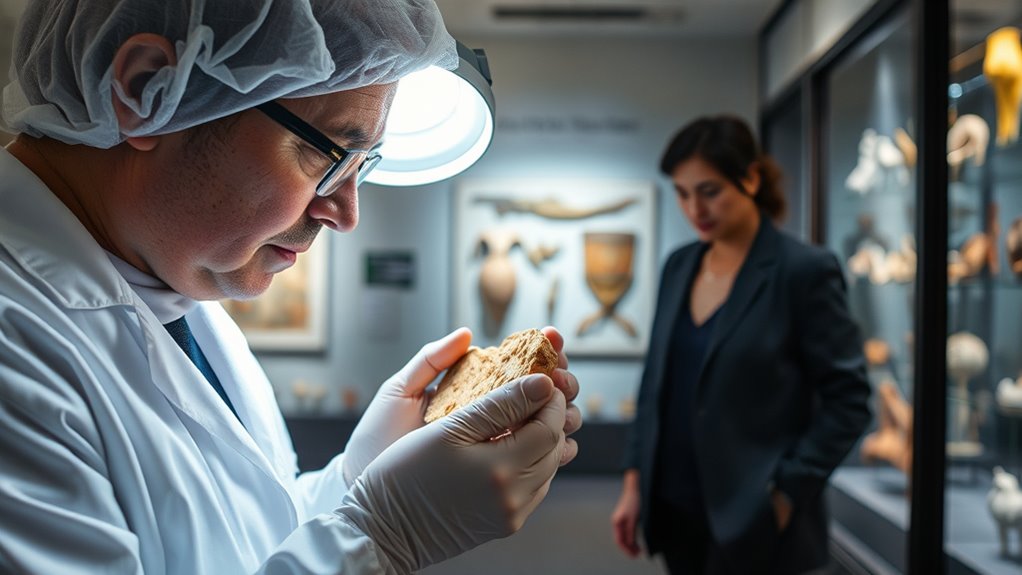
When it comes to preserving and showcasing artworks and historical objects, understanding the distinct roles of a curator and a conservator is essential. As someone interested in the world of cultural preservation, you should recognize that these professionals focus on different aspects of the art and history world. Curators are primarily responsible for selecting, interpreting, and organizing collections. They develop exhibitions, research historical contexts, and create narratives that help visitors connect with the pieces. Their work involves digital curation as well, which uses technology to document, manage, and share collections online. This approach allows broader access to collections and enhances storytelling through virtual galleries, interactive displays, and detailed digital records. Their expertise lies in understanding the significance of objects and making them accessible to the public, often through educational programs and exhibitions.
On the other hand, conservators focus on the physical integrity and long-term preservation of objects. They delve into the technical side of preservation, employing various restoration techniques to repair and stabilize artifacts. For example, a conservator might clean a fragile painting, consolidate flaking paint, or repair a broken sculpture. Their goal is to slow deterioration and ensure that objects remain as close to their original state as possible. They work meticulously, often using scientific methods to analyze materials and determine the best treatment methods. Restoring a piece requires skill, patience, and a deep understanding of materials—whether it’s determining the appropriate adhesives, consolidants, or cleaning agents to use. Unlike curators, who focus on the narrative and presentation, conservators work behind the scenes, ensuring the physical safety of the collection for future generations.
While their roles are different, curators and conservators often collaborate closely, especially during exhibitions and collection management. For instance, when a new piece arrives or an artifact needs display, the conservator assesses its condition and applies necessary restoration techniques to prepare it. The curator then plans how to present it within an exhibition, sometimes incorporating digital curation tools to enhance visitor engagement. Understanding these roles helps you appreciate how cultural institutions maintain their collections—not just by storytelling but also through meticulous preservation efforts. Whether it’s a digital archive, a restored masterpiece, or an engaging exhibition, both professionals work together to ensure that history and art are preserved, understood, and appreciated for generations to come.

ALVIN Mini Dusting Brush, 2340, 100% Horsehair and Wood Handle, Art, Drafting, and Architecture Cleaning Tool, Great for Students, Hobbyists, and Professionals – 10 Inches
High-Quality Material – The brush is made from soft, sterilized 100% horsehair in a single row of tufts…
As an affiliate, we earn on qualifying purchases.
As an affiliate, we earn on qualifying purchases.
Frequently Asked Questions
How Do I Become a Professional Curator or Conservator?
To become a professional curator or conservator, start by earning a relevant degree in art history, museology, or conservation. Gain experience through internships involving art handling and archival management. Build your skills by working with collections, learning preservation techniques, and understanding exhibit planning. Networking with professionals and staying updated on industry standards will also help. With dedication, you can develop the expertise needed to excel in managing and preserving art collections.
What Skills Are Essential for Each Role?
You need specialized training to excel in each role. For a curator, focus on skills like collection management, research, and exhibit design. Conservators require expertise in preservation techniques, object stabilization, and environmental control. Both roles demand attention to detail and strong communication. By developing these skills, you’ll effectively maintain and showcase valuable collections, ensuring their longevity and accessibility for future generations.
Can a Person Be Both a Curator and Conservator?
Yes, you can be both a curator and conservator, as some professionals handle dual responsibilities. However, it requires a unique skill overlap, including knowledge of collection management and preservation techniques. Balancing these roles demands versatility, strong organizational skills, and the ability to prioritize tasks. While challenging, combining both roles can deepen your understanding of collections, making you more effective in preserving and showcasing artifacts or artworks.
How Do They Collaborate on Museum Projects?
Think of museum projects as a symphony, where each role plays a crucial instrument. You, as a curator and conservator, work in harmony through collaborative workflows, sharing insights and expertise. Your interdisciplinary teamwork ensures collections are both engaging and preserved. By communicating openly, you blend storytelling with preservation, creating a seamless experience for visitors. Together, your combined efforts craft a masterpiece that respects history and captivates audiences.
What Are the Career Prospects in Each Field?
You’ll find solid career prospects in both fields, especially as museums focus on sustainability and cultural heritage management. As a curator, you can lead exhibitions, manage collections, and promote cultural awareness, while conservators preserve artifacts for future generations. Both roles demand specialized skills, and demand is rising as museums prioritize sustainability initiatives. With dedication, you can build a rewarding career, making a lasting impact on preserving history and enriching communities.
Digital Curation in the Data Age: A Multidisciplinary and International Exploration
As an affiliate, we earn on qualifying purchases.
As an affiliate, we earn on qualifying purchases.
Conclusion
Now that you see the difference, think of the curator as the passionate storyteller, bringing art to life for audiences, while the conservator acts as the guardian, protecting that story for generations. One ignites curiosity, the other preserves it. Together, they guarantee your favorite works aren’t just displayed today but cherished tomorrow. So, whether you’re admiring a museum piece or learning about its history, remember: both roles are essential, each with a unique, indispensable purpose.

Le Crayon a Gratter Conservator Cleaning Restoration Pencils for Coins and Artifacts – 4 Steel Wool Brush Pencil Set
Ink color: Multicolor
As an affiliate, we earn on qualifying purchases.
As an affiliate, we earn on qualifying purchases.

Solvent Gels for the Cleaning of Works of Art: The Residue Question (Research in Conservation)
Used Book in Good Condition
As an affiliate, we earn on qualifying purchases.
As an affiliate, we earn on qualifying purchases.