
TL;DR

Get art and craft supplies delivered free with Prime
- Fast, free delivery on millions of items
- Prime Video, Amazon Music and more included
- Member-only deals all year
Delacroix’s painting ‘Entry of the Crusaders into Constantinople’ has been restored after years of conservation. The work’s colors and details are now visible, revealing its complex depiction of a historical event. The restoration enhances understanding of Delacroix’s mastery and the painting’s significance.
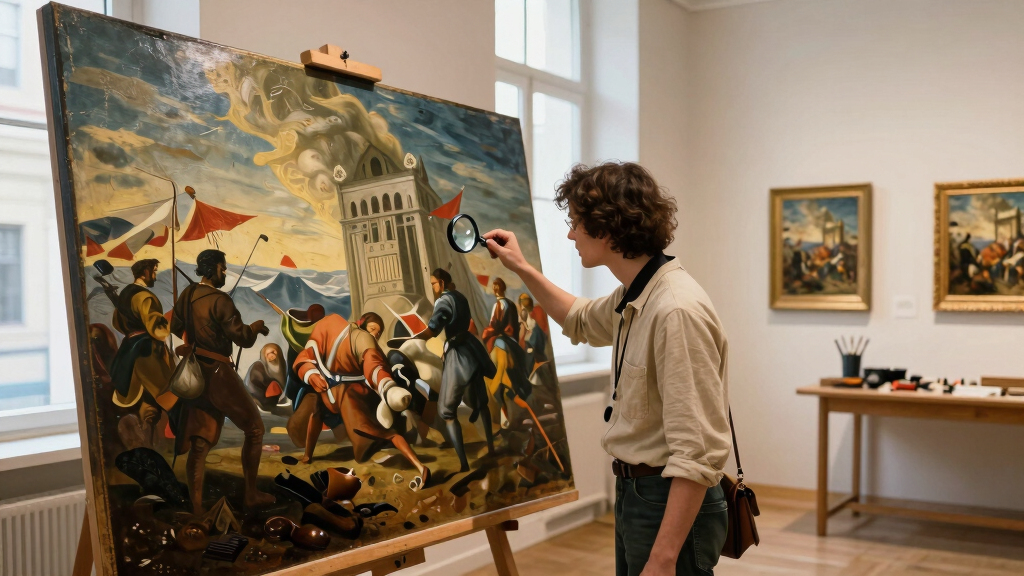
The Louvre has finished restoring Eugène Delacroix’s ‘Entry of the Crusaders into Constantinople,’ returning the painting to its original visual brilliance after years of deterioration. The work, a major piece by Delacroix, is now fully visible in its intended chromatic effects, allowing viewers to better appreciate its historical and artistic significance.
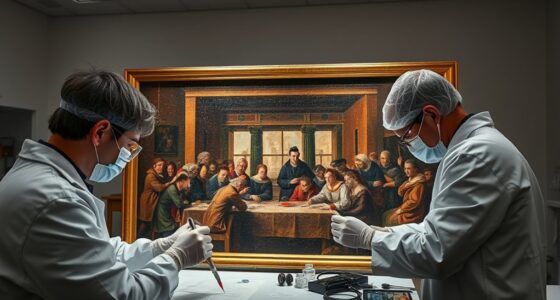
The conservation process, conducted between May 2025 and April 2026, involved removing yellowed varnish, reinforcing the canvas structure, and applying a new transparent varnish. Scientific imaging revealed that Delacroix’s original technique included detailed depictions of violence, suffering, and vivid coloration, which had been obscured by aging varnish. The restoration uncovered the artist’s use of chromatic effects, such as flochetage, to create vibrant flesh tones and dynamic movement in the scene.
The painting, created in 1840 and acquired by the Louvre in 1881, depicts the sack of Constantinople in 1204 during the Fourth Crusade. It was commissioned by King Louis-Philippe I and has been displayed at the Paris Salon and Versailles. Over the years, its varnish darkened, diminishing the impact of Delacroix’s color palette. The recent conservation work has restored these colors, revealing the complex details of the composition, including the suffering of enslaved women and the terrified horses.
Why It Matters
The restoration enhances understanding of Delacroix’s mastery in history painting and provides a clearer view of a pivotal moment in medieval history. It also emphasizes the importance of preserving cultural heritage, allowing current and future audiences to experience the work as originally intended. The improved visibility of the painting’s details offers new insights into the artist’s techniques and the violent, chaotic scene he depicted, making it a more powerful historical and artistic statement.
As an affiliate, we earn on qualifying purchases.
Background
Delacroix’s ‘Entry of the Crusaders into Constantinople’ was painted during the artist’s height and reflects his interest in dramatic, violent historical scenes. It was commissioned for Versailles and exhibited at the Paris Salon before being transferred to the Louvre. Over nearly a century, aging varnish and previous restorations obscured its original brilliance. The recent conservation campaign, supported by Ms. Isabelle Ealet-Corbani, aimed to reverse this deterioration and restore the work’s original visual impact.
“The detailed imaging revealed how Delacroix meticulously depicted violence and suffering, which had been hidden beneath layers of varnish.”
— an anonymous researcher
“Restoring the colors has allowed us to see the vibrant palette Delacroix used to evoke the chaos and brutality of the sack of Constantinople.”
— an anonymous researcher
As an affiliate, we earn on qualifying purchases.
What Remains Unclear
While the conservation has restored much of the original appearance, some details—such as the full extent of Delacroix’s initial color palette—remain subject to further scientific analysis. It is also unclear how much the recent restoration will influence scholarly interpretations of the painting’s historical and artistic significance.
professional art conservation tools
As an affiliate, we earn on qualifying purchases.
As an affiliate, we earn on qualifying purchases.
What’s Next
The Louvre plans to document the conservation process in detail and may organize exhibitions or publications to showcase the restored work. Further studies may explore Delacroix’s techniques and the historical scene depicted, deepening understanding of the artist’s approach and the event’s significance.
As an affiliate, we earn on qualifying purchases.
Key Questions
What was the main goal of the conservation process?
The primary goal was to remove aged varnish and restore the painting’s original colors and details, revealing Delacroix’s intended chromatic effects and enhancing visual clarity.
How does the restoration change the way we see the painting?
The restoration uncovers brighter, more vivid colors and details that had been obscured, allowing viewers to better appreciate the scene’s violence and movement as originally depicted by Delacroix.
Will the painting be displayed publicly after restoration?
Yes, the Louvre plans to display the restored ‘Entry of the Crusaders into Constantinople’ in its galleries, likely in conjunction with exhibitions highlighting the conservation process and Delacroix’s work.
Source: Hacker News
Evergreen bestsellers Picks
bestsellers
As an affiliate, we earn on qualifying purchases.