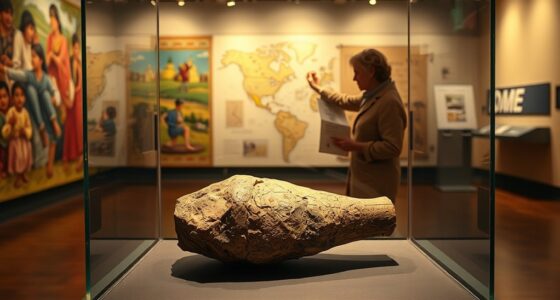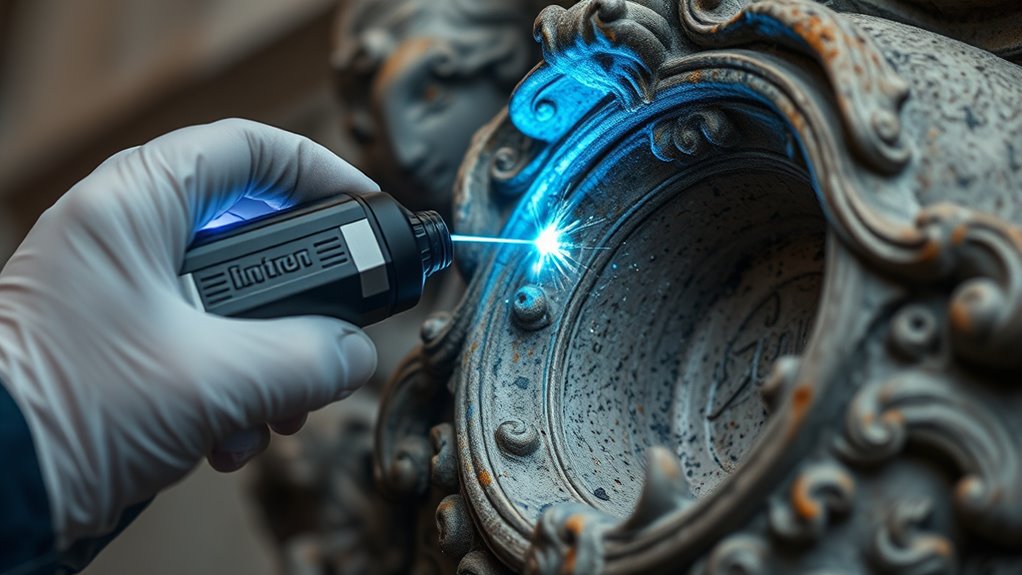

Laser cleaning offers a precise, eco-friendly way to restore artifacts without risking damage to delicate surfaces. It effectively removes dirt, corrosion, and contaminants while preserving the original materials and details. This method is versatile, safe for various materials, and enhances efficiency compared to traditional techniques. Its environmentally conscious approach reduces chemical waste and physical contact, ensuring ideal preservation. Keep exploring to discover how laser cleaning can revolutionize conservation efforts and protect our cultural heritage.

Get art and craft supplies delivered free — and shop member deals
- Fast, free delivery on millions of items
- Access to Prime Big Deal Days deals on October 6–7
- Prime Video, Amazon Music and more included
Key Takeaways
- Laser cleaning offers precise, non-invasive removal of dirt, corrosion, and contaminants from cultural artifacts.
- It preserves original materials and details, maintaining the authenticity and historical integrity of artifacts.
- The process is environmentally friendly, producing no chemicals or hazardous waste.
- Suitable for diverse materials, laser cleaning ensures efficient, customizable conservation solutions.
- It enhances safety for conservators by reducing physical contact and minimizing damage risks.
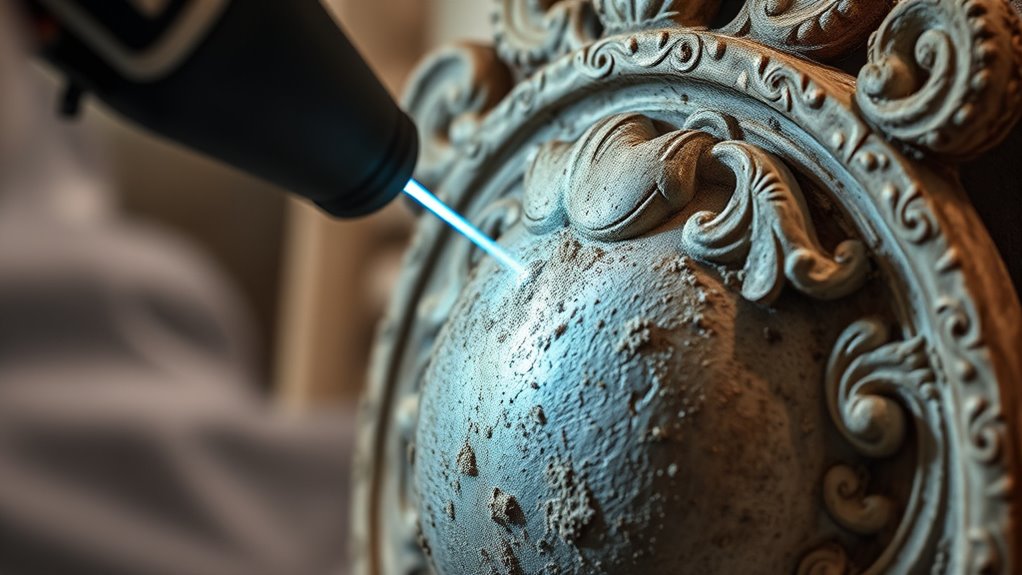
Have you ever wondered how modern technology is revolutionizing the way we preserve historical artifacts? Laser cleaning is at the forefront of this transformation, offering precise and effective methods to restore priceless objects while maintaining their original integrity. Unlike traditional cleaning techniques, laser technology allows you to target specific areas with pinpoint accuracy, making certain that you don’t accidentally damage delicate surfaces. This precision plays an essential role in preserving the historical accuracy of artifacts, as it minimizes the risk of removing or altering original materials. When you opt for laser cleaning, you’re choosing a method that respects the authenticity of the piece, helping to keep its story intact for future generations.
Laser cleaning precisely preserves artifacts, ensuring their integrity and authenticity for future generations.
Moreover, laser cleaning greatly reduces the environmental impact compared to conventional methods that often involve chemicals or abrasive tools. Traditional cleaning processes can produce hazardous waste, pose health risks to conservators, and require extensive disposal procedures. In contrast, laser systems generate no chemicals or residues, making the process cleaner and safer for both the environment and the operators. This environmentally friendly approach aligns with sustainable practices, allowing you to restore artifacts without contributing to pollution or waste. As awareness of ecological concerns grows, laser cleaning presents a responsible choice for conservation efforts, balancing preservation needs with environmental stewardship.
The technology also offers advantages in terms of efficiency. Laser cleaning can often be completed more quickly than manual methods, reducing the time artifacts spend in restoration. This efficiency not only saves money but also minimizes the exposure of artifacts to potential environmental hazards during lengthy cleaning processes. When you use laser cleaning, you gain the ability to remove dirt, corrosion, and other surface contaminants with minimal physical contact, which further preserves the artifact’s original condition. This non-invasive approach ensures that you do not compromise the artifact’s stability, especially important for fragile or historically significant objects.
Additionally, laser cleaning provides versatility across different materials and surfaces, making it suitable for a wide range of artifacts—from metal sculptures and stone monuments to delicate manuscripts. Its adaptability means you can tailor the process to specific conservation needs without risking damage. As technology advances, laser systems are becoming more sophisticated, allowing you to achieve even greater control and precision in your restoration work. In doing so, you not only protect the artifact’s historical value but also contribute to sustainable conservation practices that respect both cultural heritage and the environment.
Furthermore, understanding the precise nature of laser cleaning helps ensure that artifacts are preserved accurately without unintended alterations. In essence, laser cleaning offers a compelling combination of accuracy, safety, and environmental responsibility. It empowers you to preserve the authenticity of historical artifacts while reducing your ecological footprint. As you embrace this innovative technology, you help ensure that treasures of the past are maintained with integrity, safeguarding their stories for generations to come.
laser cleaning machine for artifacts
As an affiliate, we earn on qualifying purchases.
As an affiliate, we earn on qualifying purchases.
Frequently Asked Questions
Is Laser Cleaning Suitable for Delicate or Fragile Artifacts?
Yes, laser cleaning is suitable for delicate artifacts and fragile materials. It offers precise control, allowing you to remove dirt, corrosion, or paint without damaging sensitive surfaces. You can target only the unwanted layers, minimizing physical contact and reducing risk. This non-invasive method is ideal if you’re working with fragile artifacts, as it preserves their integrity while effectively cleaning, making it a safe choice for delicate conservation projects.
How Does Laser Cleaning Compare to Traditional Cleaning Methods?
When comparing laser cleaning to traditional methods, you find laser cleaning is more precise, reducing chemical impact and environmental effects. It’s faster, safer, and leaves no residue, unlike abrasive or chemical cleaners that can damage delicate surfaces. Laser technology targets dirt and grime specifically, preserving artifacts’ integrity. So, you benefit from a cleaner, greener process that minimizes risks and maximizes preservation, making it a superior choice for conservation needs.
Are There Any Health and Safety Concerns With Laser Cleaning?
You should know that laser cleaning involves specific health and safety concerns, mainly related to laser safety. You must follow strict health protocols, like wearing protective eyewear and ensuring proper ventilation, to prevent eye injuries and inhalation of fine particles. It is crucial to operate the laser equipment trained and certified, as improper use can cause skin burns or damage to surrounding materials. Always prioritize safety measures to protect yourself and others during the process.
What Types of Materials Can Be Safely Cleaned With Lasers?
You can safely clean a variety of materials with lasers, but it’s essential to consider material compatibility and surface preparation. Laser cleaning works well on metals, stone, ceramics, and certain plastics, provided the surface is properly prepared to avoid damage. Always assess the material’s properties first, adjusting laser settings accordingly. Proper surface preparation ensures effective cleaning while maintaining the integrity of delicate or sensitive surfaces.
What Is the Typical Cost and Time Required for Laser Cleaning Projects?
You can expect the cost estimation for laser cleaning projects to vary, typically ranging from a few hundred to several thousand dollars, depending on size and complexity. Project duration usually spans from a few hours to several days. Factors like material type, surface area, and level of contamination influence both cost and time. Planning ahead ensures you allocate enough resources for a smooth process and peak results.
eco-friendly laser surface cleaner
As an affiliate, we earn on qualifying purchases.
As an affiliate, we earn on qualifying purchases.
Conclusion
In summary, laser cleaning offers a powerful, precise, and preservative solution for conservation and restoration. By balancing brilliance with care, you can confidently combat corrosion, grime, and grime’s grip without damage. Embrace this innovative approach to liberate artifacts from their layers of grime, giving them new life and longevity. With laser technology leading the way, you preserve the past while proudly protecting the present’s priceless pieces.
professional laser cleaning system
As an affiliate, we earn on qualifying purchases.
As an affiliate, we earn on qualifying purchases.
As an affiliate, we earn on qualifying purchases.
Halloween Picks
halloween
As an affiliate, we earn on qualifying purchases.