UV light is a hidden threat many home galleries overlook, yet it silently causes your artwork to fade and discolor over time. It breaks down pigments and dyes, accelerating damage even when it’s not immediately visible. Sunlight through windows and artificial lights like LEDs or incandescent bulbs all contribute to this risk. Protecting your art with UV-blocking glass, window films, and careful light management can preserve its vibrancy. Keep exploring to learn more about safeguarding your collection.
Key Takeaways
- UV light causes invisible chemical damage in pigments, leading to gradual fading of artwork over time.
- Sunlight through windows and artificial UV-emitting bulbs are common but overlooked sources of artwork deterioration.
- Many home galleries underestimate UV’s role, focusing only on visible light, which still contributes to fading.
- Proper UV protection, like UV-filtering glass and window films, is essential but often neglected in home settings.
- Regular monitoring of light levels and using protective measures can significantly extend artwork vibrancy and lifespan.
Why UV Light Poses a Hidden Threat to Your Artwork?

UV light silently damages your artwork by breaking down the chemical bonds in pigments and dyes. This invisible process accelerates deterioration, making your pieces fade over time. Art conservation experts recognize UV exposure as a major threat, even if the damage isn’t immediately visible. To protect your collection, light filtration becomes essential. Using UV-filtering glass or acrylic can markedly reduce harmful rays reaching your artwork. These filters act as a barrier, blocking out the ultraviolet light that causes chemical reactions leading to fading. Without proper light filtration, your artwork remains vulnerable to slow but relentless damage. Recognizing UV damage as an invisible yet significant risk allows collectors to implement effective protective measures early on, especially since UV exposure can be compounded by lighting conditions that are often overlooked. Additionally, understanding the chemical breakdown process involved in fading can help you choose the most effective preservation strategies. Incorporating UV protection techniques into your display setup is crucial for long-term preservation, as understanding light exposure patterns can help optimize conservation efforts.
How Does UV Light Accelerate Fading and Damage Colors?
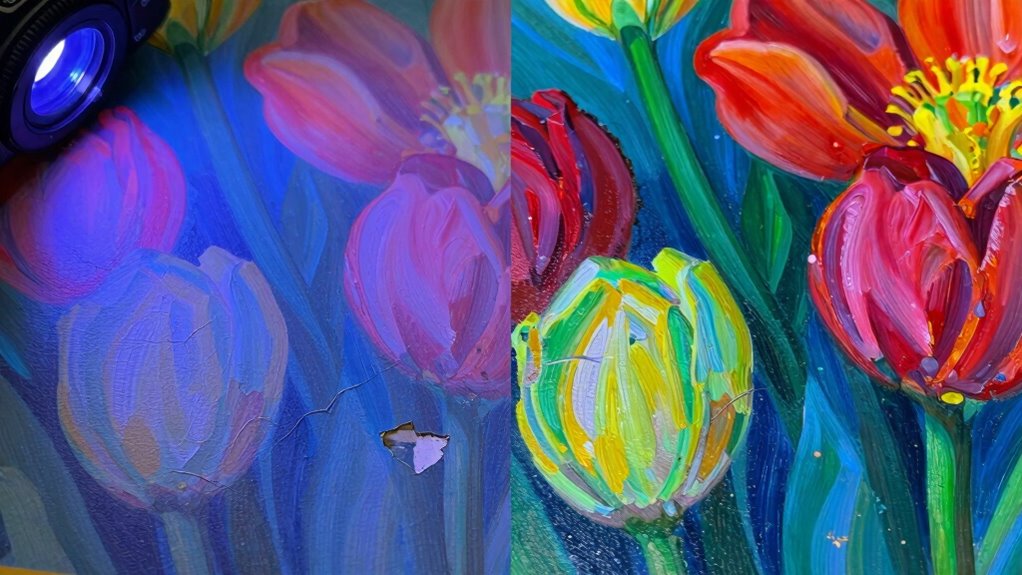
When ultraviolet rays penetrate your artwork, they trigger chemical reactions that break down pigments and dyes. These reactions weaken pigment stability, leading to fading and discoloration over time. Art material properties, such as how pigments are formulated, influence their vulnerability—some fade faster than others. To illustrate, consider the table below:
| Art Material Property | Effect on UV Damage | Example |
|---|---|---|
| Pigment Stability | Higher stability resists fading | Ultramarine blue |
| Coating Layers | Thicker coatings block UV | Varnish |
| Light Absorption | Reflects or absorbs UV light | Matte vs. glossy finishes |
Understanding these factors helps you protect your collection from accelerated fading caused by UV exposure. Implementing Proper preservation techniques can further mitigate damage and extend the lifespan of your artwork. Additionally, UV-filtering glass can be employed to reduce light penetration and safeguard your pieces. Recognizing the role of art material properties in UV sensitivity allows collectors to choose more resilient options and apply appropriate protective measures. Incorporating UV-protective coatings is another effective method to shield artwork from harmful rays and preserve its original appearance. Regularly monitoring UV exposure levels in your display environment is crucial for maintaining the long-term health of your collection.
Where Does UV Light Come From in Your Home Gallery?
Ever wonder where the UV light that damages your artwork originates inside your home? It mainly comes from ambient light sources like sunlight filtering through windows, as well as artificial lighting such as fluorescent and incandescent bulbs. The art material composition also plays a role; some materials, like certain paints and papers, are more sensitive to UV exposure. Even indirect light can cause damage over time. You might not notice UV rays, but they’re present in many common light sources that emit a small but persistent amount of ultraviolet radiation. Understanding where UV comes from helps you recognize that it’s not just sunlight during the day, but also the everyday lighting in your home gallery that contributes to fading and deterioration. Additionally, UV radiation levels can vary depending on the type of bulbs used and window treatments, influencing the extent of artwork fading. Light exposure duration is another important factor that affects how rapidly your artwork may fade over time. Furthermore, light source characteristics, such as spectral output, can significantly impact the rate of fading and damage to sensitive materials.
Why Do Many Homeowners Overlook UV Damage to Their Art?
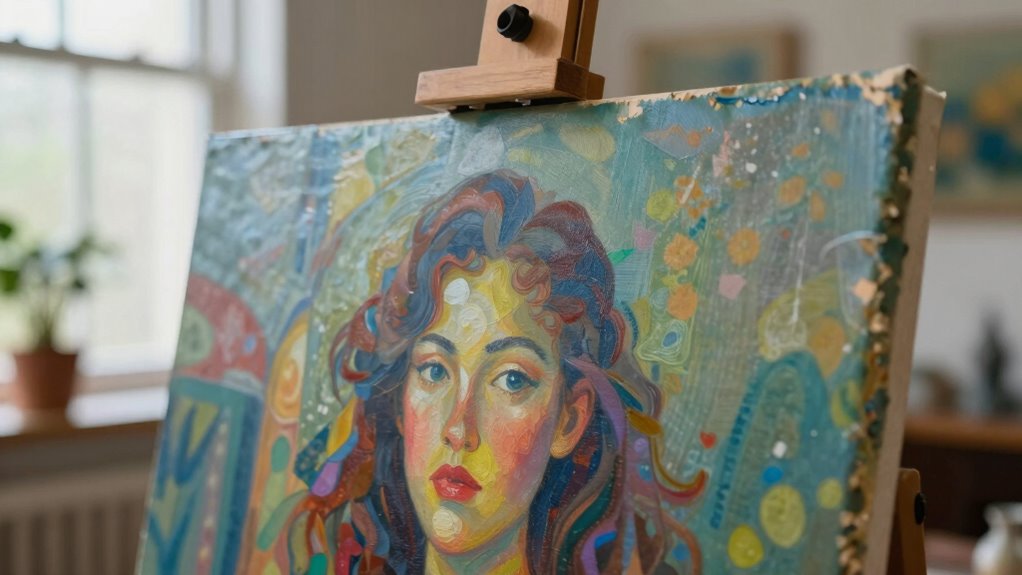
Many homeowners don’t realize how much their everyday lighting can harm artwork. UV exposure from common light sources, like lamps and windows, often goes unnoticed as a risk. Because UV rays are invisible and don’t produce heat, people assume their lighting is safe. They overlook that prolonged UV exposure accelerates paint deterioration, causing colors to fade and surface damage over time. This process is often gradual and unnoticed, making it easier to dismiss as insignificant. Additionally, homeowners may lack awareness of UV’s harmful effects on art or believe that regular lighting poses little threat. They may also be unaware of fabric technology advancements, such as UV-protective coatings, that can mitigate damage. Incorporating UV-filtering window films or specialized light bulbs can significantly reduce UV exposure. Moreover, understanding UV radiation effects can encourage more proactive protection measures. Recognizing the long-term risks of UV damage can motivate homeowners to implement protective strategies before irreversible harm occurs. As a result, they fail to take steps to protect their artwork, risking significant long-term damage without realizing it.
What Are the Best Ways to Protect Your Artwork From UV Light?
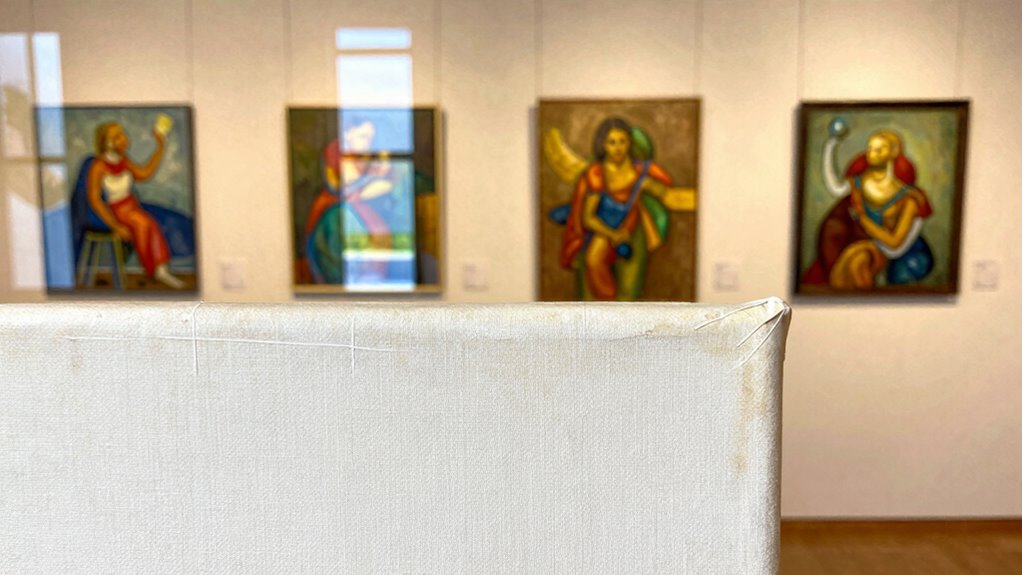
Protecting your artwork from UV light involves taking deliberate steps to block or minimize exposure. You can enhance UV protection through proper display techniques and materials. Use UV-filtering glass or acrylic when framing to shield your art, and consider UV-blocking window films or shades to prevent sunlight from reaching your pieces. Placement matters—avoid direct sunlight and position artworks in areas with limited natural light. Regularly monitor and clean your display environment to prevent dust and damage. Being aware of UV light effects helps you understand the importance of proper protection strategies and ensures long-term preservation. Additionally, using UV-protective coatings on the surface of artworks can provide an extra layer of defense against harmful rays. Incorporating proper storage methods when not on display can further safeguard your art from potential UV damage. Here’s a quick visualization:
| Method | Impact on Artwork Preservation |
|---|---|
| UV-filtering glass | Reduces UV damage, prolongs color vibrancy |
| Window shades or films | Blocks harmful UV rays from entering |
| Strategic placement | Limits exposure, maintains integrity |
Implementing these steps ensures your art stays vibrant and protected from UV damage. Understanding UV effects can help you make more informed choices about display and protection.
How Do You Choose Lighting and Window Treatments for Art Preservation?

When selecting lighting and window treatments, you need to take into account the light’s intensity and how long your artwork is exposed. You have options like UV-filtering window coverings and specialized art lighting techniques to protect your pieces. By balancing these factors, you can help preserve your art for years to come.
Light Intensity and Duration
Choosing the right lighting and window treatments for art preservation depends heavily on controlling both light intensity and duration. You need to measure light levels carefully through art conservation principles, ensuring that exposure stays within safe limits. Use light measurement tools like lux meters to monitor intensity and prevent overexposure. Keep light levels low—generally below 50 lux for sensitive artworks—and avoid prolonged exposure, which accelerates fading. Adjust lighting duration by turning lights off when not needed and using timers or motion sensors to limit exposure. Consistent monitoring allows you to maintain ideal conditions, reducing the risk of damage. By managing both the brightness and how long art is illuminated, you protect your collection’s integrity and extend its lifespan.
Window Coverings Options
Selecting the right window coverings is essential for controlling light exposure and preserving your artwork. UV protection is a key factor, as sunlight can cause fading and deterioration over time. Consider using window treatments like UV-filtering blinds, shades, or curtains designed specifically to block harmful rays. These treatments can be easily adjusted to control the amount of light entering your space, shielding your art from direct sunlight while still allowing natural brightness. Look for window coverings labeled with UV protection features, ensuring they effectively reduce UV transmission. Proper window treatments not only help preserve your artwork but also create a more controlled environment, reducing light fluctuations that can accelerate fading. Investing in quality window coverings tailored for art preservation is a smart step to safeguard your collection.
Art-Specific Lighting Techniques
To effectively preserve your artwork, you need to carefully consider both the type of lighting and window treatments you use. Proper gallery lighting enhances visibility while protecting color integrity. Use LED lights with low UV emissions to prevent fading and maintain color preservation. Adjustable track lighting allows you to spotlight artwork without harsh glare. Window treatments should block UV rays and control natural light, reducing potential damage. Consider this guide:
| Lighting Technique | Window Treatment Focus |
|---|---|
| Use LED, UV-filtered lights | Heavy, UV-blocking curtains or blinds |
| Position lights carefully | Window films for additional UV protection |
| Dim ambient lighting | Sheer curtains to diffuse sunlight |
| Avoid direct sunlight | Motorized shades for control |
This approach balances visibility with longevity, ensuring your art stays vibrant.
How Can You Monitor Your Artwork to Catch Fading Early?

To catch fading early, you should regularly check your artwork for any signs of discoloration or damage. Using UV sensors can help monitor light exposure levels and alert you to potential risks. Incorporate routine visual inspections to catch subtle changes before they become serious issues.
Use UV Sensors
Have you considered how UV sensors can help protect your artwork from fading? These devices monitor UV levels in your gallery, giving you real-time data on light pollution that can harm your pieces. By installing UV sensors, you can detect sudden increases in UV exposure and take immediate action, like adjusting lighting or closing curtains. They’re especially useful if your space has windows or artificial lighting that emits UV rays. With accurate readings, you can prevent prolonged exposure to damaging light, preserving color and detail over time. UV sensors provide an extra layer of security, allowing you to catch potential fading issues early before they become irreversible. Investing in these sensors ensures you’re actively managing your artwork’s environment, safeguarding your collection from the silent threat of UV damage.
Regular Visual Checks
While UV sensors provide valuable data, regular visual inspections remain one of the most effective ways to catch early signs of fading. By frequently examining your artwork, you can spot subtle changes in color, tone, or texture that might indicate deterioration. Use good lighting technology—such as natural daylight or LED lighting with minimal UV output—to get a clear view without risking further damage. Incorporate principles of art conservation during these checks, handling pieces carefully and avoiding unnecessary exposure. Develop a routine schedule, inspecting your collection monthly or quarterly, and document any changes. Early detection allows you to take prompt action, such as adjusting lighting conditions or consulting professionals, to preserve your artwork’s vibrancy and longevity.
What Simple Steps Can You Take to Keep Your Art Vibrant for Years?

Keeping your artwork vibrant over the years is all about protecting it from harmful UV rays and environmental damage. Implement simple steps to preserve its beauty:
- Install UV-protective glass or acrylic in your frames to block harmful rays while allowing light to pass through.
- Use light filtration window films or curtains to reduce UV exposure without sacrificing natural illumination.
- Place your art away from direct sunlight, especially near windows or skylights, to prevent fading caused by UV light.
These measures help create a barrier against UV damage, keeping colors vivid and details sharp. Regularly check your artwork for signs of fading or discoloration, and adjust protection levels as needed. By prioritizing UV protection and light filtration, you’ll extend the life of your art and enjoy its vibrancy for years to come.
Frequently Asked Questions
Can Natural Sunlight Cause More Damage Than Artificial Lighting?
Yes, natural sunlight exposure can cause more damage than artificial lighting. Sunlight has higher UV intensity, which accelerates fading and deterioration of artwork over time. You might notice faster color loss and material breakdown when your pieces are exposed to direct sunlight. To protect your art, limit direct sunlight exposure and use UV-filtering glass or shades. Being mindful of sunlight’s impact helps preserve your gallery’s collection longer.
Are Certain Types of Artwork More Vulnerable to UV Damage?
Yes, certain artwork types are more vulnerable to UV damage. Canvas vulnerability makes oil paintings susceptible, especially if left unprotected. Paper sensitivity means prints and drawings can fade faster under UV exposure. You should be cautious with delicate pieces, like watercolor or pastel works, as they often lack UV-resistant coatings. Protect these artworks by using UV-filtering glass or acrylic, and keep them out of direct sunlight to preserve their vibrant colors.
How Often Should I Evaluate My Artwork for Uv-Related Fading?
You should evaluate your artwork for UV-related fading every six to twelve months. Regular artwork maintenance includes UV monitoring, which helps you catch early signs of damage. By checking your pieces periodically, you can identify fading or discoloration early and take steps to safeguard them. Consistent inspections ensure your artwork stays vibrant and well-preserved, minimizing long-term damage caused by exposure to harmful UV rays.
Do Uv-Protective Coatings Impact the Appearance of Artwork?
Sure, UV-protective coatings might slightly alter your artwork’s aesthetic impact, but you’re choosing preservation over perfection, right? These coatings, like tiny armor, defend your masterpiece from fading while barely changing its look. Think of them as a subtle beauty secret—protective yet unobtrusive. So, go ahead, apply UV coatings without fear; your art will thank you with vibrant colors lasting longer, even if a few art snobs notice a tiny difference.
What Are the Costs Associated With Professional UV Protection Solutions?
The cost analysis of professional UV protection solutions varies based on the size and number of artworks you want to protect. Protection expenses can range from a few hundred to several thousand dollars for high-quality coatings or specialized glass. While these costs might seem significant, investing in UV protection helps prevent fading and damage, saving you money long-term by maintaining your artwork’s value and appearance.
Conclusion
To truly preserve your cherished artwork, you might consider gently adjusting your environment and staying attentive to subtle changes over time. While the world’s bright lights can be alluring, a quiet patience and mindful choices will help keep your gallery’s colors whispering their stories for years to come. Remember, a little care now can gracefully prolong the beauty you treasure, allowing your art to continue inspiring with quiet elegance.