
TL;DR

Get art and craft supplies delivered free with Prime
- Fast, free delivery on millions of items
- Prime Video, Amazon Music and more included
- Member-only deals all year
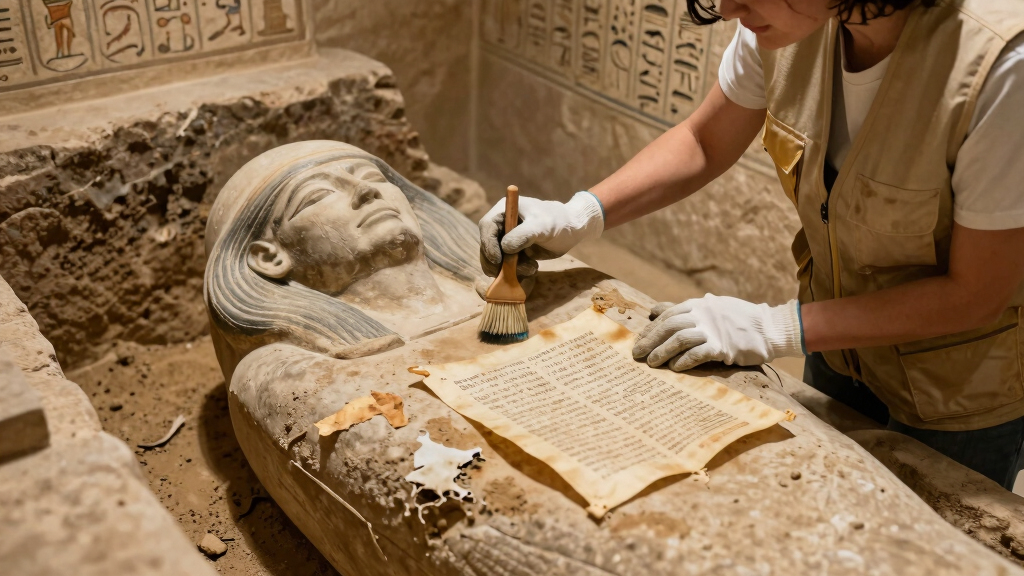
Archaeologists have discovered a 1,600-year-old Egyptian mummy buried with pages from Homer’s Iliad. This find reveals the enduring cultural significance of Greek literature in Egypt long after classical Greece.
Archaeologists have confirmed the discovery of a 1,600-year-old Egyptian mummy buried with fragments of Homer’s Iliad, marking the first known instance of Greek literary pages found with an Egyptian burial from this period. The find underscores the cultural influence and reverence for Greek literature in Egypt long after the classical era, making it a significant development in understanding ancient cross-cultural interactions.
The discovery was made in the Egyptian town of Al Bahnasaa, where a Roman-era tomb was excavated. The tomb contained a well-preserved mummy alongside fragments of papyrus that include lines from Book 2 of Homer’s Iliad, specifically the ‘catalogue of ships’ segment. Dating from the 4th or 5th century AD, this period follows the reign of Cleopatra and is notable for the presence of Greek cultural artifacts in Egypt.
According to archaeologists involved in the excavation, the papyrus fragments are believed to have been part of a Greek literary collection. The presence of Homer’s Iliad in this context suggests that Greek texts served as cultural symbols or ‘passports,’ possibly used to signify social status or spiritual protection in the afterlife. Greek literature was highly valued, with some Egyptian physicians even prescribing pages of Homer for health purposes, such as fever relief, in antiquity.
Why It Matters
This find highlights the enduring influence of Greek culture in Egypt well into the late antique period. The presence of Homer’s Iliad with an Egyptian mummy suggests that Greek literary works held not only cultural but possibly spiritual importance, serving as symbols of identity or protection in the afterlife. It also provides new insights into the cultural exchanges between Greece and Egypt during the Roman Empire, illustrating how Greek texts remained relevant in Egypt centuries after Greece’s classical height.
ancient Egyptian papyrus replica
As an affiliate, we earn on qualifying purchases.
As an affiliate, we earn on qualifying purchases.
Background
During the Roman period, Egypt was a melting pot of cultures, with Greek influence persisting long after the decline of classical Greece. Greek became the language of administration and culture, and Greek literature was widely circulated among the elite. Previous discoveries include Greek texts in Egyptian tombs, but this is the first confirmed instance of Homer’s Iliad found with an Egyptian mummy, dating from this later era. The find adds a new dimension to our understanding of cultural continuity and the significance of Greek literature in Egypt’s history.
“The presence of Homer’s Iliad with this mummy underscores the deep respect and cultural integration of Greek literature in Egypt during the late antique period.”
— Dr. Nadia El-Sayed, lead archaeologist
“This discovery suggests that Homer’s work was not just literary but also held spiritual or protective value for Egyptians in the Roman era.”
— Professor Marcus Lyons, classical historian
Homer's Iliad ancient manuscript replica
As an affiliate, we earn on qualifying purchases.
As an affiliate, we earn on qualifying purchases.
What Remains Unclear
It is still unclear whether the pages were used solely as cultural symbols or had specific ritual functions. The exact provenance of the papyrus within Egyptian burial customs remains under investigation, and further analysis is needed to determine whether other similar finds exist.
As an affiliate, we earn on qualifying purchases.
What’s Next
Further analysis of the papyrus fragments will be conducted to confirm their textual content and origin. Additional excavations in the region may uncover more Greek texts or artifacts, shedding light on the extent of Greek influence in Egypt during this period. Researchers also plan to study the burial context to understand the role of Greek texts in Egyptian spiritual practices.
Greek literature historical book
As an affiliate, we earn on qualifying purchases.
As an affiliate, we earn on qualifying purchases.
Key Questions
How old is the mummy and the papyrus fragments?
The mummy and papyrus fragments date from approximately the 4th to 5th century AD, about 1,600 years old.
What specific part of Homer’s Iliad was found?
Fragments include lines from Book 2, the ‘catalogue of ships,’ which lists the vessels sent to Troy.
Why would Homer’s Iliad be buried with an Egyptian mummy?
It is believed that Greek texts like the Iliad served as cultural symbols or spiritual protectors, possibly functioning as a ‘passport’ to the afterlife or symbols of status.
Does this discovery change our understanding of Greek influence in Egypt?
Yes, it provides new evidence that Greek literature remained culturally significant in Egypt long after the classical period, especially during the Roman era.
Halloween Picks
halloween
As an affiliate, we earn on qualifying purchases.