
TL;DR

Get art and craft supplies delivered free with Prime
- Fast, free delivery on millions of items
- Prime Video, Amazon Music and more included
- Member-only deals all year
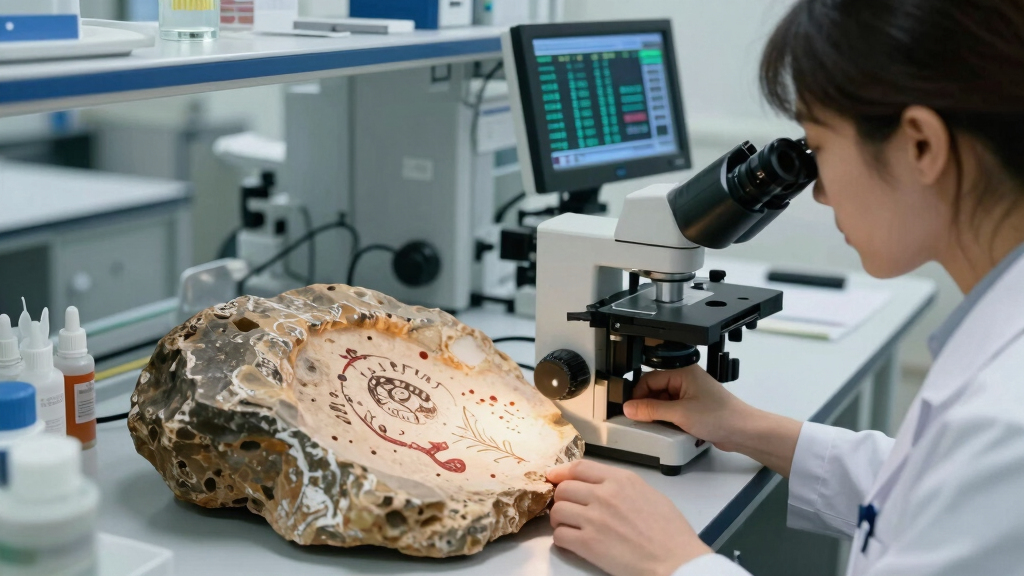
Scientists have discovered that human DNA can survive within pigment samples from Paleolithic cave paintings, some dating back over 10,000 years. This breakthrough offers a new method to identify ancient artists and learn about early human communities.
Scientists have confirmed that human DNA can survive within pigments used in Paleolithic cave paintings for over 10,000 years, marking a significant breakthrough in archaeogenetics. This discovery, made through analysis of samples from caves in Spain and Portugal, opens new possibilities for identifying the individuals behind prehistoric artwork and understanding ancient human societies.
The study, published in Nature Communications, examined 24 pigment samples from 11 caves across Spain and Portugal, including renowned sites like the Cave of Altamira and Maltravieso Cave. Researchers extracted and sequenced ancient DNA from these samples, finding human DNA in several cases, including hand stencils and figurative paintings.
While only a limited number of samples contained detectable human DNA, scientists note that the diversity of rock art techniques and contexts suggests that further research could uncover more instances of preserved human genetic material. The findings demonstrate that DNA can endure within mineral pigments for thousands of years, challenging previous assumptions about DNA degradation over time.
Implications for Identifying Ancient Artists and Societies
This breakthrough matters because it introduces a new method to potentially identify the individuals who created Paleolithic cave art, a quest that has long challenged archaeologists. By recovering human DNA directly from artwork, researchers can gain insights into the genetics, origins, and migrations of early human populations. This approach complements existing methods that rely on bones, teeth, and other remains, expanding the toolkit for studying prehistoric humans and their cultures.
Additionally, this discovery has the potential to deepen our understanding of the social and biological aspects of early human communities, revealing connections between individuals and groups that were previously inaccessible through traditional archaeological evidence.
As an affiliate, we earn on qualifying purchases.
Advances in Archaeogenetics and Paleolithic Art Research
Prior to this discovery, archaeologists primarily relied on skeletal remains, sediment samples, and faunal remains to reconstruct ancient populations. The potential to extract human DNA from cave paintings marks a significant evolution in the field of archaeogenetics. Similar efforts have been made with ancient textiles, ceramics, and other artifacts, but cave art has remained a largely untapped source of genetic material.
The research builds on recent developments in DNA analysis technology, which now allows for the recovery of genetic material from extremely degraded samples. The study’s focus on rock art from Spain and Portugal provides a proof of concept that could be extended to other regions, including South America, where iconic cave paintings like those in Cueva de las Manos contain hundreds of handprints dating back over 10,000 years.
“Retrieving molecular evidence of the past — whether of humans themselves or the lifeforms they interacted with — has been revolutionizing our understanding of everything from mass migrations to pandemics.”
— an anonymous researcher
As an affiliate, we earn on qualifying purchases.
Limitations and Future Potential of DNA in Cave Art
It is not yet clear how consistently human DNA can be recovered from cave paintings across different sites, styles, and ages. The current study found only limited samples with detectable human DNA, suggesting that preservation conditions vary significantly. Researchers caution that further work is needed to determine the full potential and limitations of this method, including whether it can reliably identify individual artists or populations.
paleolithic cave art preservation tools
As an affiliate, we earn on qualifying purchases.
As an affiliate, we earn on qualifying purchases.
Next Steps in Archaeogenetic Analysis of Prehistoric Art
Future research will focus on refining sampling techniques to improve DNA recovery rates from cave paintings. Expanding the geographic scope to include caves in South America, Africa, and Asia will test the method’s broader applicability. Scientists also aim to develop more precise genetic markers to differentiate individual artists, which could eventually lead to a better understanding of social networks and cultural transmission in prehistoric times.
DNA sequencing equipment for ancient samples
As an affiliate, we earn on qualifying purchases.
As an affiliate, we earn on qualifying purchases.
Key Questions
Can human DNA be recovered from all cave paintings?
Currently, DNA recovery is limited and depends on preservation conditions, pigment composition, and age. Not all cave paintings will yield usable DNA, but ongoing research aims to improve detection methods.
What does this discovery tell us about prehistoric artists?
If human DNA can be identified, it could reveal information about the genetic background, origins, and migration patterns of the artists, providing a personal dimension to prehistoric art.
How might this research impact archaeology?
This approach could revolutionize the study of ancient human populations by linking genetic data directly to artworks, supplementing traditional archaeological methods with biological evidence.
Are there ethical concerns with extracting DNA from cave art?
As with all genetic research, ethical considerations include respecting cultural heritage sites and ensuring that sampling does not damage or destroy valuable artifacts. Researchers follow strict protocols to minimize impact.
Source: rss
Halloween Picks
halloween
As an affiliate, we earn on qualifying purchases.