
TL;DR
Potter and East Fork founder Alex Matisse has described how the garden around his home near Asheville, North Carolina, extends into 23 acres of woodland, trails and waterways. In an interview for the Garden Diaries series, he said gardening offers a way to reconnect with the physical world while running a demanding business. His account also details native plants, seasonal experiments and features of the property; no new project or formal garden opening was announced.
Potter and East Fork founder Alex Matisse has shared how the garden around his home near Asheville, North Carolina, opens into 23 acres of woodland, trails and waterways—a landscape he says helps him reconnect with the physical world while managing a demanding business. The account appears in Garden Diaries, a series about how creatives shape and use personal gardens; it is a profile, not an announcement of a new garden project.

Get art and craft supplies delivered free with Prime
- Fast, free delivery on millions of items
- Prime Video, Amazon Music and more included
- Member-only deals all year
Matisse describes the cultivated area around his home as part of a larger, less formal landscape. Trails lead through the woods toward a river, while a creek runs through a ravine on one side of the property and a larger stream borders a long edge. He calls the garden “porous”: tended planting and gathering spaces give way to forest rather than stopping at a defined boundary. He also says the family sees wildlife including deer, raccoons and possums, and has occasionally seen a bear and a bobcat.
The garden changes with the seasons. Matisse says spring brings an intense period of clearing, planting and moving established plants as he tries to understand why some areas thrive and others do not. He describes going to the garden center after work and spending more than intended, then easing off during summer to let the planting grow. This cycle of experimentation followed by a slower season is a central part of his account.
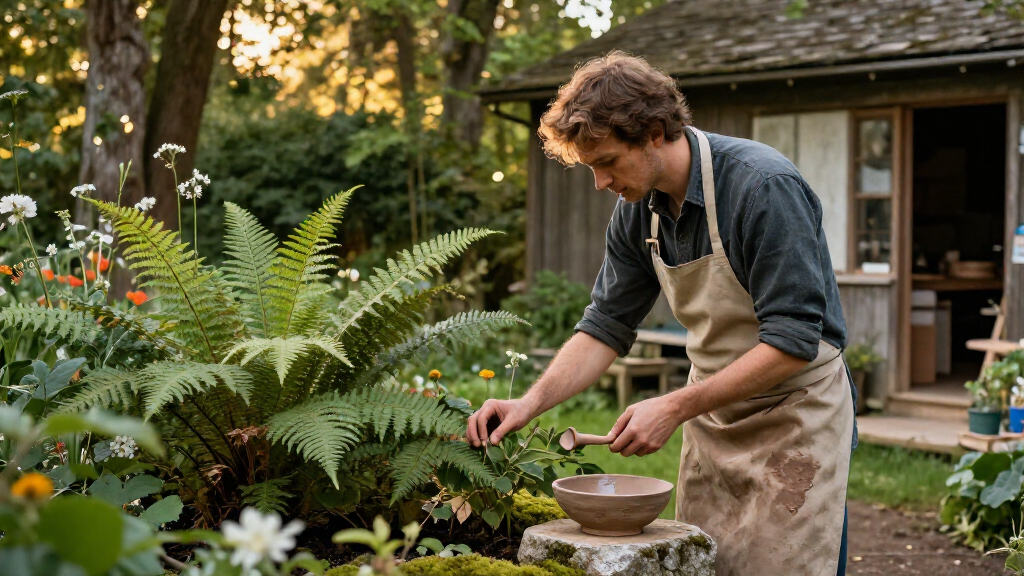
Some planting is tied to memory and place. Matisse says he has gathered native plants from the surrounding woods for a small garden near the kitchen, including ginseng, Jack-in-the-pulpit, mayapple and ferns. A large planting of sweet fern, a woody shrub rather than a true fern, reminds him of growing up in New England. He also mentions irises, roses, bee balm, rhododendrons and laurels. The source describes these as his observations about his own garden, not as universal growing advice.
A Woodland Garden Beyond the Business
Potter and East Fork founder Alex Matisse describes a home garden that opens into woodland near Asheville, North Carolina. He says gardening helps him reconnect with the physical world while running a demanding business.
A porous landscape
Tended spaces meet the surrounding woods, streams and steep ground.
- Native plants near the kitchen
- Irises, roses and bee balm
- Trails lead toward a river
- A creek and larger stream border the property
Plants tied to place
Matisse describes choices shaped by nearby woods and personal memories.
From the surrounding woods
He mentions ginseng, Jack-in-the-pulpit, mayapple and ferns.
Sweet fern
This woody shrub reminds him of growing up in New England.
A seasonal rhythm
His account moves from spring experimentation to a slower summer pace.
Clear, plant and move established plants while observing what thrives.
Ease off and enjoy the planting as it develops.
What the profile confirms
The feature shares Matisse’s personal account, not a formal garden plan.
- Garden Diaries profiles how creatives use their gardens.
- No new project, public opening or visitor access is announced.
- Plant details are observations from his own garden, not general growing advice.
A Garden Beyond the Business
Matisse’s account links a working creative life with the practical routines of caring for a landscape. He says gardening gets him using his body and connecting with the physical world, habits he can neglect while running East Fork. That makes the garden more than a collection of plants in his telling: it is a place for family time, outdoor activity and a different pace from work.
The profile also shows how a garden can be shaped by its setting rather than imposed on it. Here, planted areas meet existing woodland, steep ground and streams. Matisse’s choices include native plants he has encountered nearby as well as species that evoke childhood memories. Readers interested in gardens may find the account useful as an example of personal, site-specific gardening, though it does not offer a formal design plan or claim that the approach will suit other properties.
Popular right now

De'Longhi Rivelia Automatic Espresso Machine with Milk Frother

Ninja Prestige Smart XL Pro Cook System 10-in-1 Air Fryer and Countertop Oven, Stainless Steel, DT551

Dyson V15 Detect Cordless Stick Vacuum
As an affiliate, we earn on qualifying purchases.
From Clay to Woodland Paths
Matisse is a potter and founder of East Fork, a pottery business based in North Carolina. The source says he is descended from French artist Henri Matisse, while also describing him as having built his own career through pottery. It frames the garden as a retreat from the responsibilities of running a business, rather than as an extension of the company’s work.
The Garden Diaries series shares accounts of how creatives and designers cultivate gardens and live in them. In this installment, the focus is Matisse’s home landscape and his own comments on its planting and use. The source does not provide a date for the interview or establish that any garden changes described are new; the spring planting cycle and recent fruiting examples are reported as part of his personal account.
““The garden aids in my sanity.””
— Alex Matisse, potter and East Fork founder
What the Profile Leaves Open
The source does not give the interview’s publication date, detailed property location, garden dimensions beyond the 23-acre total, or a complete account of the garden’s design. It also does not identify a landscape designer or say whether the property is open to visitors. Matisse’s plant descriptions and growing results are personal observations; the account does not provide a planting guide, climate data or independent verification of those details.
Some seasonal references are not dated precisely. Matisse says his pawpaw trees fruited for the first time “this year” and that he harvested passionflower fruit, but the source does not specify the calendar year. It is also unclear whether the garden has changed since the interview or whether any future plans are under way.
A Garden Still Taking Shape
No follow-up event, public opening or new gardening project is announced in the source. Matisse’s description suggests the garden will continue to evolve through his seasonal routine: he expects to experiment and move plants in spring, then let the planting grow through summer. The profile offers no specific schedule for further updates.
Readers seeking more detail will need a dated, fuller version of the Garden Diaries feature or additional information from Matisse or East Fork. Until then, the confirmed development is the publication of his account of a personal woodland garden, rather than a change in the business or a newly launched public initiative.
Key Questions
Where is Alex Matisse’s garden?
The source places his home and garden in woodland near Asheville, North Carolina. It does not provide an exact address.
How large is the property?
Matisse says the property covers 23 acres. The source does not give a separate measurement for the cultivated garden area.
What does Matisse grow?
He mentions native plants including ginseng, Jack-in-the-pulpit, mayapple and ferns, as well as sweet fern, irises, roses, bee balm, laurels and rhododendrons. These are examples from his own account, not a complete plant list.
Why does Matisse say the garden matters to him?
He says gardening helps him use his body and connect with the physical world, particularly when the demands of running East Fork make it harder to keep up with ordinary routines. He also describes the property as a place for his family to spend time outdoors.
Is the garden open to the public?
The source does not say whether the property is open to visitors or whether Matisse plans to open it.
Source: homesandgardens.com