
TL;DR

Get art and craft supplies delivered free — and shop member deals
- Fast, free delivery on millions of items
- Access to Prime Big Deal Days deals on October 6–7
- Prime Video, Amazon Music and more included
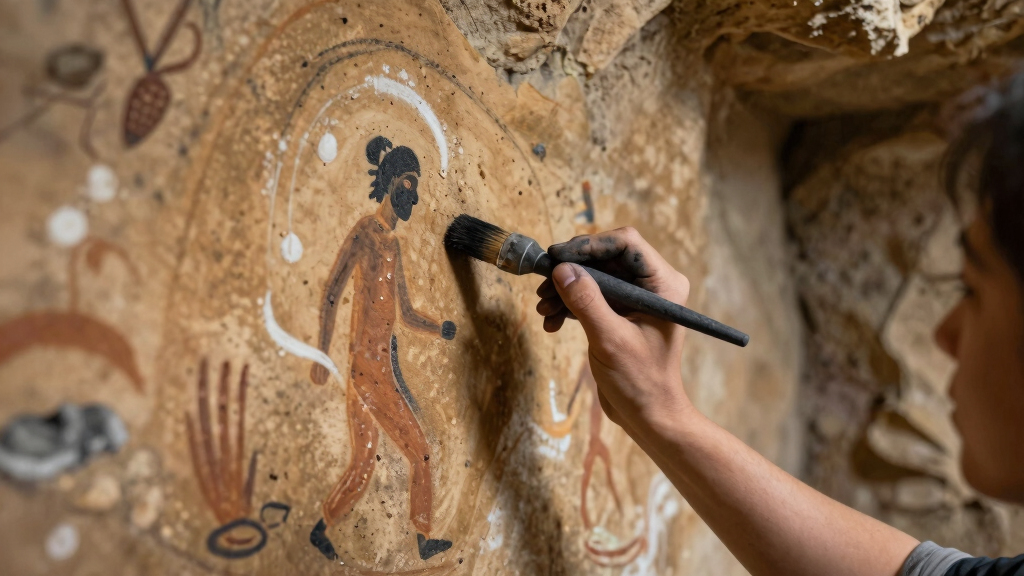
Diego Garate Maidagan and his team have discovered previously unseen cave paintings in northern Spain, shedding light on prehistoric art techniques. This ongoing research could redefine understanding of early human creativity.
Researchers led by Diego Garate Maidagan have uncovered new evidence of prehistoric cave paintings in northern Spain, revealing vibrant pigments and faint images previously hidden from view. This discovery offers fresh insights into early human artistic expression and the techniques used by Paleolithic artists. The findings are significant for understanding the extent and sophistication of prehistoric art, and they are part of ongoing investigations into Spain’s rich archaeological heritage.
Garate, a professor of prehistory and Paleolithic art at the University of Cantabria, has been exploring caves in the Basque Country, focusing on the preservation of ancient pigments and etchings. His recent expedition involved detailed examination of caves that had been previously inaccessible or overlooked, with the goal of identifying faint or hidden images that may have survived natural decay.
During the fieldwork, Garate and his team used specialized lighting and imaging techniques to reveal pigment traces and etch marks. They discovered new depictions of animals, including bison and horses, with some images dating back approximately 34,000 years. These findings support the theory that early humans created elaborate pictograms across extensive regions of western Europe, with many artworks now obscured or eroded due to natural processes.
Garate emphasized that the preserved pigments, primarily ochre and charcoal, remain remarkably vivid in certain areas, thanks to the cave’s microclimate and geological conditions. His team also conducted experiments in a nearby ‘clean’ cave, Isuntza, to better understand how pigments and images can survive over millennia, and to develop techniques for detecting faint prehistoric art.
Potential Revisions to Prehistoric Art Chronology and Techniques
The discovery of new cave paintings and preserved pigments could significantly alter current understanding of Paleolithic artistic capabilities. It suggests that early humans employed sophisticated techniques and created extensive, detailed artworks across Europe, which were previously thought to be less developed or less widespread. These findings may influence future archaeological methods, conservation efforts, and theories about early cultural expression, making Spain a key site for ongoing prehistoric research.
portable UV flashlight for cave art detection
As an affiliate, we earn on qualifying purchases.
As an affiliate, we earn on qualifying purchases.
Historical and Archaeological Background of Spain’s Cave Art
Spain’s cave paintings, especially those at Altamira, are among the most famous prehistoric artworks, dating back around 34,000 years. Historically, these caves were thought to contain only select, well-preserved images, with many other sites either lost or obscured over time. Since the 19th century, archaeologists have debated the sophistication of Paleolithic artists, initially dismissing the art as hoaxes before recognizing their genuine antiquity. Recent technological advances have enabled researchers like Garate to uncover faint images and pigments that were previously invisible, expanding the known scope of prehistoric artistic activity in the region.
“The pigments still look fresh, and there are images we haven’t seen before. It’s like uncovering a secret history of human creativity.”
— Diego Garate Maidagan
high-resolution imaging camera for archaeological sites
As an affiliate, we earn on qualifying purchases.
As an affiliate, we earn on qualifying purchases.
Uncertainties About the Extent and Preservation of Artworks
While new images and pigments have been identified, it remains unclear how widespread these artworks are across other caves in the region. The longevity of pigments and their visibility over thousands of years also pose questions about the original extent of prehistoric art and the factors influencing its preservation. Further research is needed to determine whether these findings represent isolated instances or part of a broader, interconnected artistic tradition.
art conservation and preservation tools
As an affiliate, we earn on qualifying purchases.
As an affiliate, we earn on qualifying purchases.
Future Research and Conservation Efforts in Spain’s Caves
Garate and his team plan to continue detailed surveys of caves across northern Spain, employing advanced imaging technologies such as multispectral analysis to detect faint images. They aim to develop a comprehensive catalog of prehistoric artworks, improve conservation strategies, and publish their findings to enhance global understanding of Paleolithic art. Additionally, collaborative efforts with international archaeologists are expected to expand the scope of research and preservation initiatives.
As an affiliate, we earn on qualifying purchases.
Key Questions
How old are the newly discovered cave paintings?
The paintings are believed to date back approximately 34,000 years, consistent with other Paleolithic artworks in the region.
What techniques are used to detect faint prehistoric images?
Researchers use specialized lighting, multispectral imaging, and digital enhancement to reveal pigments and etchings invisible to the naked eye.
Why are many cave paintings no longer visible?
Natural processes such as moisture, bacteria, calcite deposits, and erosion have obscured or destroyed many artworks over millennia.
What significance do these discoveries have for understanding prehistoric humans?
They suggest that early humans possessed advanced artistic skills and created widespread, detailed imagery, challenging previous assumptions about Paleolithic culture.
Source: Hacker News
Fall Picks
fall essentials
As an affiliate, we earn on qualifying purchases.