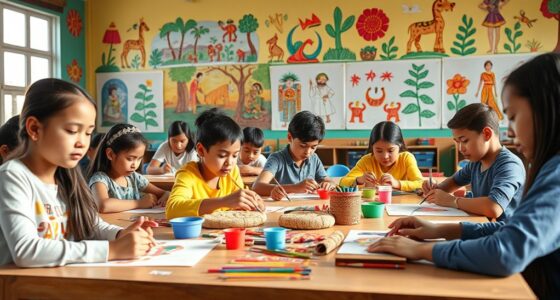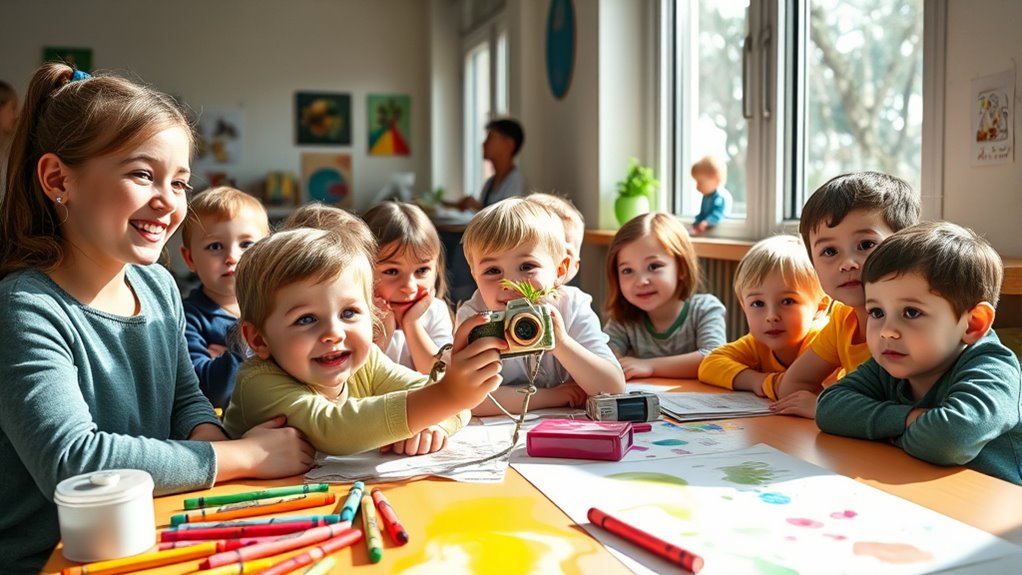

Integrating photography into early art education boosts your students’ creativity and enhances their visual literacy. You can encourage children to capture scenes that express feelings or tell stories, helping them communicate ideas visually. Using digital tools, they learn technical skills like editing and cropping while developing critical thinking. This approach also fosters collaboration as students share and discuss their images, building a strong foundation for artistic and media literacy. Keep exploring to discover effective ways to implement these exciting techniques.
Key Takeaways
- Incorporate photography activities to foster creativity, visual literacy, and storytelling skills in young learners.
- Use digital tools for editing and enhancing images to develop technical and digital literacy.
- Encourage children to express feelings and experiences through visual storytelling.
- Facilitate peer sharing and discussions to promote critical analysis and diverse perspectives.
- Align photography projects with early art education goals to strengthen understanding of imagery and visual communication.
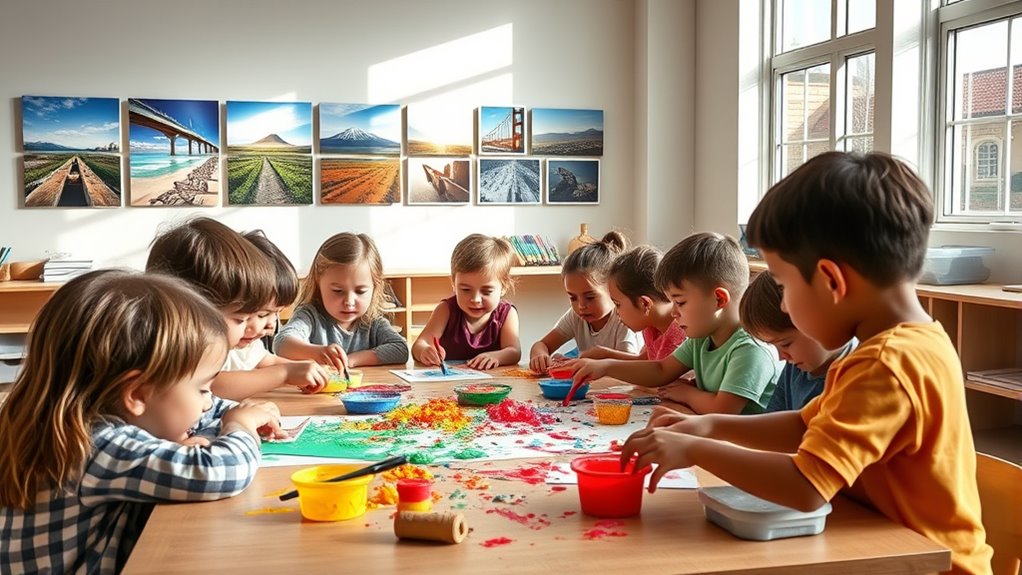
Photography has become an increasingly valuable tool in early art education, offering young learners a hands-on way to explore creativity and develop visual literacy. When you introduce photography into the classroom, you’re empowering children to communicate their ideas visually, which enhances their understanding of imagery and storytelling. Digital storytelling, in particular, benefits from photography by allowing children to create narratives that combine photos, captions, and audio, making their stories more engaging and meaningful. As you guide them through this process, you’ll notice how their ability to interpret and craft visual messages improves, laying a foundation for more complex communication skills later on.
By integrating photography into your lessons, you help children recognize the power of images to tell stories and evoke emotions. You might encourage them to capture scenes that represent their feelings or experiences, then discuss what the photos reveal about their perspectives. This process not only fosters creativity but also sharpens their visual literacy—the ability to interpret, analyze, and create visual content. As they learn to see through a camera lens, they become more aware of composition, perspective, and symbolism, which deepens their understanding of visual language. This skill set is vital in today’s media-rich environment, where images often speak louder than words. Additionally, incorporating the use of digital tools for editing and sharing their photographs helps children develop essential technical skills, further enriching their artistic and digital literacy.
When you guide children to use digital tools for editing and sharing their photographs, you’re also teaching them technical skills that complement their artistic growth. They learn to select, crop, and enhance images, understanding how these choices affect the message they want to convey. This hands-on experience with digital storytelling helps them see the connection between visual elements and storytelling, making abstract concepts more concrete. It also encourages critical thinking as they decide how best to communicate their ideas visually.
Furthermore, incorporating photography into early art education allows you to foster collaboration and discussion. Children can share their photographs with peers, explain their creative choices, and listen to others’ interpretations. This dialogue enhances their ability to analyze visual content critically and appreciate different perspectives. As a result, they develop a richer understanding of visual literacy, which will serve them well across subjects and in everyday life. Overall, integrating photography provides a dynamic, interactive way to nurture creativity, technical skills, and visual comprehension from an early age, setting a strong foundation for lifelong learning and expression.

Digital Camera for Kids, 48MP FHD 1080P Point and Shoot Digital Cameras with 16X Zoom Anti-Shake, Compact Portable Cameras for Photography, for Boys Girls Teens Beginners-Black
Compact and Portable Design: The DX5 features a compact body with a 2.4-inch LCD screen. It includes a…
As an affiliate, we earn on qualifying purchases.
As an affiliate, we earn on qualifying purchases.
Frequently Asked Questions
How Can Photography Enhance Children’s Creativity?
Photography enhances your children’s creativity by encouraging visual storytelling and imaginative exploration. As they frame shots and choose subjects, they develop a unique perspective and express their ideas visually. This process sparks their imagination, helping them see the world differently and tell stories through images. By experimenting with angles and concepts, children build confidence in their creative abilities and learn to communicate their thoughts effectively.
What Safety Precautions Are Needed for Young Photographers?
Think of safety as your guiding star when young photographers are involved. You need to supervise equipment closely, ensuring camera safety by handling devices properly and not pointing at faces or eyes. Keep cords untangled and batteries out of reach. Always teach children to use equipment gently and responsibly. By staying vigilant and providing clear instructions, you help prevent mishaps and foster confidence in their photography journey.
How Do You Assess Artistic Development Through Photography?
You assess artistic development through photography by observing how well you use visual storytelling to convey ideas and emotions. Pay attention to improvements in technical skills like framing, focus, and lighting. Notice if your work shows increased creativity and confidence in experimenting with different perspectives. As you progress, your photos should become more expressive and intentional, reflecting a deeper understanding of both technique and storytelling.
What Are Age-Appropriate Photography Tools for Early Learners?
Perfectly playful, age-appropriate photography tools boost your early learners’ camera skills and spark creativity. Choose simple, sturdy cameras designed for small hands—think kid-friendly, durable devices with easy-to-press buttons. Incorporate basic editing techniques like cropping or filters to enhance images without overwhelming. These tools foster fun, foundational skills while encouraging exploration and self-expression, making photography accessible and engaging for young children.
How Can Parents Support Photography Activities at Home?
You can support photography activities at home by providing simple home equipment like smartphones or tablets with cameras, and encouraging your child to explore their surroundings. Offer parental guidance by setting safe boundaries, suggesting fun themes, and helping them frame shots. Show genuine interest, ask questions about their photos, and celebrate their creativity. Your active involvement boosts confidence and makes photography an enjoyable, educational experience for your young learner.

Music Software Bundle for Recording, Editing, Beat Making & Production – DAW, VST Audio Plugins, Sounds for Mac & Windows PC
No Demos, No Subscriptions, it's All Yours for Life. Music Creator has all the tools you need to…
As an affiliate, we earn on qualifying purchases.
As an affiliate, we earn on qualifying purchases.
Conclusion
As you explore integrating photography into early art education, you’ll notice how students naturally connect with their surroundings, capturing moments that reflect their world. It’s like a coincidence—just as you introduce a simple camera, they start noticing beauty in everyday objects. This unexpected link sparks creativity and confidence, proving that when you bring photography into the classroom, you open doors to endless discovery. Sometimes, the simplest tools lead to the most profound artistic journeys.
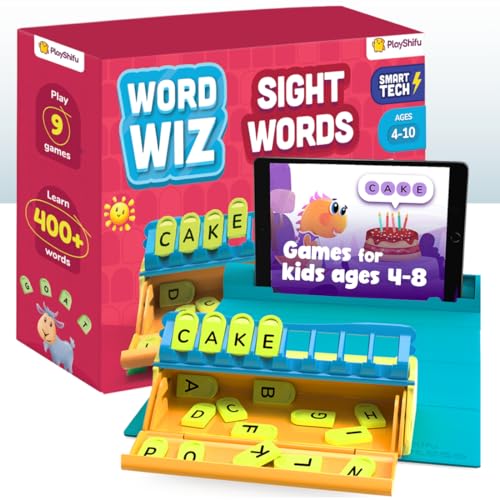
PlayShifu Word Wiz – Plugo Letters Learning Kit | Build Reading, Spelling & Grammar Skills for Kids Ages 4–10
PLUGO LETTERS is an AR-powered word building game kit that combines the goodness of hands-on learning and healthy…
As an affiliate, we earn on qualifying purchases.
As an affiliate, we earn on qualifying purchases.

DPduct Microscope for Kids, Kids Microscope with Sample Slide, Educational Science Kit, Macro Fixed Focus Kid Mini Microscopes 500x Magnification, 32GB SD Card Include(Purple)
【2.4 Inch IPS Color Display】 This Digital microscope has a 2.4-inch HD IPS eye protection screen with vibrant…
As an affiliate, we earn on qualifying purchases.
As an affiliate, we earn on qualifying purchases.