Training teachers in sustainable art practices enables you to incorporate eco-friendly materials and techniques into your lessons, inspiring students to think critically about the environment. You’ll learn how to use recycled paper, natural dyes, and biodegradable glues to create meaningful projects. By engaging your community through initiatives like murals or clean-up events, you foster collective responsibility. Keep exploring to discover effective strategies for making sustainability a core part of your art education.
Key Takeaways
- Provide professional development workshops focused on eco-friendly materials and sustainable art techniques.
- Incorporate project-based learning to demonstrate community engagement and environmental impact.
- Offer resources and curricula that embed sustainability principles into classroom art activities.
- Facilitate collaborative training sessions to share best practices and foster peer support among educators.
- Emphasize the importance of community involvement and partnerships to enhance sustainable art initiatives.
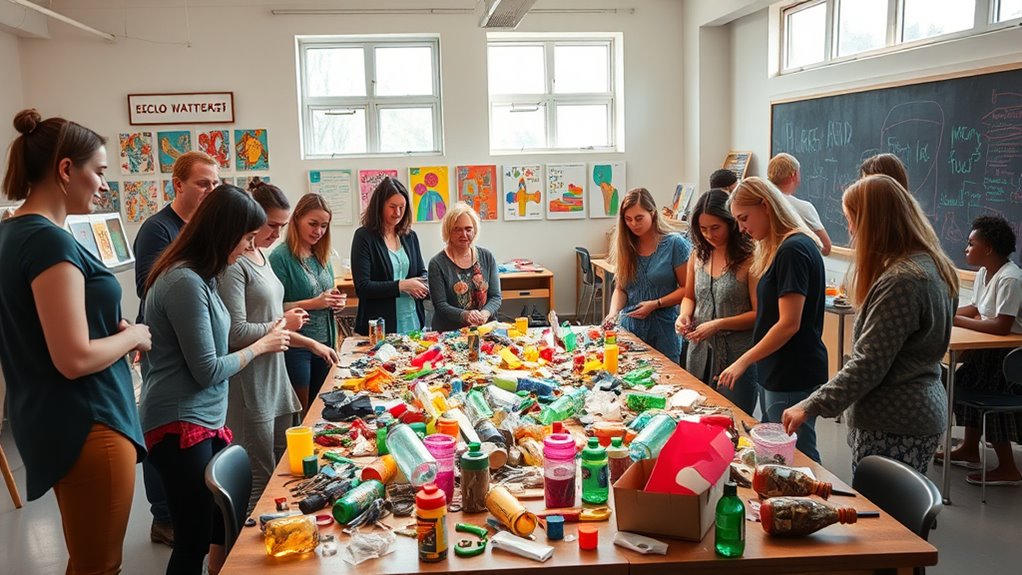
Training teachers in sustainable art practices is essential for fostering environmentally conscious creativity in the classroom. When you equip educators with the knowledge and skills to incorporate eco-friendly materials, you empower them to guide students toward making environmentally responsible choices. Using eco-friendly materials like recycled paper, natural dyes, and biodegradable glues not only reduces waste but also demonstrates that art can be both beautiful and sustainable. As teachers learn to select and utilize these sustainable resources, they can create projects that inspire students to think critically about their environmental impact. Integrating eco-friendly materials into art lessons makes sustainability tangible and relevant, helping students develop a deeper understanding of eco-conscious living. Additionally, incorporating dynamic communication exercises can help teachers foster collaboration and open dialogue about sustainability themes within their classrooms. Community engagement plays a vital role in sustainable art education. When you train teachers to involve local communities, they can foster a sense of shared responsibility and collective action. For example, teachers might organize neighborhood clean-up events where students collect discarded materials for use in art projects. These activities highlight the importance of reducing waste and repurposing materials, making sustainability part of the community’s daily life. By working with local organizations, artists, and residents, teachers can create opportunities for students to see the tangible impact of their efforts, strengthening their commitment to environmental stewardship. Community engagement also amplifies the reach of sustainable art initiatives, encouraging wider participation and awareness. You can also teach teachers to leverage community assets, such as local gardens or recycling centers, as sources of inspiration and materials. This approach not only minimizes the need for new resources but also helps students understand the importance of resourcefulness and innovation. When teachers emphasize collaborative projects that involve community members, students learn that sustainability isn’t just an individual effort but a collective one. These projects can include mural paintings using reclaimed materials or community sculpture installations, which serve as lasting symbols of environmental consciousness. By fostering these partnerships, you help teachers embed sustainability into the fabric of their teaching practice and community life. Ultimately, training teachers in sustainable art practices ensures that eco-consciousness becomes a core element of education. When educators are confident in using eco-friendly materials and engaging their communities, they can create dynamic, meaningful learning experiences that inspire students to become environmentally responsible citizens. This holistic approach not only benefits the environment but also nurtures creativity, critical thinking, and social awareness among students. By investing in teacher training, you lay the foundation for a future where art and sustainability go hand in hand, inspiring generations to protect and cherish their planet through innovative and inclusive practices.
eco-friendly art supplies for teachers
As an affiliate, we earn on qualifying purchases.
As an affiliate, we earn on qualifying purchases.
Frequently Asked Questions
How Can Teachers Incorporate Sustainability Into Existing Art Curricula?
You can incorporate sustainability into your art curriculum by teaching eco-friendly techniques like using recycled materials and eco-dyes. Encourage students to explore visual storytelling that highlights environmental issues, fostering awareness and activism. Integrate projects that emphasize resource conservation and waste reduction, making sustainability a core part of creative processes. This approach not only enhances artistic skills but also instills eco-conscious values, inspiring students to become environmentally responsible artists.
What Are Cost-Effective Sustainable Art Materials for Classrooms?
Think of your classroom as a garden where creativity blooms. You can use recycled supplies like cardboard, bottle caps, and old magazines to nurture projects. Eco-friendly paints, made from natural ingredients, are like nourishing water for your students’ ideas. These cost-effective materials not only sprout sustainability but also inspire resourcefulness. By blending recycled supplies and eco paints, you cultivate an environment where art grows with respect for the planet.
How Do I Assess Students’ Understanding of Sustainable Art Concepts?
You can assess students’ understanding of sustainable art concepts through peer assessment and reflective journaling. Encourage students to evaluate each other’s work, focusing on sustainability aspects, and provide constructive feedback. Additionally, ask them to keep reflective journals, detailing their thoughts on sustainability in art, the materials used, and their creative process. This approach helps you gauge their comprehension and fosters deeper engagement with sustainable practices.
What Are Successful Examples of Sustainable Art Projects in Schools?
You see a school courtyard transformed by eco-friendly sculptures crafted from reclaimed materials, drawing curious glances from all around. Recycled murals burst with vibrant images, illustrating environmental themes and inspiring students to think green. These projects succeed because they engage students actively, promote sustainability, and make art meaningful. When you implement eco-friendly sculptures and recycled murals, you create powerful visual statements that foster awareness and community pride in protecting the planet.
How Can Teachers Collaborate With Local Communities on Sustainability Initiatives?
You can collaborate with local communities by actively engaging them in sustainability initiatives. Reach out to community members, organizations, and local leaders to build partnerships that foster community engagement. Share resources like materials, expertise, and spaces to support your projects. By involving the community in planning and decision-making, you create meaningful connections that enhance sustainability efforts and inspire collective responsibility for environmental well-being.
recycled paper art materials
As an affiliate, we earn on qualifying purchases.
As an affiliate, we earn on qualifying purchases.
Conclusion
By embracing sustainable art practices in your teaching, you become the seed that blooms creativity and environmental awareness in your students. Your efforts plant a garden of future artists who respect and preserve our planet. Remember, every lesson you craft is a brushstroke on the canvas of change. Together, you and your students can turn the world into a vibrant masterpiece of sustainability, where art and nature grow hand in hand like old friends sharing a timeless story.
natural dye kits for fabric and paper
As an affiliate, we earn on qualifying purchases.
As an affiliate, we earn on qualifying purchases.
biodegradable glue for crafts
As an affiliate, we earn on qualifying purchases.
As an affiliate, we earn on qualifying purchases.