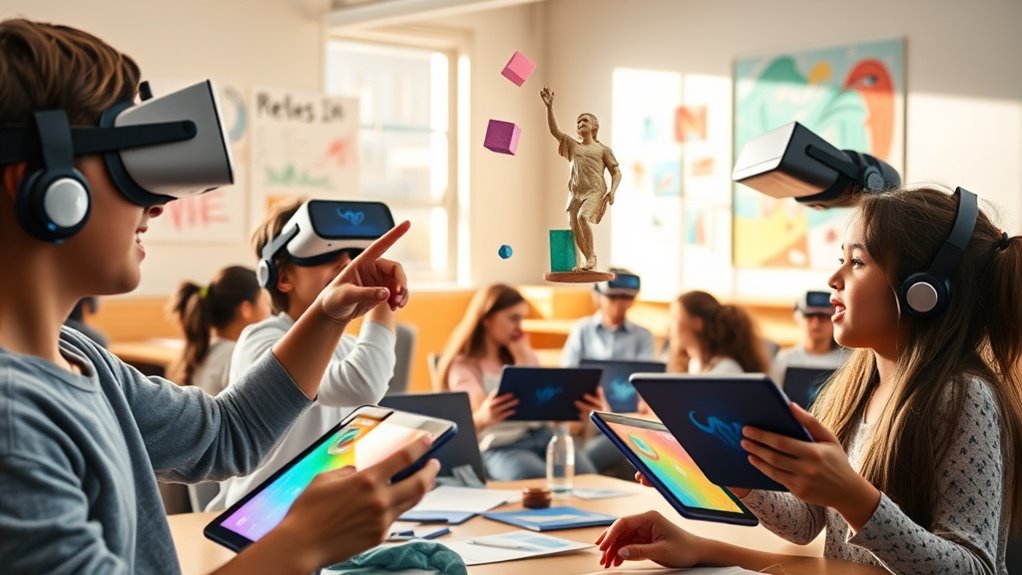

Incorporating VR and AR into your art lessons allows you to create immersive experiences that engage students directly with artworks and techniques. You can enable virtual gallery visits, offer interactive manipulation of art elements, and foster collaboration in digital spaces. These tools help students explore different cultures, experiment with new mediums, and develop digital skills relevant to modern careers. Keep exploring to discover how these innovative approaches can transform your teaching practices and inspire creativity in your classroom.

Get art and craft supplies delivered free with Prime
- Fast, free delivery on millions of items
- Prime Video, Amazon Music and more included
- Member-only deals all year
Key Takeaways
- Integrate virtual galleries and exhibitions to enable immersive exploration of artworks from different cultures and eras.
- Use AR and VR tools to facilitate interactive manipulation of digital art elements, enhancing understanding of artistic techniques.
- Promote collaborative learning by sharing virtual spaces for group critiques, discussions, and co-creating projects.
- Prepare students for modern careers by developing proficiency with digital platforms and incorporating VR/AR projects into portfolios.
- Transform traditional lessons into engaging, immersive experiences that broaden cultural awareness and artistic experimentation.
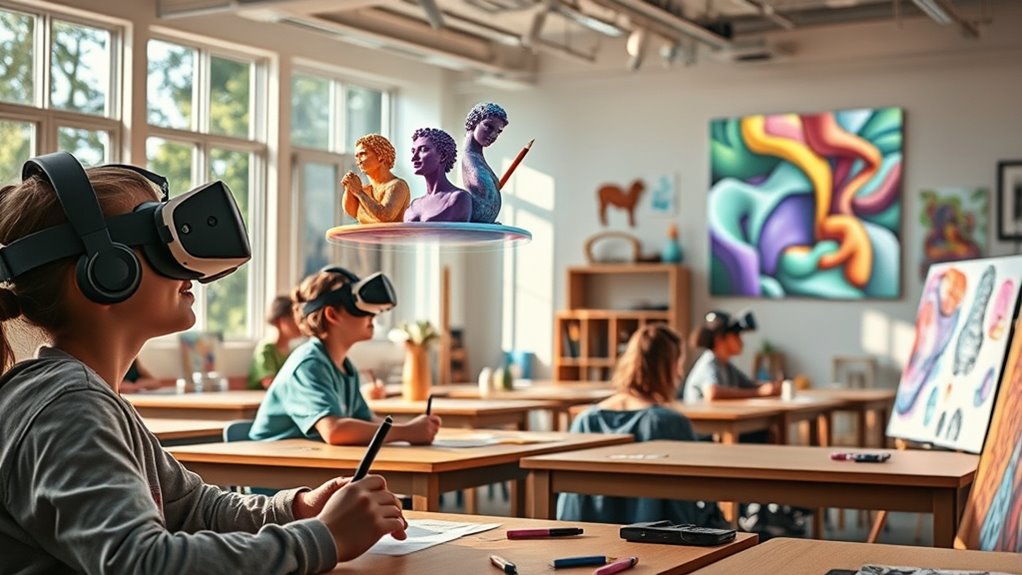
Integrating virtual reality (VR) and augmented reality (AR) into art lessons transforms how students experience creativity and learn techniques. These technologies open a new dimension where you can explore virtual galleries, walk through immersive exhibitions, and appreciate artworks from different eras and cultures without leaving the classroom. Virtual galleries aren’t just digital images on a screen—they allow you to move around, examine details up close, and get a sense of scale and context that static images can’t provide. As you navigate these virtual spaces, you develop a deeper understanding of composition, lighting, and artistic styles, making art history more tangible and engaging. Increased interactivity in these digital environments can also improve learning outcomes by fostering active exploration and engagement.
Explore virtual galleries and immersive exhibitions to deepen your understanding of art and artistic styles.
AR takes this experience further by blending digital elements with your physical environment. Imagine pointing your device at a blank canvas and seeing a 3D sculpture take shape or sketching out an idea that materializes as an interactive sketch. These AR features enable you to experiment freely, adjusting forms and colors in real-time, which fosters a more dynamic learning process. Interactive sketches in AR allow you to manipulate your artwork from different angles, see how different techniques influence the outcome, and receive immediate feedback. This hands-on interaction helps you grasp complex concepts like perspective, shading, and texture more intuitively than traditional methods.
Incorporating VR and AR into your art lessons also encourages collaborative learning. You can share virtual galleries with classmates, discuss artworks in a shared virtual space, or co-create projects within a digital environment. This shared experience promotes dialogue, critique, and collective problem-solving, all essential skills for artists. Using VR and AR tools also caters to diverse learning styles. Visual and kinesthetic learners, in particular, benefit from the immersive and interactive nature of these technologies, making artistic principles more accessible and less abstract.
Moreover, these innovations prepare you for modern artistic careers, where digital skills are increasingly important. You learn to work with cutting-edge tools, understand digital aesthetics, and develop a versatile portfolio that includes virtual and augmented reality projects. As you incorporate VR and AR into your art practice, you gain confidence in experimenting with new mediums, pushing creative boundaries, and presenting your work in innovative ways. The integration of these technologies doesn’t replace traditional techniques but enhances your ability to explore, analyze, and communicate your artistic vision in a rapidly evolving digital landscape. Ultimately, VR and AR transform your art education into an immersive, interactive journey—one that broadens your horizons and prepares you for the future of creative expression.
VR art gallery virtual reality headset
As an affiliate, we earn on qualifying purchases.
As an affiliate, we earn on qualifying purchases.
Frequently Asked Questions
What ARe the Initial Costs for Integrating VR and AR Into ARt Lessons?
The initial costs for integrating VR and AR into art lessons vary based on your cost analysis and equipment investment. You might spend between $1,000 and $5,000 for quality VR headsets, AR devices, and compatible hardware. Remember to budget for software licenses and training. While it seems costly upfront, consider these expenses as investments that can greatly enhance student engagement and creativity, making your art lessons more immersive and innovative.
How Do VR and AR Impact Students’ Creative Development?
You’ll notice VR and AR boost students’ creative development by immersing them in storytelling and encouraging exploration. These technologies enhance spatial awareness, helping students understand three-dimensional space and composition. With immersive storytelling, students can craft compelling narratives through virtual environments, fostering imagination and innovation. This active engagement pushes them to experiment with new ideas, develop artistic skills, and think beyond traditional boundaries, ultimately enriching their creative growth.
What ARe the Technical Requirements for Implementing VR and AR?
Think of it like Da Vinci preparing his tools; you need compatible hardware like VR headsets and AR devices, ensuring they work seamlessly with your systems. You also must consider software licensing to access the right programs and updates. Make sure your computer meets the hardware compatibility requirements, including sufficient processing power and graphics capabilities, so your VR and AR experiences run smoothly and enhance your art lessons effectively.
How Do VR and AR Tools Differ in Effectiveness for ARt Education?
VR tools offer immersive virtual environments that deeply engage you through virtual immersion, making it easier to explore complex art concepts. AR tools enhance interactive engagement by overlaying digital art onto real-world objects, allowing you to manipulate and analyze artworks in context. While VR creates a fully immersive experience, AR integrates seamlessly into your physical space, making each method effective depending on your learning goals.
What Safety Considerations ARe Necessary When Using VR and AR in Classrooms?
It’s no coincidence that safety starts with mindful planning. You must protect student privacy by securing data and controlling access, and guarantee equipment sanitation to prevent germs. Regularly inspect headsets and controllers for damage, and set clear guidelines for proper use. By prioritizing these safety measures, you create a secure environment that allows students to explore VR and AR creatively without unnecessary risks.
AR art sketching app for tablets
As an affiliate, we earn on qualifying purchases.
As an affiliate, we earn on qualifying purchases.
Conclusion
As you embrace VR and AR in your art lessons, you open a world of endless possibilities. Imagine students exploring masterpieces or creating immersive art pieces firsthand—what new ideas could emerge? But this is just the beginning. The true potential of these technologies is still unfolding. Are you ready to step into the future of art education? The next chapter awaits, and it’s more exciting than you ever imagined.
immersive art education VR tools
As an affiliate, we earn on qualifying purchases.
As an affiliate, we earn on qualifying purchases.
digital art collaboration platform
As an affiliate, we earn on qualifying purchases.
As an affiliate, we earn on qualifying purchases.
Halloween Picks
halloween
As an affiliate, we earn on qualifying purchases.