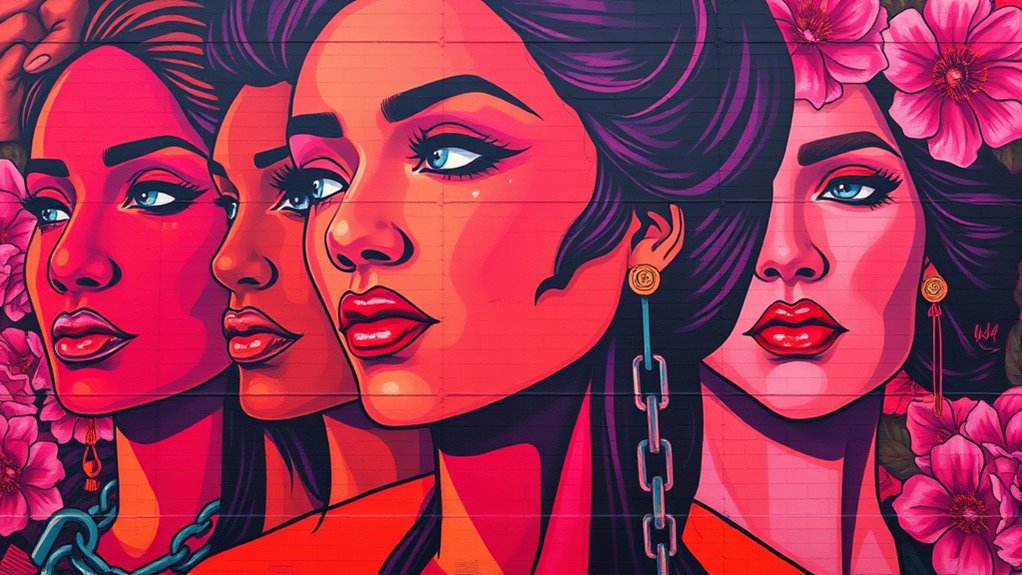

Feminist art movements have profoundly changed how you see and understand art by challenging gender stereotypes and amplifying women’s voices. Through bold visuals, provocative messages, and innovative materials, these movements push societal boundaries and promote gender equality. They also create platforms that empower marginalized women artists and inspire social activism. As you explore further, you’ll discover how these movements continue to shape a more inclusive and socially conscious art world today.
Key Takeaways
- Feminist art challenges gender stereotypes and promotes women’s voices through provocative visuals and activism.
- It uses unconventional materials and community involvement to amplify marginalized women’s experiences.
- The movement confronts societal expectations, addressing issues like gender inequality, violence, and reproductive rights.
- Feminist art platforms have historically increased visibility and recognition for women artists.
- Its ongoing influence inspires future generations to use art for social justice and challenging societal norms.
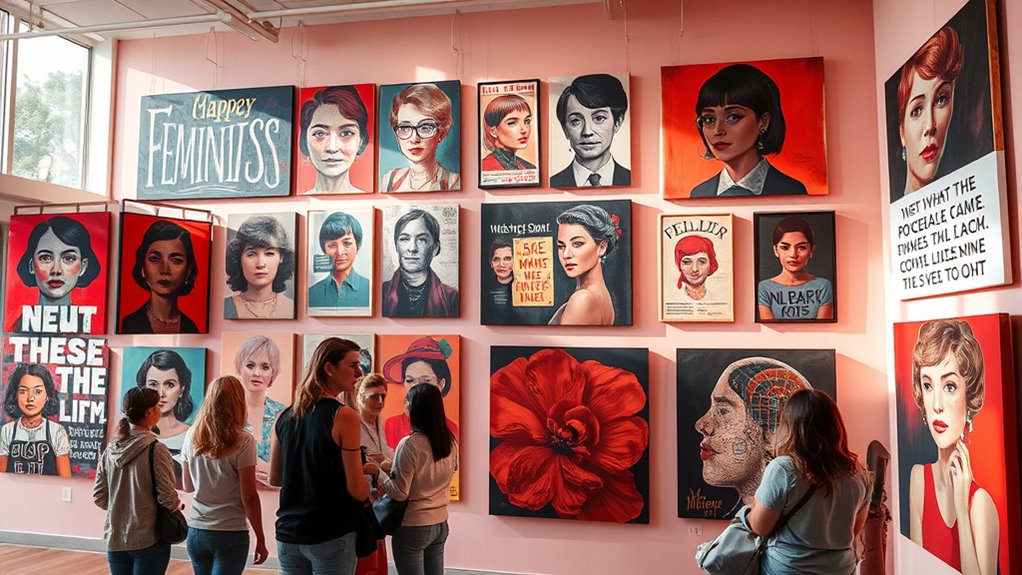
Have you ever wondered how art has been used to challenge gender stereotypes and promote women’s voices? Throughout history, feminist art movements have played a crucial role in reshaping gender representation, using art activism as a powerful tool for social change. When you look at works created during these movements, you see more than just visual expressions; you see acts of resistance that question traditional notions of femininity, masculinity, and power. Artists involved in feminist art movements intentionally push boundaries, confronting societal expectations and giving visibility to marginalized experiences. Their work often seeks to dismantle stereotypes that confine women to specific roles, highlighting the diversity and complexity of female identities. By doing so, they challenge the dominant narratives that have historically limited women’s representation in art and society. Engaging with these works reveals how community engagement amplifies the impact of feminist art and fosters collective awareness. Art activism becomes a central strategy in these movements because it transforms personal experiences into collective voices. When you engage with feminist art, you’re witnessing more than aesthetics; you’re witnessing activism that aims to inspire change. Artists use bold visuals, provocative messages, and unconventional materials to draw attention to issues like gender inequality, reproductive rights, and violence against women. Their work often blurs the lines between fine art and political activism, making a statement that demands action. This approach not only amplifies women’s voices but also invites viewers to reconsider their perceptions of gender roles and stereotypes. The visibility of women in art, especially when they challenge traditional portrayals, shifts societal understanding and promotes gender equality. Feminist art movements have also created platforms for women artists who were historically marginalized or ignored. By asserting their presence and voice, they redefine what counts as meaningful art and who gets to be recognized as an artist. This advocacy helps to diversify the art world, breaking down barriers rooted in gender bias. As you explore this history, you’ll notice how collective efforts through art activism continue to inspire new generations of artists committed to social justice. These movements show that art isn’t just about aesthetics; it’s a powerful tool for fostering awareness, challenging stereotypes, and promoting gender equality. When you support or engage with feminist art, you’re participating in a larger conversation—one that seeks to reshape societal norms and empower women’s voices through the transformative power of creativity.

Women's Work: From feminine arts to feminist art
As an affiliate, we earn on qualifying purchases.
As an affiliate, we earn on qualifying purchases.
Frequently Asked Questions
How Have Feminist Art Movements Influenced Contemporary Mainstream Art?
Feminist art movements have transformed contemporary mainstream art by emphasizing gender representation and encouraging artistic activism. You see more diverse perspectives and voices now, challenging traditional norms and stereotypes. Artists actively push boundaries, spotlighting issues like gender inequality and social justice. This influence inspires you to engage with art that promotes equality, making the art world more inclusive and reflective of real-world experiences.
What Role Do Intersectionality and Diversity Play Within Feminist Art Movements?
You see that intersectionality and diversity are central to feminist art movements today. They guarantee racial representation and cultural inclusion by highlighting varied experiences and identities. This approach pushes artists to challenge stereotypes and broaden narratives, making art more inclusive. By embracing these values, you help create a space where marginalized voices are heard and celebrated, enriching the art world with authentic, diverse perspectives that reflect society’s complexity.
How Do Feminist Art Movements Address Issues of Gender Identity?
You see feminist art movements challenge traditional gender roles by exploring gender expression and identity politics. Artists create powerful imagery that questions societal norms, encouraging viewers to reconsider fixed ideas of gender. They promote inclusivity, highlighting diverse gender identities, and foster dialogue around self-identity. By doing so, feminist art movements empower individuals to express their true selves and push for greater acceptance and understanding within society.
What Challenges Have Feminist Artists Faced Within the Art World?
You often face gender bias and artistic censorship in the art world, which can limit your creative freedom and recognition. These challenges make it difficult to showcase your work and gain equal opportunities. Despite these obstacles, you push through by challenging stereotypes and advocating for your voice. Your resilience helps break down barriers, inspiring others and gradually transforming the art scene into a more inclusive space for all genders.
How Have Feminist Art Movements Evolved Globally Over Recent Decades?
Imagine a vibrant tapestry woven with threads from every corner of the world. You see feminist art movements evolve globally, spreading like wildfire, fueled by cultural shifts and digital connectivity. These movements now embrace diverse voices, challenge norms, and ignite conversations across borders. You witness a dynamic shift where art becomes a universal language, empowering women everywhere to express their truths and reshape perceptions, creating a more inclusive, vibrant global artistic landscape.

Surreal Woman Canvas Wall Art, Cool Grid Addiction Girl Poster, Unique Feminine Art Print, Abstract Fine Art Painting, Contemporary Surrealism Picture for Living Room Bedroom 8x12in Unframed
Trippy Surreal Art Painting Collection: A captivating collection of surreal art pieces that transport you into a dreamlike…
As an affiliate, we earn on qualifying purchases.
As an affiliate, we earn on qualifying purchases.
Conclusion
As you explore feminist art movements, it’s clear they’ve transformed the creative world by challenging norms and empowering women. Did you know that women artists now account for nearly 50% of gallery exhibitions worldwide? This shift highlights how these movements have opened doors and reshaped perceptions. By continuing to support and understand feminist art, you contribute to a more inclusive and diverse artistic landscape, ensuring future generations can enjoy a richer, more equitable cultural environment.

Art and Activism: Colorful Protest Signs: Adult Coloring Book
As an affiliate, we earn on qualifying purchases.
As an affiliate, we earn on qualifying purchases.

The Art of Being Unreasonable: Lessons in Unconventional Thinking
As an affiliate, we earn on qualifying purchases.
As an affiliate, we earn on qualifying purchases.