
The Kinetic Art Movement began in the early 20th century when artists started incorporating movement into sculptures, transforming static forms into dynamic, interactive works. Pioneers like Alexander Calder created mobiles that sway gently with air currents, making sculptures appear alive. This shift added new dimensions of rhythm, balance, and viewer engagement. As technology advanced, so did the ability to animate art, opening the door to even more innovative movements—and there’s much more to discover if you continue exploring.

Get art and craft supplies delivered free with Prime
- Fast, free delivery on millions of items
- Prime Video, Amazon Music and more included
- Member-only deals all year
Key Takeaways
- The kinetic art movement emerged in the early 20th century, integrating motion into sculptures as a core artistic element.
- Alexander Calder’s mobile sculptures, introduced in the 1930s, popularized the use of moving parts in art.
- Mechanical innovation with gears, motors, and pendulums enabled sculptures to move dynamically from the 1930s onward.
- The movement aimed to break free from static forms, making sculptures interactive and responsive to viewers or environment.
- Kinetic art’s evolution reflects a shift toward combining engineering and artistic expression to create living, moving sculptures.
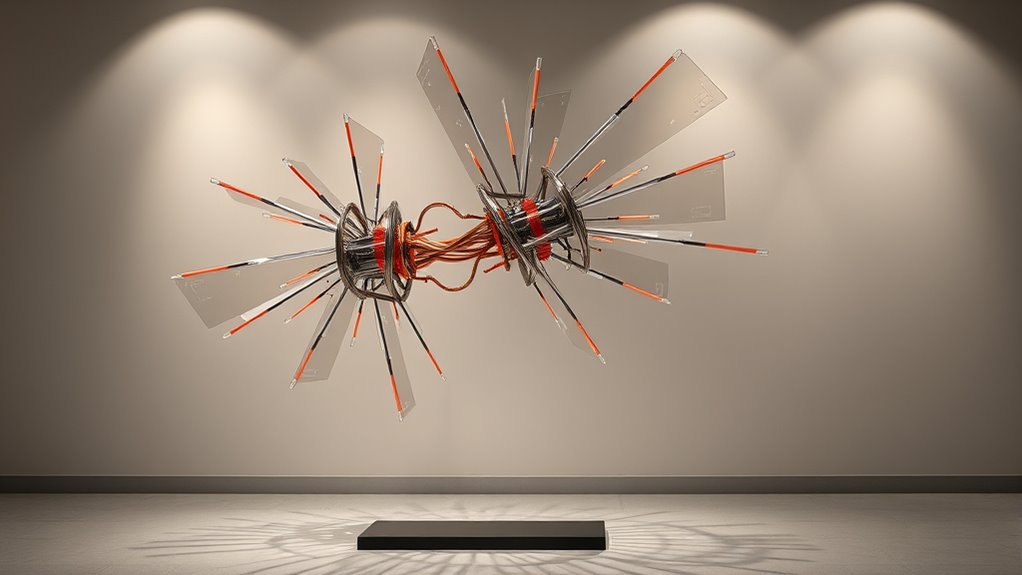
Have you ever wondered how art can move and change before your eyes? The Kinetic Art Movement captures this wonder perfectly, pushing the boundaries of traditional sculpture and visual art. At its core, it’s about blending mechanical innovation with artistic expression to create works that are dynamic and alive. Imagine standing in front of a sculpture that doesn’t stay still—its parts shift, rotate, or sway, responding to the environment or even viewer interaction. This movement isn’t accidental; it’s carefully designed to evoke emotion, challenge perceptions, and make you think about the relationship between the observer and the artwork.
Discover how kinetic art combines innovation and emotion to create living, interactive sculptures that captivate and challenge perceptions.
The roots of kinetic art lie in a desire to break free from static forms. Artists sought to incorporate motion, not just as a visual trick but as an integral part of their message. Mechanical innovation became essential here, as inventors and artists collaborated to develop mechanisms—gears, motors, pendulums, and other devices—that could animate sculptures. This technological progress allowed artists to experiment with new materials and techniques, transforming sculptures from fixed objects into interactive experiences. You might see a mobile that gently spins on invisible threads, or a sculpture that moves with the slightest breeze, each piece designed with precision to showcase the endless possibilities of mechanical innovation in artistic expression. Additionally, the concept of interactivity has expanded kinetic art into new realms, involving viewers more directly in the experience. Furthermore, advancements in mechanical devices have opened up even more innovative ways for artists to explore movement and viewer engagement.
Kinetic art isn’t just about spectacle; it’s about engaging your senses and mind. When you observe a moving sculpture, you become acutely aware of the mechanics behind it. You recognize the craftsmanship involved, and this understanding deepens your connection to the piece. Artists like Alexander Calder pioneered this approach with his mobiles, which used simple mechanical structures to create delicate, mesmerizing movements. Calder’s work exemplifies how mechanical innovation can serve artistic expression, turning simple components into a language that communicates rhythm, balance, and harmony. It invites you to see art as something alive—an ongoing conversation between human ingenuity and creative vision.
As an affiliate, we earn on qualifying purchases.
Frequently Asked Questions
Who Are the Pioneers of Kinetic Art?
You’ll find that the pioneers of kinetic art, like Alexander Calder and Jean Tinguely, harnessed mechanical innovation to push artistic expression beyond traditional boundaries. They created sculptures that move, inviting viewers to experience art dynamically. Their work exemplifies how mechanical innovation fuels artistic expression, transforming static sculptures into lively, engaging pieces. By experimenting with movement, they revolutionized sculpture and opened new creative possibilities in the art world.
What Materials Are Commonly Used in Kinetic Sculptures?
You’ll notice that kinetic sculptures feature a variety of materials, showcasing diversity in fabrication techniques. Common choices include metals like aluminum and steel for durability and smooth movement, plastics for lightweight designs, and sometimes wood for a natural touch. These materials allow artists to experiment with different forms and mechanisms, creating dynamic pieces. The combination of materials and techniques enables the sculptures to move fluidly and engage viewers in unique ways.
How Do Kinetic Sculptures Generate Movement?
Pondering precisely how kinetic sculptures propel, you’ll find mechanical systems at play, creating continuous, mesmerizing motion. These systems—gears, pulleys, motors—transform static structures into dynamic displays. By blending mechanical ingenuity with artistic innovation, artists engineer sculptures that move intentionally, inviting viewers into a world where art actively engages. It’s this seamless synergy of science and creativity that brings kinetic sculptures to life, transforming simple materials into stunning, stirring motion masterpieces.
What Are the Challenges in Maintaining Kinetic Artworks?
You face challenges in maintaining kinetic artworks due to environmental effects like humidity, dust, and temperature fluctuations that can affect their moving parts. Restoration techniques are essential to keep sculptures functioning properly, but they require careful handling to avoid damage. Regular inspections and preventive maintenance help ensure the artwork’s longevity, allowing it to continue enthralling viewers without compromising its mechanical integrity or aesthetic appeal.
How Has Technology Influenced Kinetic Art Development?
You see, technology acts like a catalyst, transforming kinetic art through mechanical innovation and digital integration. While traditional sculptures relied on wind or manual movement, today’s artists harness robotics and sensors to create dynamic, interactive pieces. This fusion of art and technology pushes boundaries, making sculptures more responsive and engaging. You’re witnessing a revolution where digital tools open new creative horizons, blending movement, light, and sound seamlessly.
As an affiliate, we earn on qualifying purchases.
Conclusion
As you explore the world of kinetic art, you’ll discover how movement gently breathes life into static forms, creating a dance between art and viewer. This movement isn’t just about motion; it’s about inviting curiosity and wonder into everyday spaces. By embracing these subtle shifts, you’re part of a timeless dialogue that softens boundaries and celebrates the beauty of change. Ultimately, kinetic art reminds us that even stillness can hold a quiet, graceful rhythm.
As an affiliate, we earn on qualifying purchases.
interactive moving art sculpture
As an affiliate, we earn on qualifying purchases.
As an affiliate, we earn on qualifying purchases.
Fall Picks
fall essentials
As an affiliate, we earn on qualifying purchases.