
In comparing Turner and Constable, you’ll see how their rivalry fueled artistic innovation. Turner embraced bold, experimental techniques, focusing on atmosphere and emotion, often portraying nature’s sublime power. Constable preferred detailed, realistic landscapes that celebrated natural beauty and authenticity. Their contrasting styles pushed each other to refine their craft, leaving a lasting impact on landscape art. Exploring their unique approaches reveals how their rivalry shaped art history—and there’s much more to uncover about their influence.
Key Takeaways
- Turner prioritized bold, atmospheric techniques capturing the sublime, while Constable focused on detailed, realistic landscapes.
- Their rivalry drove artistic innovation, with Turner pushing boundaries and Constable emphasizing natural authenticity.
- Turner’s influence shaped the Romantic movement’s emotional intensity; Constable’s work influenced naturalistic landscape painting.
- Turner’s experimental style contrasted with Constable’s meticulous method, reflecting differing philosophies on nature’s representation.
- Both artists left lasting legacies, transforming landscape art and inspiring future generations through their distinctive approaches.
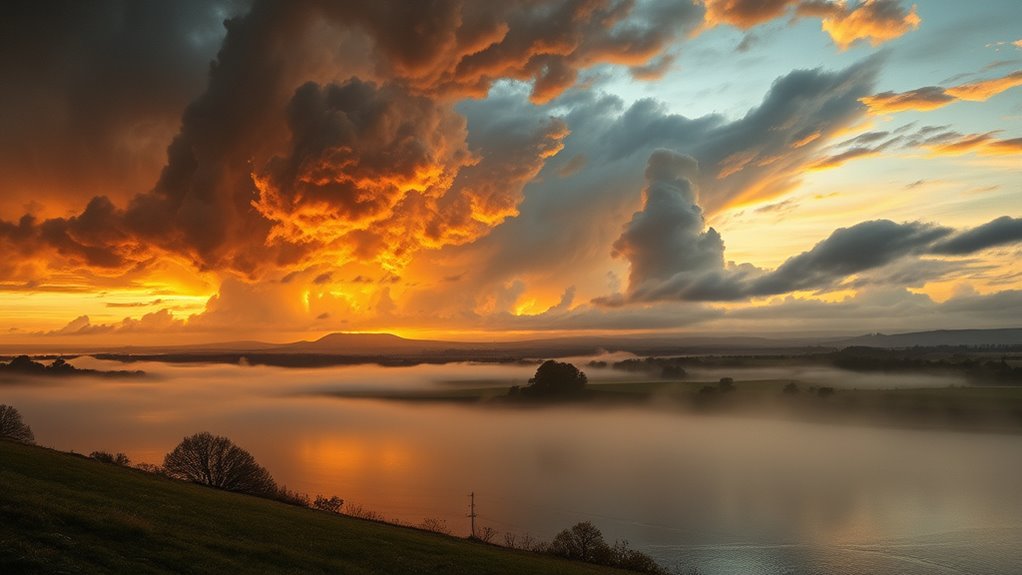
The rivalry between J.M.W. Turner and John Constable is one of the most fascinating stories in art history, and it offers you a compelling look at two masters with contrasting approaches. When you compare their techniques, you notice immediately that Turner embraced bold, experimental methods, often using vivid washes of color, dynamic brushwork, and a focus on capturing atmospheric effects. His works seem almost spontaneous, emphasizing mood over precise detail. In contrast, Constable favored a more traditional, meticulous approach, relying on careful observation and precise rendering of nature’s details. His technique involved layering paint and using a range of textures to depict the natural landscape with realism and subtlety. By examining their techniques comparison, you see how each artist’s methods reflect their underlying artistic philosophies: Turner’s fascination with the sublime and the power of nature, and Constable’s dedication to capturing the tranquility and authenticity of rural life. Their techniques also demonstrate a distinct artistic style, showcasing how each artist’s unique approach contributed to their legacy.
Their artistic philosophies also shape the way they approach their subjects. Turner believed that art should evoke emotion and convey the awe-inspiring force of nature, often pushing the boundaries of realism to achieve atmospheric effects that stir the viewer’s feelings. His paintings, full of swirling clouds and fiery sunsets, express a sense of movement and chaos that aligns with his philosophical view of nature as an unstoppable, divine force. Constable, on the other hand, held a deep reverence for nature’s serenity and sought to depict it as he experienced it firsthand. His philosophical stance centered on the idea that true beauty lies in the honest portrayal of everyday scenes, and he aimed to preserve the landscape’s natural essence. This contrast highlights how their artistic philosophies influenced not only their technique but also their overall artistic goals.
If you look at their works side by side, you’ll see how these differences create a distinct visual language. Turner’s paintings often feel like glimpses into the sublime, full of movement and emotion, while Constable’s compositions present a calm, detailed view of the countryside, inviting you to appreciate the quiet beauty of nature. Their rivalry pushed each artist to refine their craft and explore new ideas, resulting in a lasting influence on art. Turner’s innovative techniques and passion for the dramatic set new standards for capturing atmosphere, whereas Constable’s dedication to accuracy and naturalism laid the groundwork for future landscape painters. Understanding their techniques comparison and artistic philosophies helps you appreciate how their contrasting visions shaped the evolution of landscape art and why both remain essential figures today.
Top picks for "turner constable rivalry"
Open Amazon search results for this keyword.
As an affiliate, we earn on qualifying purchases.
Frequently Asked Questions
How Did Turner and Constable Influence Modern Landscape Painting?
You can see how Turner and Constable influenced modern landscape painting through their innovations. Turner’s Romantic landscapes pushed emotional depth and dramatic light, inspiring Impressionist innovations like capturing fleeting moments. Constable’s focus on natural scenes and plein air techniques laid groundwork for modern realism. Together, their rivalry encouraged experimentation, shaping today’s landscape art by blending emotional intensity with a love for nature’s authenticity.
Were Turner and Constable Personally Rivals or Solely Professional Competitors?
Imagine two painters racing to capture a storm’s fury—this is how Turner and Constable’s personal rivalry played out. While their professional competition pushed each other to new heights, evidence suggests they weren’t personal enemies, just ambitious rivals. Their rivalry fueled innovation, but they maintained mutual respect. So, their relationship was more about pushing boundaries than personal animosity, inspiring generations of artists with their intense, yet respectful, competition.
What Specific Techniques Distinguished Turner’s Work From Constable’s?
You’ll notice Turner’s work stands out with his bold, dynamic brushwork techniques, creating energetic scenes full of movement and emotion. His color palettes often feature vivid, dramatic hues that evoke mood and atmosphere. In contrast, Constable’s brushwork is more refined and detailed, emphasizing natural textures. His softer, more harmonious color palettes capture the tranquility of the countryside. These techniques define their unique artistic styles and approach to landscape painting.
Did Their Rivalry Impact Their Artistic Development or Careers?
Your personal rivalry between Turner and Constable pushed both artists to evolve their artistic development. You can see how their competition fueled innovation, as each sought to outdo the other with new techniques and perspectives. This rivalry didn’t just influence their careers; it spurred them to experiment more boldly, ultimately enriching their artworks and leaving a lasting impact on the Romantic landscape painting movement.
How Are Turner and Constable Viewed in Contemporary Art History?
You see that Turner and Constable are celebrated in contemporary art history for their artistic legacy. Their work receives high critical reception, highlighting their influence on landscape painting. Turner’s innovative use of light and color contrasts with Constable’s detailed naturalism, shaping modern artistic standards. Today, they’re viewed as pioneers whose rivalry pushed each to refine their style, cementing their importance in art history’s evolution.
Conclusion
As you reflect on Turner and Constable’s rivalry, it’s almost as if fate gently nudged their paths together, shaping their legacies. Their contrasting styles, like two sides of the same coin, pushed each other to new heights. You realize that their influence wasn’t just born from competition but from a shared passion that somehow, in a twist of coincidence, kept inspiring generations. In the end, their story reminds you that rivalry can spark greatness in unexpected ways.