TL;DR

Get art and craft supplies delivered free with Prime
- Fast, free delivery on millions of items
- Prime Video, Amazon Music and more included
- Member-only deals all year
Hyperallergic has published Lauren Moya Ford’s review of Ruth Bernard Yeazell’s new book, Vermeer’s Afterlives, which traces the Dutch painter’s influence across the arts. The report also recounts Vermeer’s posthumous obscurity and 19th-century rediscovery; it does not give the book’s publication date, publisher or a detailed account of its conclusions.
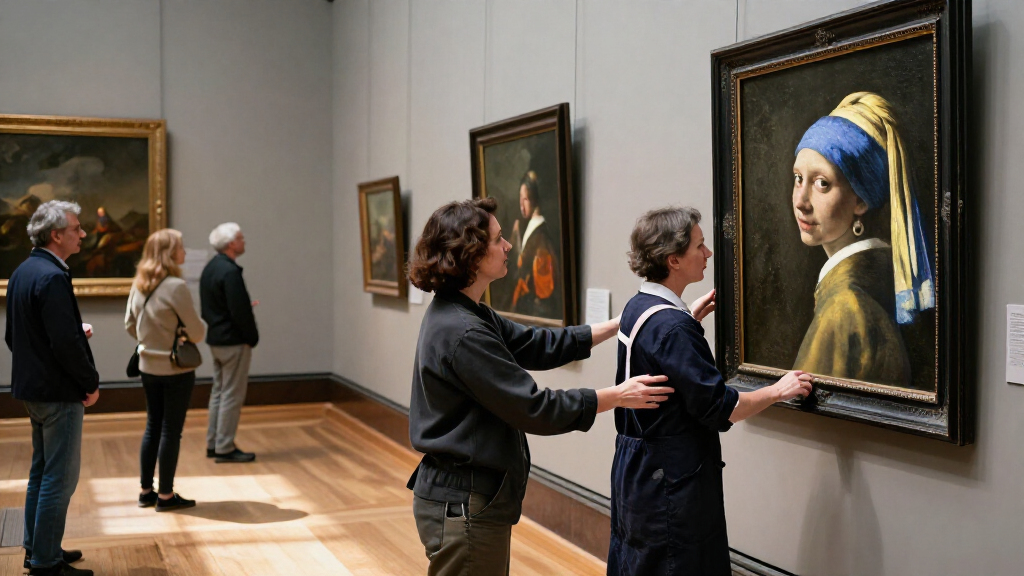
Hyperallergic has published Lauren Moya Ford’s review of historian Ruth Bernard Yeazell’s new book, Vermeer’s Afterlives, which traces how the Dutch painter’s presence has extended beyond museum collections into film, poetry and other arts. The report places the book’s subject against a longer history: Vermeer, now widely recognized for his interior scenes, was little known for centuries after his death.
Ford introduces Yeazell’s book as an account of Vermeer’s enduring influence across the arts. The newsletter describes the book as “exquisitely illustrated,” but does not provide its publisher, release date, length or a fuller summary of the examples Yeazell discusses. Its stated scope includes film and verse, suggesting an interest in how later creators have taken up the painter’s work and reputation.
The report also sketches Vermeer’s changing standing. He died deeply in debt in 1675, aged 43, and, according to the article, fell into obscurity soon after his death. He remained a marginal figure in art history until the mid-19th century, when French critic Théophile Thoré helped renew attention to his paintings.
Hyperallergic quotes Thoré’s 1866 response to the rediscovery: “Here’s someone we don’t know in France, and who very much deserves to be known!” The remark captures the contrast at the heart of the report: Vermeer’s current cultural reach followed a long period in which his work was not widely recognized.
How Vermeer’s Reputation Endures
Yeazell’s book, as described by Hyperallergic, treats Vermeer’s legacy as more than the continued display of his paintings. By following references and influence across film, poetry and other forms, it considers how an artist’s work can persist in cultural memory and shape later creative responses. That perspective may interest readers who know Vermeer primarily through museum exhibitions or reproductions.
The history summarized in the report also offers a reminder that artistic reputation can change over time. Vermeer’s present recognition was not immediate: the account connects it to a rediscovery in the 19th century, long after his death. The book’s subject is therefore both his artistic influence and the afterlife of his public standing.
As an affiliate, we earn on qualifying purchases.
From Posthumous Obscurity to Rediscovery
Johannes Vermeer was a 17th-century Dutch painter known for carefully composed interior scenes. Hyperallergic says he died in 1675, aged 43, and in debt. The newsletter characterizes his subsequent reputation as a long period of obscurity, with his name barely registering in art history before interest revived in the 19th century.
The article identifies French critic Théophile Thoré as a key figure in that renewed attention and cites his 1866 praise. This brief history provides the basis for the “afterlives” in Yeazell’s title: the report connects the recovery of Vermeer’s reputation with the ways later artists and writers have engaged with him.
““Here’s someone we don’t know in France, and who very much deserves to be known!””
— Théophile Thoré, quoted in the Hyperallergic report
As an affiliate, we earn on qualifying purchases.
Details the Report Leaves Open
The newsletter does not give the book’s publisher, publication date, length or price, nor does it identify particular films, poems or other works analyzed by Yeazell. It also offers only a short description of Ford’s review rather than a detailed account of the book’s argument, so the report alone cannot establish how Yeazell evaluates individual adaptations or the full scope of her research.
The source describes Vermeer as having fallen into obscurity and being rediscovered in the 19th century, but does not explain the steps in that recovery or name additional scholars and institutions involved. Those details remain outside the supplied account.
As an affiliate, we earn on qualifying purchases.
Read the Review and Book
Readers can consult Lauren Moya Ford’s review in Hyperallergic for a fuller account of Yeazell’s illustrated book and its treatment of Vermeer’s influence. The supplied report does not announce a later event, publication milestone or follow-up from the author or publisher, so no further developments can be confirmed from this source.
art history books on Johannes Vermeer
As an affiliate, we earn on qualifying purchases.
As an affiliate, we earn on qualifying purchases.
Key Questions
What is Vermeer’s Afterlives?
It is a new book by historian Ruth Bernard Yeazell about Johannes Vermeer’s continuing presence in the arts, including film and poetry, as described by Hyperallergic.
Who reviewed the book?
Lauren Moya Ford wrote the review highlighted in Hyperallergic’s daily newsletter.
Why is Vermeer described as having been rediscovered?
The report says Vermeer fell into obscurity after his death in 1675 and received renewed attention in the mid-19th century, including praise from French critic Théophile Thoré in 1866.
What details about the book are available?
The newsletter identifies Yeazell as the author and says the book is illustrated and covers Vermeer’s influence across the arts. It does not specify the publisher, release date or price.
Source: rss
Columbus Day / Indigenous Peoples' Day Picks
long weekend sales
As an affiliate, we earn on qualifying purchases.