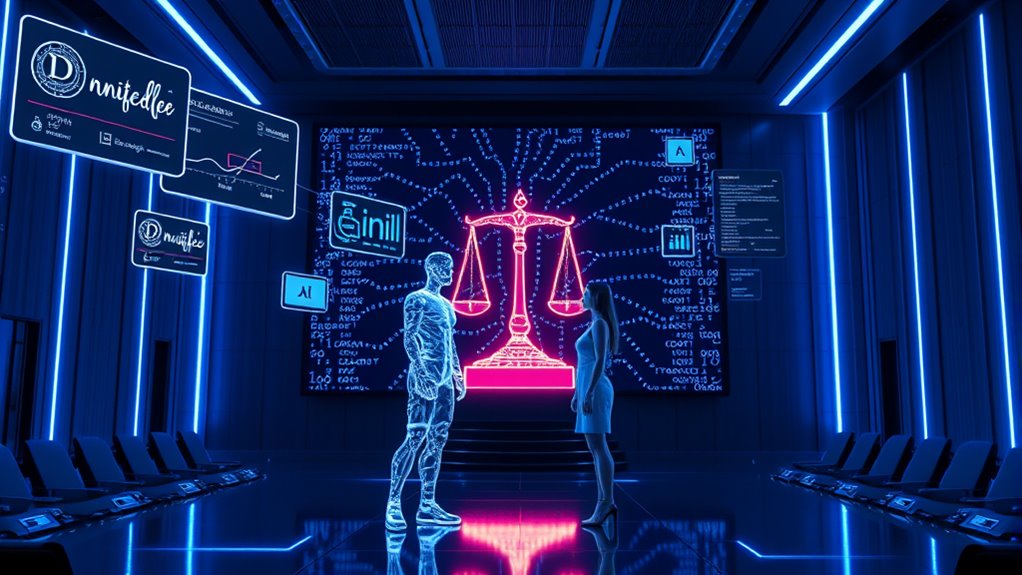

As AI grows more autonomous and integrated into daily life, protecting your digital moral rights depends on clear accountability frameworks, robust digital identity safeguards, and active stakeholder involvement. You need transparent policies that guarantee your rights, such as privacy and attribution, are respected and enforced. By understanding these evolving protections, you can better navigate how AI impacts your digital dignity. Continue exploring to learn how future policies and tools will shape your digital rights in this AI-driven era.
Key Takeaways
- Establishing clear AI accountability frameworks ensures respect for human values, rights, and dignity in digital interactions.
- Protecting digital identities through transparent policies safeguards moral rights like privacy and attribution.
- Evolving regulations must balance innovation with ethical responsibilities amid increasingly autonomous AI systems.
- User-controlled management tools are essential for maintaining digital moral rights and transparency in AI-generated content.
- Ongoing stakeholder collaboration and technological standards will shape an ethical AI future that upholds individual dignity.

As artificial intelligence continues to evolve, the question of how digital moral rights will be protected and upheld becomes increasingly urgent. You’ll find that establishing clear frameworks for AI accountability is essential to ensure that AI systems respect human values, rights, and dignity. When AI interacts with digital content or generates new material, it’s *crucial* to define who is responsible for its actions. Without proper accountability measures, digital moral rights risk being overlooked or compromised, especially as AI becomes more autonomous and capable of making decisions that impact individuals deeply.
Your digital identity plays a *crucial* role in this landscape because it embodies your rights, preferences, and personal data. As AI systems process vast amounts of information, protecting your digital identity means safeguarding your moral rights—like the right to privacy, attribution, and control over your digital footprint. It’s not enough to simply have these rights acknowledged; you need mechanisms that *guarantee* they’re actively enforced. This involves creating transparent policies that hold developers and users accountable for how AI handles your data and content. When AI systems are designed with accountability in mind, they can better respect your digital moral rights by providing clear explanations for decisions, offering avenues for redress, and preventing misuse or manipulation of your digital identity.
Protecting your digital identity ensures your moral rights are actively enforced and respected by accountable AI systems.
You should also be aware that future policies and standards will need to evolve alongside AI advancements. As AI becomes more sophisticated, the lines between human and machine-generated content will blur, raising questions about authorship, ownership, and moral rights. Striking a balance between innovation and ethical responsibility will require collaborative efforts from policymakers, technologists, and the public. Your role will be *crucial* in advocating for systems that embed moral considerations into their core functionalities. This includes pushing for regulations that enforce AI accountability, *assuring* that your digital identity remains protected against unauthorized use or exploitation.
Moreover, as AI systems become more integrated into daily life, you’ll need tools and platforms that empower you to manage your digital identity actively. These tools should allow you to control how your data is used, *guarantee* your content’s attribution, and provide transparency about AI decision-making processes. When these elements are in place, your digital moral rights can be preserved even as AI continues to advance. Ultimately, safeguarding your digital identity and establishing robust AI accountability will be *paramount* to maintaining your moral rights in an increasingly automated world. Your active engagement and vigilance will help shape an ethical future where AI upholds the dignity and rights of every individual. Additionally, understanding the importance of contrast ratio and color accuracy in AI-driven visual content can enhance your ability to identify ethically generated media that respects aesthetic integrity.

Veltec ID Protector Ink Roller – Identity Theft Protection Roller Stamp Set (Blue, Stamp+3 Refills)
SHIELD YOUR PRIVACY WITH THE ID DEFENDER ROLLER STAMP: Tired of worrying about your personal information falling into…
As an affiliate, we earn on qualifying purchases.
As an affiliate, we earn on qualifying purchases.
Frequently Asked Questions
How Will Digital Moral Rights Be Enforced Across Different Countries?
You’ll see digital moral rights enforced through international cooperation, but cross border enforcement faces challenges due to cultural differences. Countries may have varying views on moral rights, making uniform enforcement tough. You’ll need global agreements or treaties to bridge these gaps, ensuring rights are respected across borders. While technology can aid in tracking violations, understanding and accommodating cultural differences remains key to effective enforcement worldwide.
Can AI Itself Claim or Hold Digital Moral Rights?
You can’t teach an old dog new tricks, and AI can’t claim or hold digital moral rights. Its agency is limited; moral attribution still depends on human creators and users. AI lacks consciousness and emotional depth, so it can’t possess moral rights. While AI can simulate understanding, true moral agency remains a human trait. You should see AI as a tool, not a moral agent deserving rights.
What Role Will Blockchain Play in Protecting Digital Moral Rights?
Blockchain will play a vital role in protecting digital moral rights by enabling digital watermarking and smart contracts. You can use blockchain to embed digital watermarks that verify authorship and provenance, making it tamper-proof. Smart contracts automate enforcement and licensing, ensuring creators retain control over their work. This transparency and security empower you to uphold your moral rights, even in complex digital environments.
How Might Digital Moral Rights Evolve With Rapid AI Advancements?
You’ll see digital moral rights skyrocket in importance as AI authorship becomes everywhere, challenging traditional notions of creativity. Moral algorithms will evolve to protect human intent and originality, ensuring creators aren’t overshadowed by machine-generated content. This rapid AI growth could lead to stronger rights enforcement, more transparent AI processes, and new legal frameworks that prioritize human moral agency, making digital rights more essential than ever in safeguarding your work.
Will Digital Moral Rights Be Adaptable to New AI Technologies?
Yes, digital moral rights will be flexible to new AI technologies. As you encounter AI systems with enhanced AI authenticity and digital personhood, your rights can evolve to protect your creative works and digital identity. You’ll need to stay informed about legal updates and advocate for frameworks that recognize AI’s growing role. This adaptability ensures your moral rights remain relevant, safeguarding your digital presence amid rapid AI advancements.

Agentic Artificial Intelligence: Harnessing AI Agents to Reinvent Business, Work and Life
As an affiliate, we earn on qualifying purchases.
As an affiliate, we earn on qualifying purchases.
Conclusion
As you navigate the evolving landscape of AI and digital moral rights, remember that you’re steering a ship through uncharted waters. The future demands your vigilance and ethical compass to guarantee creators’ rights are protected and respected. Embrace the challenge like a lighthouse guiding ships safely ashore, illuminating the path forward. By actively shaping these rights, you help forge a digital world where innovation and morality sail hand in hand, steering toward a fairer tomorrow.

Applying AI in Learning and Development: From Platforms to Performance
As an affiliate, we earn on qualifying purchases.
As an affiliate, we earn on qualifying purchases.
content attribution tools for AI
As an affiliate, we earn on qualifying purchases.
As an affiliate, we earn on qualifying purchases.