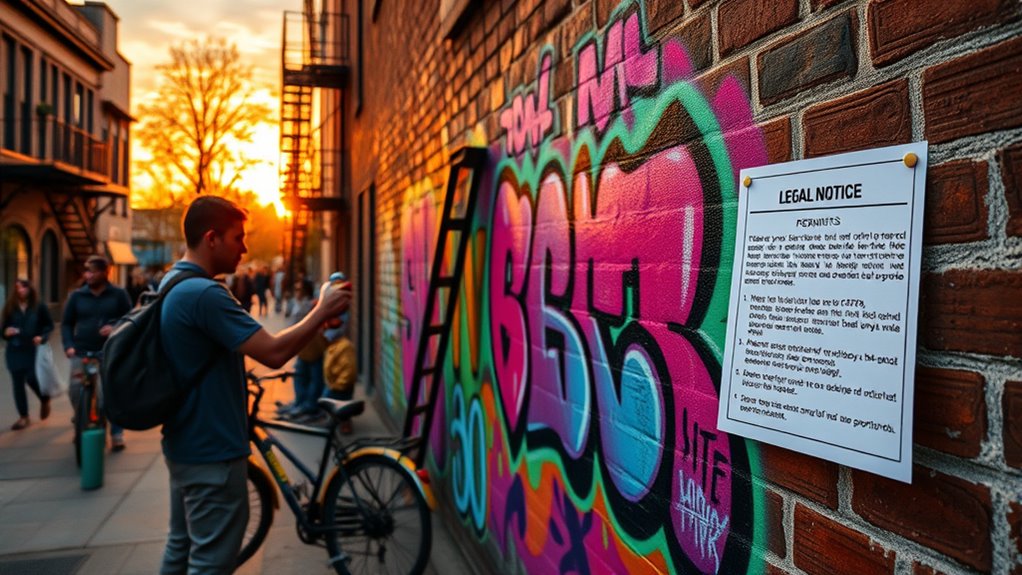

To stay legal as a street artist, you need to understand local permit requirements and respect designated zones for artwork. Always check if you need permission from property owners or city officials before starting a project. Be aware of copyright laws to avoid using protected images or logos without consent. Familiarizing yourself with these legal boundaries helps protect your work and reputation. Keep exploring to discover more practical tips for creating responsible street art.

Get art and craft supplies delivered free with Prime
- Fast, free delivery on millions of items
- Prime Video, Amazon Music and more included
- Member-only deals all year
Key Takeaways
- Always obtain necessary permits from local authorities before creating street art to ensure legal compliance.
- Know designated zones and restrictions to avoid unauthorized work on private or public property.
- Use original or properly licensed materials to prevent copyright infringement issues.
- Understand property rights and secure permission when working on private property.
- Familiarize yourself with local laws and regulations to avoid fines, cleanup orders, or legal action.

If you want to share your art on city streets, understanding the legal basics is essential. One of the first things to consider is permitting requirements. Many cities have regulations that dictate where and when you can create street art. Before you start, check with local authorities or city ordinances to see if you need a permit. Some areas have designated zones for murals or graffiti, while others prohibit certain types of street art altogether. Ignoring these rules can lead to fines, cleanup orders, or even arrest. Securing the proper permits not only keeps you within the law but also lends credibility to your work. It shows you’re respecting the community’s rules and can help you avoid conflicts with property owners or law enforcement. Additionally, using diverse designs and materials can enhance your street art’s appeal and help it stand out within legal boundaries. Familiarizing yourself with local laws and regulations can further prevent unintended violations and support your creative endeavors. Understanding property rights is also vital, as unauthorized use of private property can result in legal issues. It’s also helpful to learn about appliance maintenance plans if you’re working with digital tools or equipment to ensure your art setup remains reliable. Alongside permitting requirements, copyright concerns are equally important. Even if you’re creating your own original artwork, you should be aware that certain images, logos, or characters might be protected by copyright law. Using copyrighted material without permission can lead to legal action, including demands to remove your work or pay damages. If your art incorporates elements from copyrighted sources, it’s wise to seek permission or use licensed images. This not only shields you from potential legal trouble but also respects the rights of other artists and creators. When in doubt, creating entirely original designs or altering existing images enough to qualify as fair use can be safer options. However, fair use is complex, and understanding its limits is crucial to avoid infringing on someone’s rights. Being familiar with beginners guides can help you understand the basics of legal compliance and best practices for street art.
street art permits and license guide
As an affiliate, we earn on qualifying purchases.
As an affiliate, we earn on qualifying purchases.
Frequently Asked Questions
Can I Sell My Street Art Legally?
You can sell your street art legally if you secure proper art licensing and respect intellectual property rights. Make sure you own the rights to your work or have permission from the property owner if it’s on private land. Selling without authorization could infringe on others’ rights. By understanding these legal basics, you protect your art and ensure your sales are legitimate. Always document your ownership and licensing agreements to avoid potential legal issues.
How Do I Protect My Artwork From Theft?
Think of your artwork as your digital fingerprint—unique and worth protecting. To guard it from theft, rely on copyright law to solidify your claim, ensuring your intellectual property rights are clear. Always document your work and consider adding a watermark or signature. Registering your art with relevant authorities strengthens your case if someone tries to steal or misuse it. Protecting your creations keeps your artistic voice loud and unmistakably yours.
Are There Age Restrictions for Street Art?
Age restrictions for street art vary depending on local laws, but generally, minors need parental permission to participate. You should check your city’s regulations to avoid legal issues. Age restrictions help protect minors from artistic liability, ensuring they understand the risks involved. If you’re underage, involving a guardian can help you navigate legal requirements and prevent potential liability concerns. Always stay informed about local laws to keep your art and yourself protected.
What Are the Consequences of Illegal Graffiti?
Like Pandora’s box, illegal graffiti can release trouble. When you engage in graffiti vandalism, you risk serious legal penalties, including fines and even jail time. Authorities see it as destruction of property, not art. The consequences can haunt you, damaging your reputation and future opportunities. Stay on the right side of the law, and remember that art should uplift, not vandalize, communities.
How Do I Get Permission to Paint Publicly?
To get permission to paint publicly, you need to go through the permits process by contacting your local city or municipal office. They usually require you to submit an application detailing your project. Building community approval is essential, so consider engaging with local residents or organizations to gain support. Once approved, you’ll receive official permits, allowing you to create your art legally and avoid potential legal issues.
As an affiliate, we earn on qualifying purchases.
Conclusion
By understanding these legal basics, you’re planting seeds of respect and awareness in your creative garden. Think of the law as a guiding compass, steering you clear of storms and guiding you toward fruitful expression. When you navigate with knowledge, your art becomes a vibrant mural painted on the city’s canvas, forever leaving your mark without erasing others’. Embrace these truths, and let your creativity soar safely on the wings of awareness.
copyright protection for street artists
As an affiliate, we earn on qualifying purchases.
As an affiliate, we earn on qualifying purchases.
As an affiliate, we earn on qualifying purchases.
Columbus Day / Indigenous Peoples' Day Picks
long weekend sales
As an affiliate, we earn on qualifying purchases.