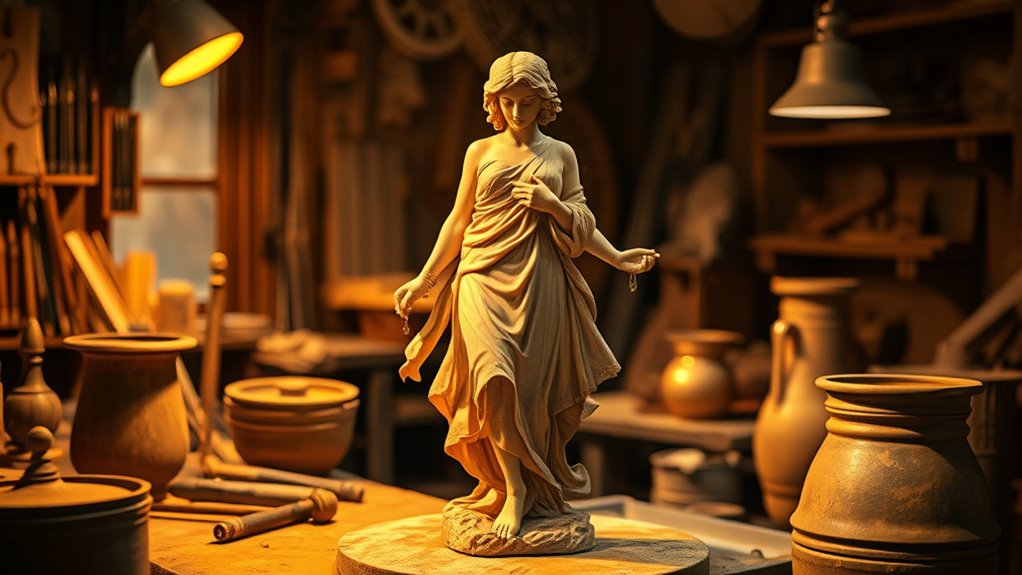

To craft a bronze sculpture, you start by creating a detailed wax model. Next, you coat the wax with a heat-resistant material, then melt and drain the wax to leave a hollow mold. Molten bronze is poured into this mold, capturing every fine detail. This traditional method, known as lost-wax casting, has been refined over thousands of years. Keep exploring to discover how these ancient techniques shape stunning, durable bronze masterpieces.

Get art and craft supplies delivered free with Prime
- Fast, free delivery on millions of items
- Prime Video, Amazon Music and more included
- Member-only deals all year
Key Takeaways
- Artists create a detailed wax model as the initial step in bronze sculpture crafting.
- The wax model is coated with a heat-resistant material to form a mold.
- The wax is melted and drained from the mold, leaving a hollow cavity.
- Molten bronze is poured into the mold to fill the cavity and form the sculpture.
- The final bronze sculpture is finished and polished after cooling and mold removal.

Have you ever wondered what makes bronze sculptures so enduring and enthralling? It all starts with the fascinating process of transforming a simple idea into a stunning metal masterpiece. One of the key elements that set bronze apart is the mastery of casting techniques. These techniques have been refined over thousands of years, allowing artists to capture intricate details and dynamic forms. The most traditional method, the lost-wax casting process, involves creating a detailed wax model of the sculpture, which is then coated with a heat-resistant material. When the wax is melted away, it leaves a hollow mold that’s filled with molten bronze. This process not only ensures precision but also preserves the fine features of the original model. Modern casting techniques continue to evolve, but many artists still prefer the lost-wax method because of its ability to produce highly detailed and durable sculptures.
Understanding the historical significance of bronze casting helps you appreciate why this medium has remained popular for centuries. Bronze has been used since ancient civilizations, from the Greeks and Romans to Asian cultures, to create statues that symbolize power, spirituality, and cultural identity. These sculptures often served as public monuments or sacred icons, reflecting the values and achievements of their societies. Over time, the techniques developed by ancient artisans have been passed down and refined, creating a rich tradition that links past and present. When you see a bronze sculpture today, you’re witnessing a craft that’s been integral to human history, embodying centuries of artistic innovation and cultural expression. The durability of bronze also plays a significant role in its historical significance; many ancient sculptures have survived wars, weather, and the passage of time, allowing you to connect with the distant past through these enduring works of art.
As an affiliate, we earn on qualifying purchases.
Frequently Asked Questions
How Long Does It Typically Take to Complete a Bronze Sculpture?
The timing considerations for completing a bronze sculpture vary based on size, complexity, and your skill level. Generally, the process duration spans from several weeks to a few months. You’ll need time for designing, creating a wax model, mold making, and metal casting. Patience is key, as each step requires precision. Planning ahead guarantees you stay on track, making the overall project more manageable and rewarding.
What Are the Environmental Impacts of Bronze Sculpture Casting?
When considering the environmental impacts of bronze sculpture casting, you should know that recycling bronze markedly reduces waste and conserves resources. Additionally, modern casting facilities implement emission controls to minimize air pollution from fumes and gases. While bronze casting can have environmental effects, these practices help lessen its footprint. By choosing recycled bronze and supporting studios with strict emission controls, you can enjoy art while being environmentally responsible.
Can Artists Create Large-Scale Sculptures Using This Technique?
Imagine towering forms rising from your hands, sculpted with confidence. Yes, you can create large-scale sculptures using bronze, employing advanced scaling techniques and carefully planned structural support. These methods allow you to manage the weight and stability of massive pieces, transforming your vision into a commanding reality. With precision and skill, you can bring monumental sculptures to life, making a lasting impression on viewers and the environment alike.
How Do Patinas Affect the Sculpture’s Appearance Over Time?
Patinas substantially influence your sculpture’s appearance over time by causing chemical changes that affect the surface. They develop through controlled chemical reactions, leading to unique color changes and textures. As the patina ages, it can deepen in color or develop a verdigris, adding character. You can intentionally alter these effects to enhance the artwork’s aesthetic, ensuring the sculpture’s evolving beauty reflects your creative vision over years.
What Are Common Challenges Faced During the Wax Modeling Process?
You might think creating a wax model is smooth sailing, but wax cracking and detail preservation are real hurdles. Ironically, the very material that captures your vision perfectly can also betray you at pivotal moments. You wrestle with delicate textures, trying to keep every detail intact, all while battling the unpredictable nature of wax. It’s a test of patience, skill, and a touch of luck to produce a flawless base before casting begins.
As an affiliate, we earn on qualifying purchases.
Conclusion
So, now that you’ve mastered the art of turning wax into bronze, don’t get too proud—your masterpiece might just outlive you. Remember, every grand sculpture started as a tiny model, just like your brilliant ideas. So go ahead, craft that bronze masterpiece with all the flair you’ve got. Who knows? Maybe one day, future generations will marvel at your “temporary” wax mess turned eternal metal. Just don’t forget to sign it—history loves a good ego boost.
As an affiliate, we earn on qualifying purchases.
As an affiliate, we earn on qualifying purchases.
Halloween Picks
halloween
As an affiliate, we earn on qualifying purchases.