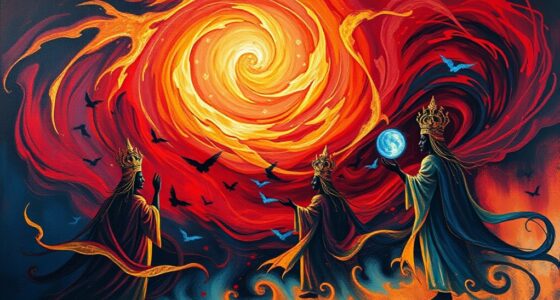

Soft focus and blurred painting techniques shift the focus from sharp details to mood and emotion, creating immersive, atmospheric scenes. By blending colors seamlessly and using gentle brushwork, these artworks evoke feelings of intimacy, calmness, or longing. They challenge you to look beyond surface details and engage with the deeper emotional context. If you continue exploring, you’ll discover how artists masterfully use these methods to craft powerful visual stories.
Key Takeaways
- Soft focus and blurring techniques create atmospheric, mood-driven paintings that emphasize emotion over sharp detail.
- These methods blend colors seamlessly, guiding viewers’ emotional responses and evoking feelings like calmness or passion.
- Artists utilize glazing, feathering, and controlled fading to achieve a dreamlike, immersive quality in their work.
- The trend emphasizes suggestion and subtlety, encouraging personal interpretation and emotional connection.
- Exploring this style reveals how less defined forms can powerfully convey mood, memory, and sensory experiences.

Soft focus and blurred painting techniques have long captivated viewers by emphasizing mood and emotion over sharp detail. When you look at these works, you’re drawn into an atmosphere where the boundaries between objects dissolve, inviting you to experience the scene on an intuitive level. This approach relies heavily on a nuanced understanding of color theory and artistic techniques that prioritize subtle gradation and harmonious palettes. By blending colors seamlessly and avoiding harsh lines, artists create a sense of movement, intimacy, or fleeting moments that resonate deeply with your senses.
Embrace the subtle harmony of blurred techniques that evoke mood and intimacy beyond sharp detail.
In mastering these techniques, artists often manipulate color relationships to evoke specific emotions. For instance, warm hues like reds and oranges can generate feelings of warmth or passion, while cooler shades such as blues and greens tend to evoke calmness or melancholy. The art lies in how brushstrokes and color gradients interact, encouraging your eye to glide effortlessly across the canvas rather than fixate on any single detail. This mastery of color theory becomes essential because it guides the artist in creating a cohesive, immersive experience that amplifies the emotional impact of the work. By carefully choosing and blending colors, they craft a visual language that communicates mood with subtlety and nuance.
From a technical perspective, these artistic techniques often involve a combination of soft brushwork, glazing, and controlled fading. You might notice how the edges of objects are intentionally blurred or how light and shadow gently merge, removing hard contours that would otherwise define shapes sharply. Such methods require a delicate touch and an understanding of how to build layers gradually, emphasizing atmospheric effects over precise realism. Artists may also employ techniques like scumbling or feathering to enhance the softness, creating a dreamlike quality that invites you to project your feelings onto the scene. These approaches turn what could be a simple painting into an evocative experience, where the overall mood becomes more significant than the individual elements.
Additionally, understanding the compositional balance in blurred paintings helps artists guide viewers’ emotions and focus, further enhancing the immersive quality of the work. Ultimately, soft focus and blurred painting techniques challenge you to see beyond surface details and to connect with the emotional core of a scene. They demonstrate how artistic techniques and color theory combine to craft visual narratives that evoke mood, memory, and sensation. As you engage with such works, you’re encouraged to interpret and feel rather than analyze, making the experience personal and immersive. This trend underscores the power of suggestion in art—where less becomes more—and reminds you that sometimes, the beauty lies in what’s just out of focus.
soft focus painting brushes
As an affiliate, we earn on qualifying purchases.
As an affiliate, we earn on qualifying purchases.
Frequently Asked Questions
How Do Soft Focus Techniques Influence Viewer Emotions?
Soft focus techniques influence your emotions by creating a gentle, dreamlike atmosphere that evokes calmness and nostalgia. They encourage a perception shift, making scenes feel more intimate and emotionally resonant. As your eyes soften the details, you may feel a deeper connection to the artwork, experiencing heightened feelings of serenity or longing. This subtle approach guides your emotional response, allowing you to engage with the piece on a more personal and heartfelt level.
What Historical Art Movements Inspired Blurred Painting Styles?
Think of blurred painting styles as a gentle fog rolling over a landscape, inspired by Impressionist motifs that emphasize fleeting moments. You’ll see Abstract influences shaping the soft, indistinct forms, creating a sense of movement and emotion. These movements, like Impressionism and early Abstract art, pushed artists to focus on mood rather than detail, inspiring modern blurred techniques that evoke atmosphere and subconscious feelings with fluidity and nuance.
Are There Specific Artists Renowned for Soft Focus Artwork?
You’ll find artists like Claude Monet and J.M.W. Turner renowned for soft focus artwork. They use Impressionist techniques and Romantic aesthetics to create dreamy, blurred effects that evoke emotion and atmosphere. Their mastery of loose brushwork and subtle color blending results in paintings that feel ethereal and immersive. By adopting these approaches, you can achieve a gentle, atmospheric quality that captures fleeting moments and enhances emotional depth in your own art.
How Has Digital Technology Impacted Blurred Painting Trends?
You’ve likely noticed that digital technology has transformed blurred painting trends, making them more accessible. Digital filters and image stabilization tools allow artists to create soft focus effects effortlessly, evoking emotion and mood with precision. This coincidence of technology and artistry opens new horizons, letting you experiment with textures and depths like never before. As a result, blurred paintings now feel more immersive, resonating deeply with viewers in a way that’s both innovative and personal.
Can Blurred Paintings Be Considered Traditional or Contemporary Art?
Blurred paintings can be seen as both traditional and contemporary art, blending impressionist influence with modern techniques like digital manipulation. You might think of the camera obscura as an early tool that inspired this style, emphasizing perception over precision. These artworks challenge classical boundaries, allowing you to appreciate their expressive, fleeting qualities that resonate with contemporary sensibilities while drawing on traditional methods.
blurring art techniques tools
As an affiliate, we earn on qualifying purchases.
As an affiliate, we earn on qualifying purchases.
Conclusion
You step into a world where colors melt and edges dissolve like morning mist, inviting your senses to wander through dreamlike landscapes. Soft focus and blurred paintings become your window to serenity, blurring the line between reality and imagination. As you gaze, the art whispers secrets hidden in gentle haze, encouraging you to see beyond clarity. In this hazy haven, every stroke beckons you closer, revealing beauty in the delicate dance of shadows and light.
glazing and feathering painting kit
As an affiliate, we earn on qualifying purchases.
As an affiliate, we earn on qualifying purchases.
artistic blending brushes for acrylics
As an affiliate, we earn on qualifying purchases.
As an affiliate, we earn on qualifying purchases.