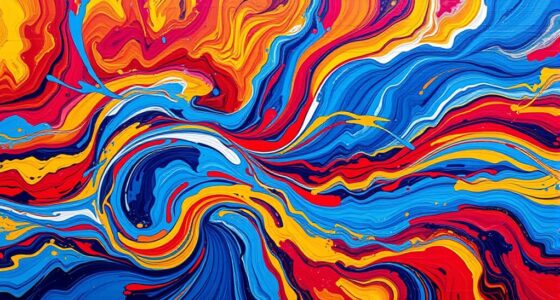
Surrealism is making a strong comeback in contemporary painting as artists push boundaries by exploring dream imagery and subconscious themes. You’ll see vivid, dream-like scenes filled with floating objects, distorted figures, and impossible landscapes that challenge your perceptions. Artists tap into deep emotions and inner fears, using fluid techniques that create movement and ambiguity. If you continue exploring, you’ll discover how this movement continues to shape modern art and reflect our hidden mental worlds.
Key Takeaways
- Contemporary painters increasingly incorporate surrealist dream imagery and subconscious themes to challenge perception and evoke emotional responses.
- Surrealism’s techniques, like blurred edges and fluid transitions, are revitalized to create ambiguous, dream-like visual experiences.
- The movement’s resurgence reflects a desire to explore deep personal and collective subconscious layers through modern art.
- Artists blend bizarre and familiar elements, merging internal visions with contemporary cultural narratives.
- Surrealism remains a vital tool for personal reflection and cultural commentary in today’s innovative painting practices.
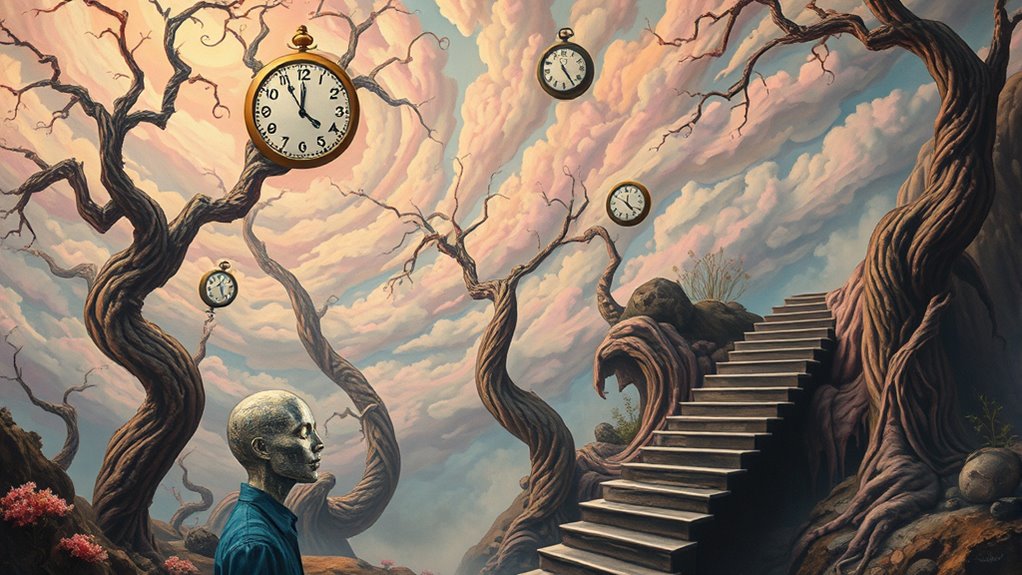
Have you ever wondered how surrealism continues to influence contemporary painting? It’s a movement that relentlessly pushes the boundaries of reality, inviting you into worlds shaped by dream imagery and subconscious themes. In today’s art scene, many painters draw inspiration from surrealism’s core ideas, blending the bizarre with the familiar to create visuals that challenge your perceptions. These artists tap into the depths of their subconscious, transforming internal visions into striking, often unsettling images. The result is a body of work that feels both personal and universal, echoing the surrealists’ desire to access hidden parts of the mind.
Surrealism pushes reality’s boundaries, blending dream imagery with subconscious themes to inspire personal and universal art.
When you look at contemporary surrealist-inspired paintings, you often notice the vivid dream imagery that forms their foundation. These images seem to float outside of logic, evoking the strange, fluid quality of dreams you experience when your mind drifts into the subconscious. Artists use this imagery to evoke emotion and mystery, guiding you through scenes that feel at once familiar and alien. You might see floating objects, distorted figures, or impossible landscapes—elements that seem pulled straight from the subconscious. These visuals serve as portals to inner worlds, encouraging you to explore feelings and thoughts that are usually kept beneath the surface.
The influence of subconscious themes in modern surrealism isn’t accidental; it’s deliberate. Many contemporary painters aim to access deeper layers of their psyche, revealing emotions and ideas that are often difficult to articulate with conventional realism. As you observe these works, you may notice recurring motifs like fragmented memories, symbolic objects, or uncanny juxtapositions—each representing fragments of the subconscious mind. This approach invites you to interpret the paintings on a personal level, recognizing your own hidden fears, desires, or fantasies reflected in the imagery. Additionally, the use of high-yield visual techniques helps artists emphasize the dreamlike quality and fluidity of subconscious thought.
Furthermore, these artists often blend techniques that emphasize the fluidity of dreams and subconscious thoughts. Soft transitions, blurred edges, and surreal juxtapositions create a sense of movement and ambiguity, mirroring the shifting nature of dreams. This stylistic choice enhances the feeling of stepping into a subconscious realm, where logic doesn’t always apply. By embracing these elements, contemporary painters keep surrealism alive, reminding you that the subconscious is a fertile ground for creativity and exploration.
In essence, surrealism’s comeback in contemporary painting isn’t just about aesthetic appeal; it’s about tapping into the deepest parts of human experience. As you engage with these artworks, you’re invited to reflect on your own subconscious themes, making the experience profoundly personal. This ongoing dialogue between past and present keeps surrealism vital, inspiring new generations to delve into the mysterious, often hidden, layers of the mind.
Frequently Asked Questions
How Has Technology Influenced Modern Surrealist Art Techniques?
Technology has revolutionized modern surrealist art by enabling you to use digital manipulation, creating dreamlike, otherworldly images with ease. Virtual reality allows you to immerse viewers in surreal environments, blurring the line between reality and imagination. These tools give you new ways to experiment and express subconscious ideas, pushing the boundaries of traditional surrealism and making your art more dynamic, interactive, and engaging for contemporary audiences.
Are There Prominent Contemporary Surrealist Artists Gaining International Recognition?
Yes, you can see prominent contemporary surrealist artists gaining international recognition. They often create dreamlike landscapes filled with symbolic imagery that captivates audiences worldwide. These artists blend traditional surrealist themes with modern techniques, pushing boundaries and inspiring new interpretations. As you explore their work, you’ll notice how they evoke imagination and subconscious thoughts, making surrealism relevant today and ensuring their influence continues to grow on the global stage.
What Themes Are Most Commonly Explored in Current Surrealist Paintings?
In current surrealist paintings, you’ll notice themes like dream imagery and subconscious exploration. Artists often depict bizarre, fantastical scenes that challenge reality, inviting you to uncover hidden emotions and thoughts. You see strange landscapes, distorted figures, and symbolic objects that evoke a sense of mystery. These themes encourage you to interpret the artwork personally, connecting you with the deeper layers of your mind and opening the power of imagination.
How Does Surrealism Intersect With Other Contemporary Art Movements Today?
You see surrealism intersecting with contemporary art movements like pop art, conceptualism, and digital art through dream symbolism and subconscious narratives. Artists blend surrealist imagery with modern techniques, creating layered works that challenge perception. This fusion invites viewers to explore hidden meanings, emphasizing personal subconscious stories while engaging with cultural commentary. By combining these elements, contemporary surrealism pushes boundaries and enriches the dialogue between past and present art movements.
What Role Does Social Media Play in Promoting Surrealist Art?
Social media acts like a magic mirror, reflecting surrealist art to a global audience. You can explore digital curation, which highlights striking pieces and connects artists with fans instantly. Viral marketing helps surrealist works spread quickly, turning them into trends overnight. By sharing and engaging online, you play a part in amplifying surrealism’s dreamlike essence, making it accessible and mesmerizing for new generations.
Conclusion
So, here you are, witnessing surrealism’s ironic revival in today’s art world. Just when you thought it was a relic of the past, it surprises you, blending dreams and reality again. Maybe it’s a sign that we all crave a little escape from the mundane, or perhaps artists just enjoy messing with your perception. Either way, surrealism’s comeback reminds us that even in the most logical world, the weird and wonderful never truly disappear.