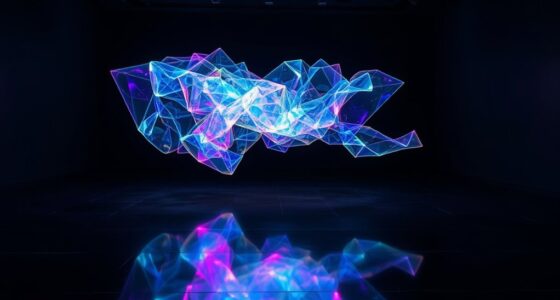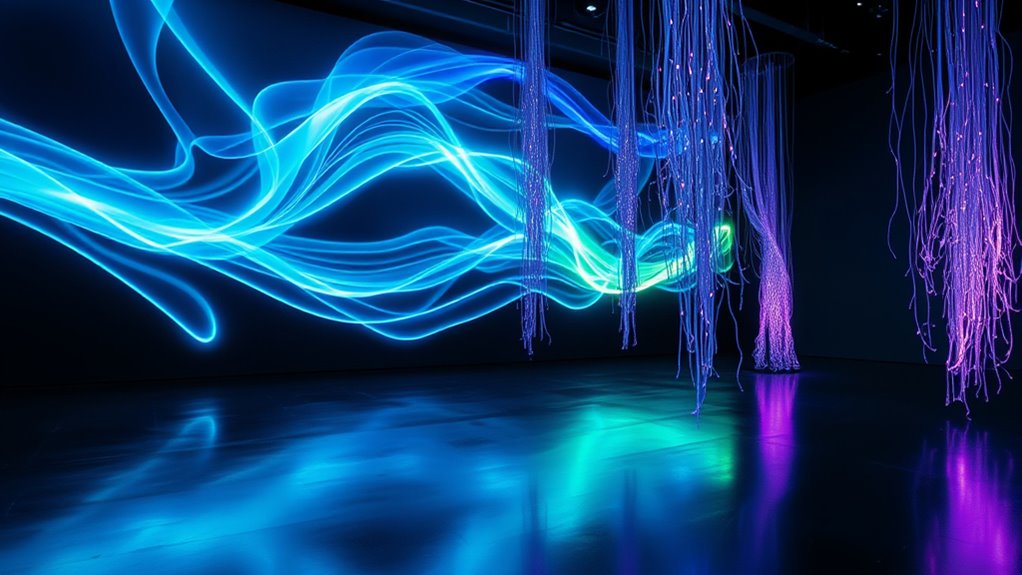

Bioluminescent art installations let you experience living light in mesmerizing ways by using glowing marine organisms or engineered microorganisms. You can find yourself immersed in dark spaces illuminated by shimmering, pulsating waves that change dynamically, creating mesmerizing visual effects. Through bioengineering, artists cultivate these natural glows, often in transparent vessels or integrated structures, promoting both beauty and sustainability. To discover more about how science and art combine to produce such stunning displays, keep exploring this fascinating intersection.
Key Takeaways
- Bioluminescent art installations use living organisms to produce dynamic, glowing visuals that mimic or enhance natural light displays.
- Artists incorporate genetically modified marine microorganisms and algae to create vibrant, sustainable light effects.
- These installations often contain organisms within transparent vessels or structures, allowing interactive and immersive experiences.
- The art combines ecological awareness with technological innovation, highlighting marine biodiversity and bioengineering advancements.
- Ongoing research expands possibilities for painting with living light, fostering sustainable, mesmerizing, and educational art forms.

Bioluminescent art installations transform dark spaces into mesmerizing displays of glowing light, enchanting viewers with their natural radiance. These installations harness the mesmerizing glow of living organisms, creating immersive experiences that feel both magical and sustainable. By integrating bioengineering techniques, artists can cultivate and manipulate bioluminescent organisms, often derived from marine ecosystems, to produce vibrant, moving displays. You might find yourself walking through a darkened room where shimmering waves of light seem to ripple and pulse, all powered by living creatures that glow naturally. This blending of art and science allows for dynamic visuals that change and evolve, making each encounter unique. Researchers and artists work together to cultivate bioluminescent microbes, algae, or marine invertebrates in controlled environments, ensuring their safety and consistency. The foundation of these luminous displays lies in understanding and utilizing bioengineering techniques. Scientists carefully adjust conditions to promote effective bioluminescence or insert specific genes to achieve particular colors and intensities. This scientific approach not only guarantees the safety and sustainability of the organisms but also opens up endless creative possibilities for artists. Marine ecosystems provide the inspiration and raw materials for these installations. Many bioluminescent species naturally inhabit the depths of our oceans, where their glow serves purposes like attracting prey, communication, or camouflage. By studying these marine organisms, bioengineers learn how to replicate or enhance their glowing capabilities, contributing to marine ecosystem conservation efforts. As an artist, you benefit from this knowledge because it allows you to incorporate authentic, living elements into your work. You might work with bioengineered plankton or other marine microorganisms, which can be contained within transparent vessels or integrated into larger structures. Watching these organisms come alive with light as you approach or interact heightens the sense of wonder and connection to nature. Understanding marine ecosystems and their organisms enriches your ability to create compelling bioluminescent displays. Exploring genetic modification techniques further enhances the potential to customize the colors and behaviors of these living lights. Incorporating sustainable practices ensures that these installations are environmentally responsible and can serve as educational tools. Additionally, ongoing research into bioluminescent mechanisms continues to expand what is possible in this innovative art form. In essence, these bioluminescent installations are more than just beautiful displays; they’re a convergence of ecological understanding, technological innovation, and artistic vision. They remind you that nature’s brilliance can be harnessed responsibly to inspire and educate. As you explore these glowing environments, you gain a deeper appreciation for marine ecosystems and the potential of bioengineering techniques to transform art and environmental awareness. This fusion of science and creativity demonstrates that living light isn’t just a spectacle but also a tribute to human ingenuity and respect for the natural world.
bioluminescent microorganisms for art installations
As an affiliate, we earn on qualifying purchases.
As an affiliate, we earn on qualifying purchases.
Frequently Asked Questions
How Sustainable Are Bioluminescent Art Installations?
You’re wondering how sustainable bioluminescent art installations are. Their ecological impact depends on factors like resource sustainability, including how the bioluminescent organisms are sourced and maintained. When designed responsibly, they can minimize environmental harm by reducing energy consumption compared to traditional lighting. However, if not managed carefully, they may disrupt local ecosystems. Overall, with sustainable practices, they offer an eco-friendly alternative that balances artistic innovation with ecological considerations.
What Safety Measures Protect Viewers From Biological Materials?
Imagine walking through a glowing forest, trusting the safety measures in place. You’ll find biological contamination prevention is key, with strict protocols like containment barriers and sterilized equipment. Viewer exposure safeguards, such as protective glass and controlled lighting, prevent direct contact. These measures create a safe environment, ensuring you enjoy the luminous beauty without risk. Trust that experts prioritize your safety while marveling at this living light display.
Can Bioluminescent Art Be Used Indoors Safely?
You can use bioluminescent art indoors safely if you manage indoor safety and control light intensity. Guarantee the biological materials are non-toxic and properly contained to prevent exposure. Keep light levels at a comfortable intensity to avoid eye strain or discomfort. Regularly monitor the environment, use appropriate ventilation, and follow safety guidelines. With these precautions, bioluminescent art provides a mesmerizing experience without compromising safety.
How Long Do Bioluminescent Effects Last Before Fading?
Think of bioluminescent effects as fleeting fireflies dancing in the night. Their glow isn’t eternal; bioluminescent decay gradually dims their light over time. Typically, this light duration lasts from a few hours to several days, depending on the species and environmental conditions. As hours pass, expect a gentle fade, a natural reminder that even the brightest moments are temporary. Your display’s lifespan hinges on these delicate biological rhythms.
Are Bioluminescent Organisms Ethically Sourced or Cultivated?
You might wonder if bioluminescent organisms are ethically sourced or cultivated. Organism sourcing varies; some are sustainably collected, while others are cultivated in labs. Ethical concerns focus on environmental impact and animal welfare, so it’s vital to guarantee responsible practices. When artists or organizations prioritize ethical sourcing, they minimize harm and support conservation efforts. Always ask about the sourcing methods to make certain the bioluminescent organisms are obtained responsibly.

API MARINE ALGAEFIX Algae Control 16-Ounce Bottle
Contains one (1) API MARINE ALGAEFIX Algae Control 16-Ounce Bottle
As an affiliate, we earn on qualifying purchases.
As an affiliate, we earn on qualifying purchases.
Conclusion
While some might worry about the environmental impact of bioluminescent art, these installations often utilize naturally occurring organisms, making them a sustainable choice. By embracing this living art form, you not only experience breathtaking visuals but also support innovative, eco-friendly creativity. So, don’t dismiss bioluminescent art as merely novelty—you’re witnessing a future where art and nature seamlessly merge, illuminating new possibilities without harming the planet.
bioluminescent microbe cultivation kit
As an affiliate, we earn on qualifying purchases.
As an affiliate, we earn on qualifying purchases.
transparent vessels for bioluminescent displays
As an affiliate, we earn on qualifying purchases.
As an affiliate, we earn on qualifying purchases.