
TL;DR

Get art and craft supplies delivered free with Prime
- Fast, free delivery on millions of items
- Prime Video, Amazon Music and more included
- Member-only deals all year
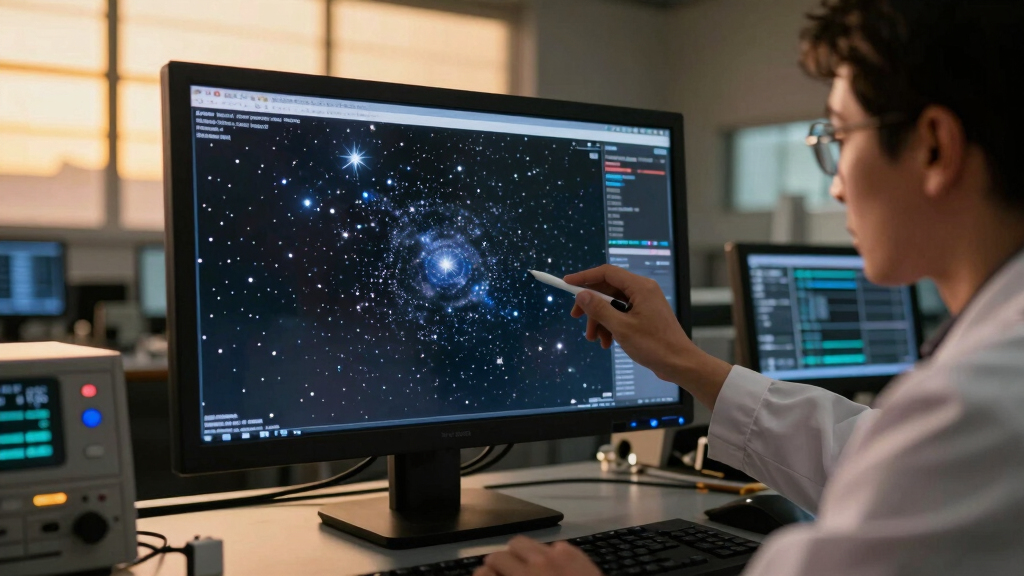
NASA’s James Webb Space Telescope has produced a 223-megapixel image of the Cigar Galaxy (M82), revealing approximately 16.5 million stars. This detailed infrared image offers new perspectives on galaxy formation and starburst activity.
NASA’s James Webb Space Telescope has released a new 223-megapixel composite image of the Cigar Galaxy (Messier 82), revealing approximately 16.5 million stars in unprecedented detail. This achievement highlights Webb’s capability to peer through dust and explore galaxy evolution, marking a significant advancement in astronomical imaging.
The image, captured over 65 hours using Webb’s Near-Infrared Camera (NIRCam), depicts the edge-on starburst galaxy located 12 million light-years away. It reveals a dense stellar population and the galaxy’s extended disk structure, providing new data on its star formation activity.
Initial analysis suggests that M82 experienced a rapid starburst likely triggered by a galaxy merger, causing star formation rates ten times higher than that of the Milky Way. Researchers note that this event probably lasted a few hundred million years, a relatively short period in cosmic terms.
Compared to previous observations by the Hubble Space Telescope, Webb’s infrared imaging penetrates dust clouds that obscure many stars, allowing scientists to see millions of stars that were previously invisible. Experts emphasize the importance of combining Webb data with other missions to deepen understanding of galaxy dynamics.
Implications for Understanding Galaxy Evolution
This new image demonstrates Webb’s ability to resolve individual stars in distant galaxies, contributing to the study of galaxy formation and evolution. The detailed view of starburst activity provides information about the triggers and duration of such events, which are relevant for models of galaxy development.
By examining the galaxy’s stellar density and structural features, the data may assist scientists in understanding the effects of galaxy mergers and interactions on star formation rates. Such insights are important for developing comprehensive theories of galaxy lifecycle and evolution.
infrared telescope for astronomy
As an affiliate, we earn on qualifying purchases.
As an affiliate, we earn on qualifying purchases.
Background on M82 and Prior Observations
The Cigar Galaxy, known as Messier 82, has been a subject of astronomical research due to its intense starburst activity. Previous observations by the Hubble Space Telescope detailed its gas and dust structures but could not resolve the multitude of stars hidden within its dust clouds.
Webb’s infrared capabilities allow it to see through these dust layers, providing a clearer picture of the galaxy’s stellar population. The current image builds on earlier data, offering a more comprehensive understanding of the galaxy’s recent history and star formation processes.
“Webb’s ability to resolve millions of stars in a distant galaxy like M82 enhances our capacity to study galaxy evolution.”
— an anonymous researcher
As an affiliate, we earn on qualifying purchases.
Unanswered Questions About M82’s Evolutionary Triggers
While the image reveals numerous stars and suggests a recent galaxy merger, the specific mechanisms that triggered the starburst are not yet fully understood. Researchers are continuing to investigate the timing, nature, and effects of potential interactions that may have influenced M82’s current state.
It remains uncertain how many stars remain undetected beyond Webb’s current detection limits or how the galaxy’s future evolution will unfold based on this new information.
As an affiliate, we earn on qualifying purchases.
Future Studies and Data Integration Efforts
Researchers plan to analyze the Webb data further to model M82’s star formation history and evaluate hypotheses regarding its recent merger. Additional observations across different wavelengths are expected to complement these findings.
Collaborative efforts involving Webb, Hubble, and other observatories will continue to improve understanding of galaxy dynamics, with future missions potentially providing more detailed insights into galaxy evolution processes.
deep space astrophotography camera
As an affiliate, we earn on qualifying purchases.
As an affiliate, we earn on qualifying purchases.
Key Questions
How does Webb’s image of M82 compare to previous images?
Webb’s infrared imaging allows it to see through dust clouds that obscured many stars in earlier Hubble images, revealing approximately 16.5 million stars in M82, compared to fewer visible in previous observations.
Why is the starburst activity in M82 significant?
The intense star formation, likely triggered by a galaxy merger, provides useful data for understanding how galaxy interactions influence star formation rates and galaxy evolution.
What does this image tell us about galaxy mergers?
The data supports the idea that galaxy mergers can induce rapid, short-lived starburst events, but further analysis is needed to understand the specific triggers and timeline.
Will more images of M82 be released?
Further observations and analyses are planned, which may include additional high-resolution images and multi-wavelength data to enhance understanding of M82’s structure and history.
How does this advance our understanding of galaxy evolution?
This image provides detailed information about stellar populations in a starburst galaxy, supporting the refinement of models describing galaxy growth and change over time.
Source: rss
Halloween Picks
halloween
As an affiliate, we earn on qualifying purchases.