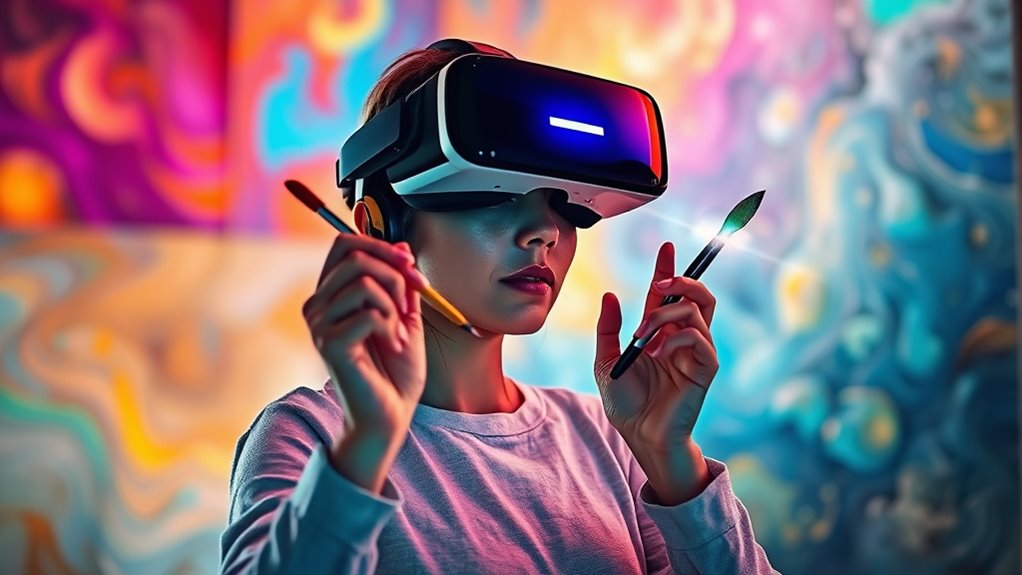

Virtual art therapy using VR environments offers a unique, immersive way to explore and express your emotions. It lets you create and manipulate art in a limitless digital space, helping you process complex feelings and gain insights. With a safe and judgment-free environment, you can revisit and adjust your artwork, building confidence and resilience. If you keep exploring, you’ll discover how this innovative approach can transform your emotional well-being and personal growth.
Key Takeaways
- VR environments provide immersive, interactive spaces for self-expression and emotional exploration in art therapy.
- They facilitate access to complex feelings, promoting understanding and processing through creative expression.
- Virtual art therapy creates a safe, judgment-free environment for vulnerable sharing and self-discovery.
- Guided prompts and meditations enhance self-awareness and engagement within VR art sessions.
- The technology supports emotional healing, regulation, and personalized treatment through spontaneous, collaborative art-making.
Virtual art therapy using VR environments is transforming mental health treatment by offering immersive, interactive experiences that foster self-expression and emotional healing. When you step into a virtual space, you’re no longer confined by physical limits or traditional tools. Instead, you have access to limitless digital canvases where you can explore your thoughts and feelings through digital self-expression. This form of therapy leverages immersive creativity, allowing you to create, manipulate, and share art in ways that feel both freeing and deeply personal. As you engage with VR art tools, you can paint, sculpt, or design in 3D environments, giving your emotions a tangible form that can be difficult to express through words alone.
The power of immersive creativity in VR art therapy lies in its ability to make abstract or complex feelings more accessible. When you’re immersed in a virtual environment, your focus sharpens, and your mind becomes more open to exploring different facets of your emotional landscape. The act of creating becomes a dialogue with yourself, helping you process trauma, reduce anxiety, or simply find calm. Unlike traditional art therapy, VR allows you to experiment with different forms and colors instantly, without concern for mess or judgment. This encourages a sense of freedom and spontaneity that can access hidden emotions and promote healing.
Immersive VR art unlocks hidden emotions, fostering healing through spontaneous, judgment-free self-expression.
Additionally, the digital self-expression facilitated by VR environments provides a safe space for vulnerable sharing. You can create art that reflects your inner world without fear of judgment, which can be especially beneficial for those who feel misunderstood or stigmatized. The virtual setting also offers opportunities to revisit and modify your creations, reinforcing a sense of control and mastery over your emotional journey. This iterative process can build confidence and resilience, as you see your growth reflected in your evolving artwork.
Furthermore, VR art therapy often incorporates interactive features, like guided meditations or prompts, that enhance self-awareness. These tools help you focus your intentions and deepen your emotional insight. The immersive nature of VR encourages full engagement, making it easier to stay present and connected to your feelings. Incorporating digital self-expression techniques in therapy can also improve motivation and adherence to treatment plans, as engaging with technology often increases interest and participation. Over time, this consistent practice can strengthen your ability to regulate emotions and develop healthier coping strategies. As you harness immersive creativity and digital self-expression through VR, you’re not only exploring artistic outlets but actively participating in your emotional healing process, making therapy more engaging, personalized, and effective.

3D VR Headset, Virtual Reality Glasses Headset Helmets, Compatible with 5.0-7.0 inch with Controller, for Mobile Games & Movies(Black)
【Immersive 3D Movie Viewing】Gaming and watching movies in 3D works best when proper your eyes properly align with…
As an affiliate, we earn on qualifying purchases.
As an affiliate, we earn on qualifying purchases.
Frequently Asked Questions
How Accessible Is VR Art Therapy for Individuals With Physical Disabilities?
VR art therapy can be quite accessible for individuals with physical disabilities, especially when designed with assistive technology. You’ll find that user adaptability features, like customizable controls and voice commands, make it easier to engage. Developers increasingly focus on inclusivity, allowing you to participate fully regardless of your mobility challenges. While some barriers remain, ongoing advancements are making VR art therapy more obtainable and tailored to your needs.
What Are the Privacy Concerns Related to VR Therapy Sessions?
Your privacy in VR therapy is more fragile than glass. Data security is a major concern, as sensitive information about your mental health and personal details could be susceptible to hacking or leaks. Confidentiality concerns arise if session recordings or personal data are improperly stored or shared. Always make certain your VR provider uses strong encryption and transparent privacy policies to protect your information and maintain trust in your therapy experience.
How Do Therapists Measure Progress in Virtual Art Therapy?
You measure progress in virtual art therapy through digital assessments that track your artwork evolution and emotional metrics that gauge your emotional responses. Therapists analyze changes in your art style, complexity, and themes over time, alongside your expressed feelings and engagement levels. This combination helps identify improvements, emotional breakthroughs, and areas needing further attention, providing an exhaustive view of your therapeutic journey in the virtual environment.
Can VR Art Therapy Be Combined With Traditional Therapy Methods?
Like a painter blending colors on a canvas, you can seamlessly integrate VR art therapy with traditional methods, enriching the healing process. By combining techniques, you customize each session to meet individual needs, fostering deeper engagement. This hybrid approach allows you to leverage the strengths of both worlds, ensuring a holistic experience that addresses emotional, cognitive, and creative growth. Mixing these techniques creates a more dynamic, personalized therapy journey for your clients.
What Are the Costs Associated With Implementing VR Environments for Therapy?
The costs of implementing VR environments for therapy mainly involve equipment expenses and a thorough cost analysis. You’ll need to budget for VR headsets, motion controllers, and compatible hardware, which can range from a few hundred to a few thousand dollars. Additionally, consider software costs and ongoing maintenance. Conducting a detailed cost analysis helps you evaluate whether the benefits outweigh the initial investment, ensuring you make informed decisions for your therapy practice.
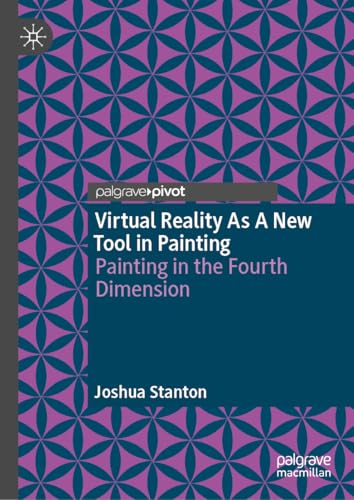
Virtual Reality As A New Tool in Painting: Painting in the Fourth Dimension
As an affiliate, we earn on qualifying purchases.
As an affiliate, we earn on qualifying purchases.
Conclusion
By embracing virtual art therapy using VR environments, you open yourself to new possibilities, new expressions, and new healing. You tap into creativity, you explore emotions, and you transform experiences. You break down barriers, you build up resilience, and you discover strength. Virtual reality becomes more than a tool—it becomes a journey, a connection, a path toward wellness. In this digital space, you find yourself, you heal yourself, and you redefine what therapy can truly be.

NEWSTYP 5~7inch VRG Pro 3D VR Glasses Virtual Reality Full Screen Visual Wide-Angle VR Glasses Box for 5 to 7 inch Smartphone Eyeglasses with Remote Control (Black Basic)
【Suitable for Most Mobile Phones】: VR Headset with detachable large screen frame, large and small screen mobile phones…
As an affiliate, we earn on qualifying purchases.
As an affiliate, we earn on qualifying purchases.

Abacus Brands Virtual Reality World Art! – Illustrated Interactive VR Book and STEM Learning Activity Set – for Ages 8 and Up
THE ULTIMATE GIFT EXPERIENCE – Tour the world like never before in Virtual Reality World Art! Offering an…
As an affiliate, we earn on qualifying purchases.
As an affiliate, we earn on qualifying purchases.