
TL;DR

Get art and craft supplies delivered free with Prime
- Fast, free delivery on millions of items
- Prime Video, Amazon Music and more included
- Member-only deals all year
Teresa Margolles is a Mexican artist whose long-established work addresses violence, death and social trauma, often using materials connected to sites of violence. Online interest in her work is currently spiking, but no specific exhibition, announcement or event has been confirmed as the cause.
Online interest in the Mexican artist Teresa Margolles and her work confronting violence has risen sharply in recent days, according to web search and news coverage trends — but no specific exhibition opening, announcement or event has been confirmed as the cause of the spike.
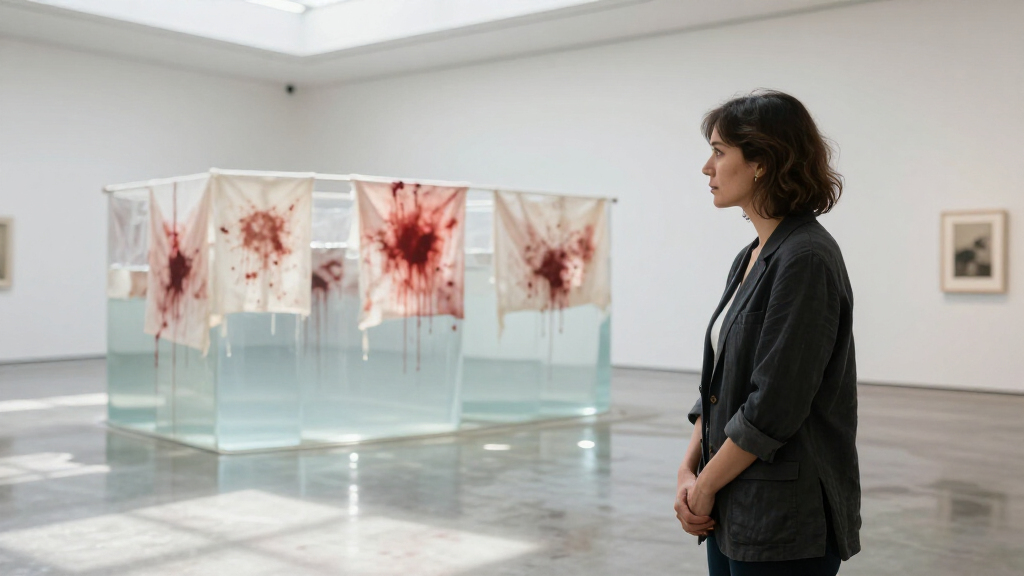
What is well established, independent of the current interest, is Margolles’s standing in contemporary art. Born in Culiacán, Sinaloa, in 1963, she trained first as a communications scientist before turning to art, and she worked for years in morgues in Mexico City — an experience that shaped her material practice. Her work has long used substances and objects connected to death and violence, including water used to wash corpses and materials gathered from sites of killings, to make the human cost of violence physically present to viewers.
She represented Mexico at the 53rd Venice Biennale in 2009, and her work has since been exhibited at major international venues, including museums and biennials across Europe and the Americas. She is widely described in art criticism as one of the most uncompromising artists working on the subject of narco-violence, femicide and social death in Latin America, though individual works and their presentation have at times drawn controversy and debate.
The phrase accompanying the current spike — “the violence we breathe” — reflects a recurring theme in commentary on her practice: that violence in Mexico is not a distant spectacle but an ambient condition, absorbed into daily life, and that her art makes that absorption tangible.
Why an Artist of Atrocity Draws Crowds Now
Spikes in attention to artists like Margolles usually track with a current event: a major museum retrospective, a biennial appearance, an acquisition, or renewed public discussion about the violence her work addresses. Because her subject matter — cartel violence, femicide, migration deaths — is ongoing news in Mexico and beyond, interest in her work can resurface whenever those topics dominate headlines.
For readers, the significance is twofold. First, Margolles’s work is frequently cited in discussions of how art can document social violence without aestheticizing it, a live debate in art criticism. Second, her prominence means that any confirmed new exhibition or project would likely draw international coverage, making the current unexplained spike worth watching.
Popular right now

Ninja CREAMi Scoop & Swirl 13-in-1 Ice Cream and Soft Serve Maker, NC701

Shark Rotator Lift-Away Upright Vacuum with DuoClean PowerFins, Wine Purple, LA702

eufy E15 Gen 2 Wire-Free Robotic Lawn Mower
As an affiliate, we earn on qualifying purchases.
From Culiacán Morgues to the Venice Biennale
Margolles emerged in the 1990s as part of a generation of Mexican artists responding to escalating drug-related violence. She was associated with the group SEMFO, which worked with materials from morgues, and later co-founded the art space Service to the People. Over three decades she has worked in installation, photography, performance and textile, often collaborating with communities affected by violence — including relatives of the disappeared and murdered women of Ciudad Juárez.
Her Venice Biennale contribution in 2009 brought her international recognition, and subsequent projects have continued to place traces of violence — cloths, earth, water — into gallery spaces that rarely host them.
No Confirmed Trigger for the Spike
The metadata driving this report indicates only a rise in search and coverage interest. It does not identify any exhibition, publication, auction, award, or public statement by Margolles or any institution. The trigger for the spike is unconfirmed, and readers should treat any specific claim about a new event — an opening, a retrospective, a controversy — as unverified until an institution or the artist’s representatives confirms it.
It is also unclear whether the interest is global or concentrated in a particular region, and whether it stems from the art world or from broader news coverage of violence in Mexico.
Watching for an Official Announcement
If a major exhibition or project is behind the interest, an institutional announcement from a museum, biennial or gallery would typically follow within days or weeks. Readers seeking confirmation can monitor the websites of institutions that have shown Margolles’s work previously and reputable art press. Absent such confirmation, the spike should be read as renewed general attention to a long-established body of work rather than news of a specific development.
Key Questions
Who is Teresa Margolles?
A Mexican artist born in 1963 in Culiacán, Sinaloa, known for work addressing violence and death in Mexico, often using materials gathered from morgues and sites of violence.
Has a new exhibition by Margolles been announced?
No. The current rise in interest has no confirmed cause. No exhibition, project or statement has been verified as the trigger.
Why is her work considered controversial?
Her use of human-connected materials — such as water used to wash bodies — raises ethical questions about consent, dignity and the display of death, which critics and audiences have debated for years.
What does “the violence we breathe” refer to?
It reflects the common critical reading of her work: that violence in Mexico has become an ambient, inescapable condition rather than a series of isolated events.
Source: rss