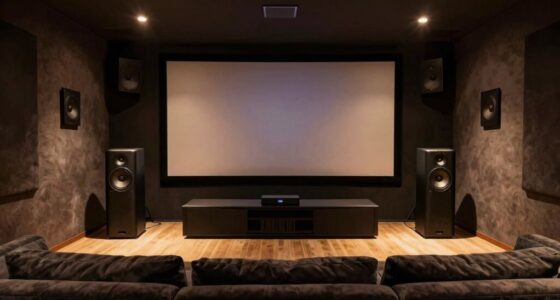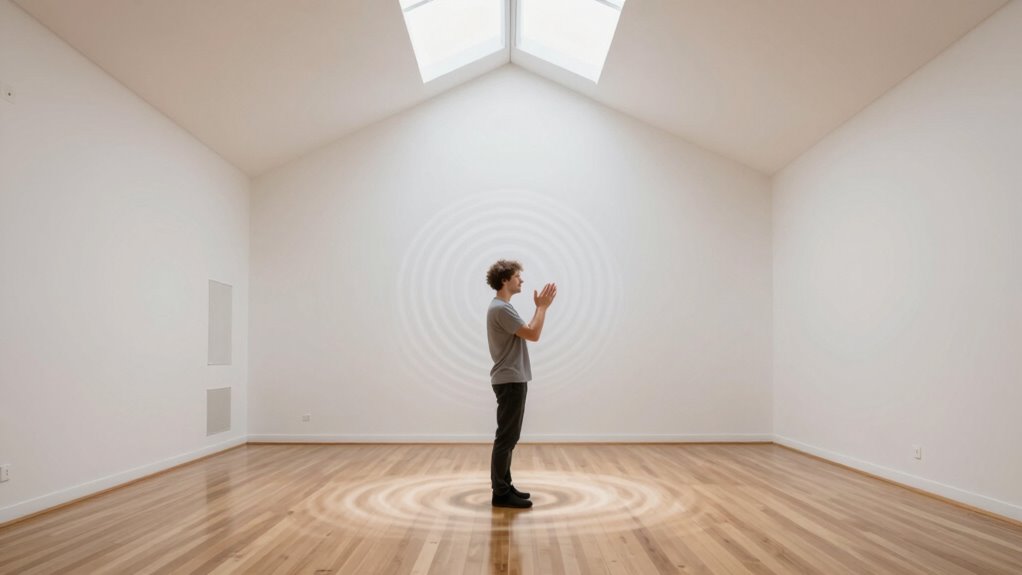
The clap test is a simple way to assess your room’s acoustics by clapping loudly and listening for echoes or reverberations. Clear, short sounds mean your space absorbs sound well, while lingering echoes point to reflections from hard surfaces. By performing this test in different spots, you find out where the acoustics need improvement. Keep exploring to discover how to interpret results and make your room sound their best.

Get art and craft supplies delivered free — and shop member deals
- Fast, free delivery on millions of items
- Access to Prime Big Deal Days deals on October 6–7
- Prime Video, Amazon Music and more included
Key Takeaways
- The clap test assesses room acoustics by listening for echoes, reverberation, and sound clarity after clapping loudly in different areas.
- Sharp, short sounds indicate good absorption; lingering echoes reveal reflection issues needing treatment.
- Proper preparation, like eliminating external noise and removing clutter, ensures accurate test results.
- Interpreting echoes and reverberation signs helps identify acoustic problems such as excessive reflections or muffling.
- Using soft furnishings, acoustic panels, and strategic furniture placement can improve room sound quality based on test findings.
acoustic panels for room soundproofing
As an affiliate, we earn on qualifying purchases.
As an affiliate, we earn on qualifying purchases.
What Is the Clap Test and Why Does It Matter for Room Acoustics?
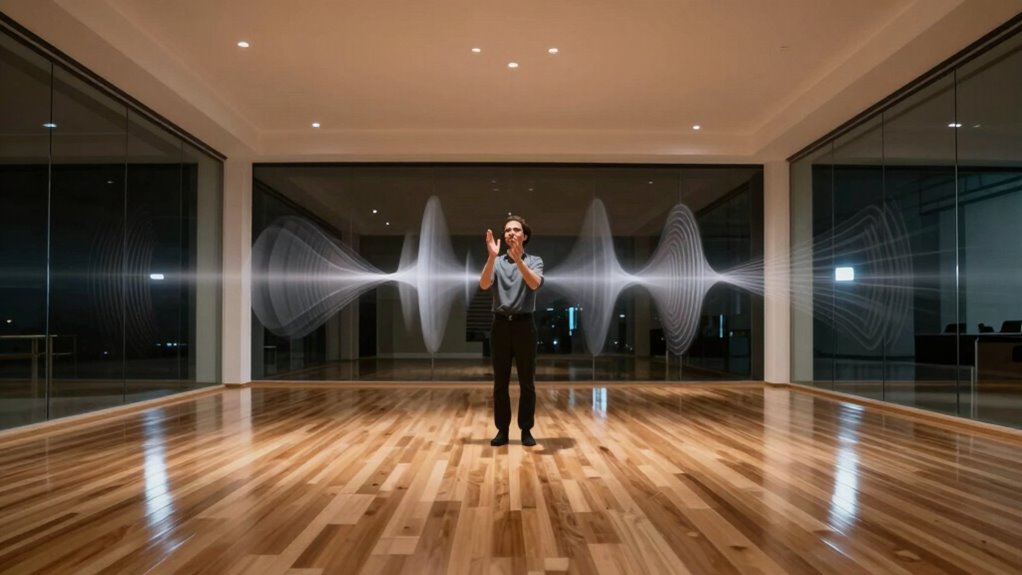
Have you ever wondered how to quickly assess a room’s acoustics? The clap test is a simple method that helps you do just that. By clapping your hands loudly, you create a quick burst of sound, which reveals important insights through echo analysis. When you clap, pay attention to how the sound reflects off the walls, ceiling, and objects. If the sound echoes loudly or lingers, it indicates strong sound reflection and poor acoustic treatment. Conversely, a short, crisp clap suggests better sound absorption. This test gives you an immediate sense of the room’s acoustic qualities and helps identify areas needing improvement. Understanding how sound reflection behaves in your space is essential for designing a room with balanced acoustics. Additionally, incorporating sound-absorbing materials can significantly improve the acoustic environment and reduce unwanted echoes. Being aware of the contrast ratio of your space can also influence how you optimize acoustic treatments for clarity and comfort. Moreover, the room’s size and shape play a crucial role in how sound behaves within the space, affecting your assessment and treatment strategies. Recognizing the power of sound reflection helps in implementing effective acoustic solutions tailored to your room’s unique characteristics. A deeper understanding of room acoustics principles allows for more precise adjustments to enhance sound quality.
bass traps for acoustic treatment
As an affiliate, we earn on qualifying purchases.
As an affiliate, we earn on qualifying purchases.
How to Get Your Room Ready for the Clap Test

Preparing your room for the clap test guarantees accurate results. First, eliminate noise sources and minimize external sounds using soundproofing techniques like sealing gaps and adding weather stripping. Next, ensure your space is free of clutter that could distort reflections. Installing bass traps in corners helps control low-frequency reverberations, making your test clearer. Consider acoustic panels or diffusers to manage mid and high frequencies. Here’s a quick overview:
| Step | What to Do | Why It Matters |
|---|---|---|
| Seal gaps | Use weather stripping and seals | Reduce external noise intrusion |
| Add bass traps | Place in corners | Control bass resonances |
| Clear clutter | Keep surfaces uncluttered | Improve reflection accuracy |
Properly soundproofing your room ensures that external noise does not interfere with your measurements. Additionally, controlling background noise is crucial for achieving precise results during the clap test. Ensuring your room is well acoustically treated enhances the accuracy of your assessment. Taking the time to optimize room acoustics can significantly improve the reliability of your test results. Getting these elements right prepares your room for a precise clap test, revealing true acoustic characteristics.
As an affiliate, we earn on qualifying purchases.
How to Perform the Clap Test Step by Step

Once your room is set up with proper soundproofing techniques and ideal speaker placement, it’s time to perform the clap test. Stand in the middle of the room and clap loudly once. Listen carefully to the echo or reverberation. If you hear a sharp, quick sound, your room likely has good acoustics. If the clap lingers or creates echoes, you may need to adjust your soundproofing or add acoustic treatments like panels or diffusers. Move to different spots in the room and repeat the process to identify problematic areas. Keep your voice low and consistent to guarantee accurate results. The goal is to detect echo patterns that reveal reflections and standing waves, helping you understand how sound behaves in your space. Understanding acoustic properties can guide you in making effective adjustments for optimal sound quality. Additionally, recognizing how reflective surfaces influence sound can help you better address acoustic issues. Being aware of room geometry can further assist in predicting and controlling sound reflections and resonances. Moreover, understanding sound reflection patterns can help you identify specific problem areas in your room.
As an affiliate, we earn on qualifying purchases.
What Your Clap Test Results Say About Your Room
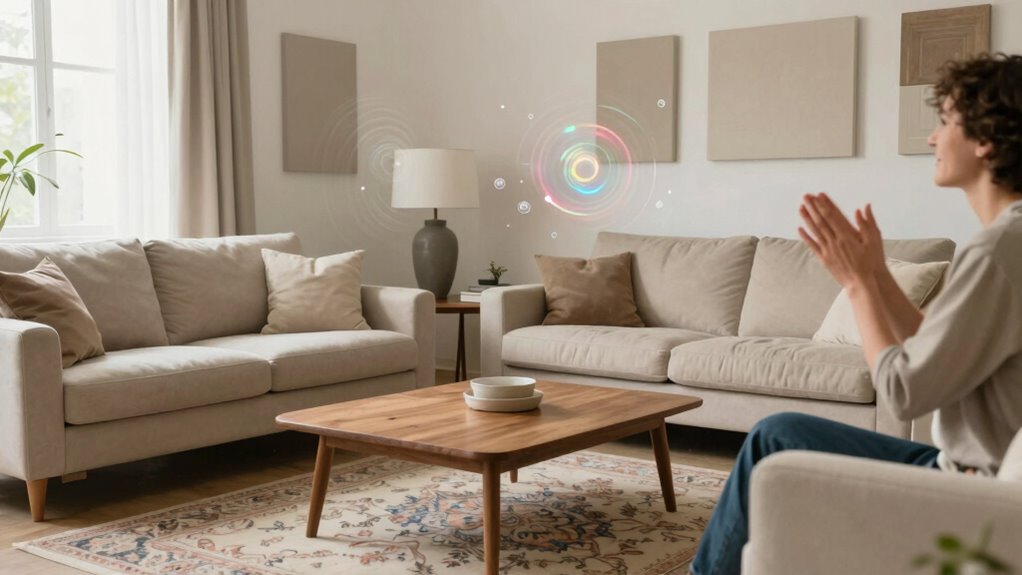
Your clap test results reveal how sound interacts with your room’s surfaces and space. If you notice a sharp, clear echo, your room may lack sound absorption, indicating the need for decorative paneling or soft furnishings. A quick, muffled sound suggests good sound absorption, but excessive deadness could dampen clarity. When sounds bounce excessively, it points to poor furniture placement or hard surfaces that reflect sound too much. Strategic furniture placement can help reduce echoes and improve sound quality. Adding decorative paneling or soft textures can absorb excess reflections, creating a balanced acoustic environment. Understanding room acoustics principles can help you make more informed adjustments to optimize your space. Exploring sound reflection concepts allows you to better analyze and address acoustic issues. Being aware of sound diffusion techniques can further enhance your room’s acoustic balance. Your results guide you on whether to soften your space or address reflective surfaces, helping you optimize your room for better sound clarity and listening comfort.
Recognizing Acoustic Problems Through Common Sounds

You can often recognize acoustic problems by paying attention to everyday sounds. Echoes and excessive reverberation make speech unclear, while clarity issues cause muffled or dull audio. Sound distortion, on the other hand, can produce unexpected echoes or unnatural tones that signal underlying room issues. Recognizing patterns linked to room acoustics can help identify specific problems and guide effective solutions. Additionally, understanding how sound absorption affects room sound can assist in choosing appropriate treatments to improve acoustics. Being aware of acoustic treatment options can further enhance your ability to create a comfortable and sound-friendly environment. Furthermore, room analysis techniques can help diagnose acoustic issues more accurately, allowing for targeted improvements. Careful assessment of room dimensions can also reveal how space influences sound behavior and help optimize acoustic solutions.
Identifying Echoes and Reverberation
How can you tell if a space has problematic echoes or reverberation? Listen carefully to the echo patterns when you clap or speak. If sounds linger and bounce around, creating a continuous, muddy reverberation effect, it’s a sign of excessive reverberation. You might notice the echo repeats multiple times or sounds blurred together, indicating that reverberation effects are overwhelming the room. Sharp, distinct echoes that seem delayed suggest hard surfaces causing reflections. Conversely, if sounds quickly decay and stay clear, the space likely has good acoustics. Recognizing these acoustic clues helps you identify areas with too much echo or reverberation, guiding you toward solutions like adding soft furnishings or diffusers to improve sound clarity and reduce unwanted reverberation effects. Paying attention to room size and shape can also influence how sound behaves within the space.
Detecting Clarity Issues
When echoes and reverberation become problematic, they often distort the clarity of everyday sounds, making it harder to understand speech or enjoy music. You can detect clarity issues by paying attention to how sounds fade or become muddy. If speech sounds muffled or distant, or music feels less vibrant, you might have acoustic problems. Use these clues to identify issues:
- Speech sounds unclear or hard to follow
- Music lacks detail or seems washed out
- Sudden volume drops or unnatural echoes
- Excessive sound bouncing, creating a “slapback” effect
- Inadequate room acoustics that can be improved with proper treatment
Addressing these problems involves implementing soundproofing techniques and improving musical acoustics. Recognizing these clues helps you determine if your space needs acoustic treatment to enhance clarity and overall sound quality.
Recognizing Sound Distortion
Recognizing sound distortion is essential for identifying acoustic problems in a space. When you notice that sounds, like voices or music, seem muffled, echoey, or overly harsh, you’re likely experiencing sound distortion. These distortions often signal acoustic anomalies, such as uneven reflections or excessive reverberation. You might hear a voice become distorted or robotic during recordings or find that music sounds unnatural. Being attentive to these subtle cues helps you pinpoint where the room’s acoustics are compromised. If certain sounds are consistently distorted or muffled, it indicates issues with sound absorption or reflective surfaces. Recognizing these signs early allows you to address the root causes, improving overall sound quality and creating a more balanced acoustic environment.
How to Improve Your Room’s Sound Based on Clap Test Results

If your clap test reveals uneven or harsh echoes, there are several straightforward steps to improve your room’s sound quality. First, consider adding decorative panels that absorb sound and reduce reflections. You can also optimize furniture placement by moving large pieces to break up sound paths and minimize echo. Rearranging your room to avoid parallel walls will help prevent standing waves. Additionally, soft furnishings like rugs, curtains, or cushions can dampen sound and create a warmer acoustic environment. These simple adjustments can considerably improve clarity and reduce harshness, making your space more acoustically balanced. Incorporating decorative panels and strategic furniture placement are quick, effective ways to enhance your room’s sound based on clap test results.
Limitations of the Clap Test and When to Use Sound Measurement Tools
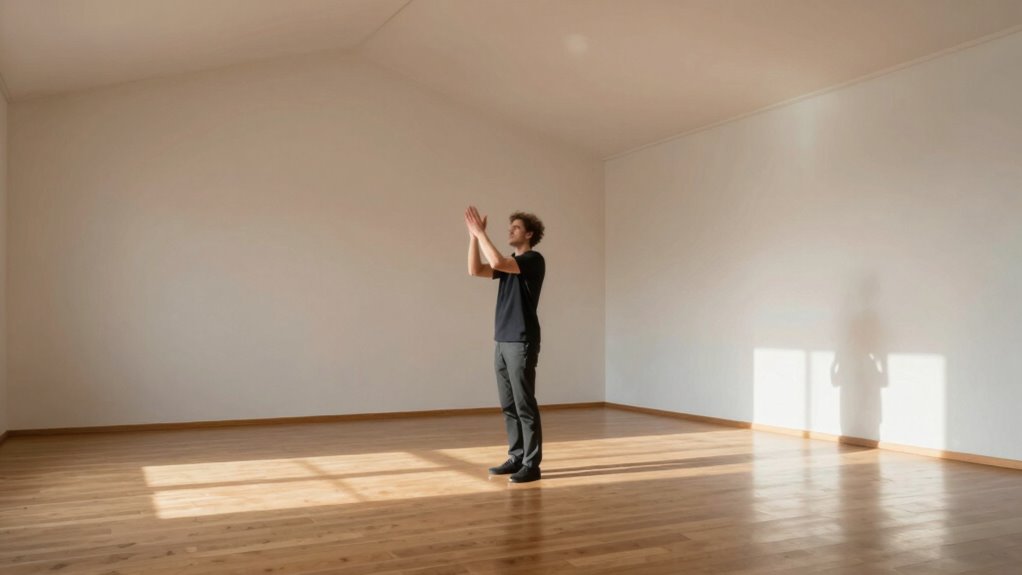
While the clap test offers quick insights into your room’s acoustics, it has limitations that can lead to misleading or incomplete assessments. The main issue is the limitations of measurements—your ears might perceive sound differently depending on mood, fatigue, or expectations, making subjective perception unreliable. The clap test can’t detect specific frequency issues, resonances, or echo times accurately. It also doesn’t account for room irregularities or multiple sound reflections that influence acoustics in complex ways. In situations with high background noise or large spaces, the test’s effectiveness diminishes further. That’s when sound measurement tools become essential. These tools provide precise data, identify problem frequencies, and help you make informed decisions to optimize your room’s acoustics objectively.
Practical Solutions for Acoustic Problems in Your Space

To improve your space’s acoustics, start by adding sound-absorbing materials like panels or curtains to reduce echo. Rearranging furniture and speakers can also help manage sound reflections and improve clarity. These practical strategies make a noticeable difference without requiring major renovations.
Sound Absorbing Materials
When acoustic problems arise in your space, using sound absorbing materials offers a practical and effective solution. These materials help reduce echo and improve sound quality by soaking up excess noise. You can enhance your space with various options, such as:
- Foam panels that dampen sound reflections
- Decorative acoustic panels that add style and function
- Heavy curtains or drapes for window soundproofing techniques
- Rugs and carpets to absorb footsteps and ambient noise
Choosing the right soundproofing techniques, like installing acoustic panels, makes a noticeable difference. Decorative acoustic panels not only improve acoustics but also add a visual appeal. By selectively using these materials, you create a more comfortable and acoustically balanced environment tailored to your needs.
Room Layout Strategies
Optimizing your room layout can considerably improve its acoustic performance by minimizing sound reflections and echo. Start by carefully considering speaker placement; position your speakers at ear level, equidistant from walls, and avoid corners to reduce bass buildup. Use soundproofing techniques like placing furniture, rugs, or acoustic panels strategically to absorb unwanted reflections. Arrange furniture to break up sound paths and prevent direct lines between speakers and reflective surfaces. Keep reflective surfaces away from the direct sound path to reduce echo. Experiment with different layouts, listening closely to identify which setup offers clearer sound and less reverberation. Proper room layout, combined with effective speaker placement and soundproofing, creates a balanced acoustic environment tailored to your space.
FAQs About the Clap Test and Room Acoustics

Many people wonder if the clap test is a reliable way to assess room acoustics. While it’s a quick method, it’s not foolproof. For accurate results, consider how soundproofing techniques influence echo and clarity. The clap test helps identify problem areas but doesn’t measure sound absorption or diffusion directly. Also, aesthetic acoustics play a role; decorative elements can impact sound quality.
Here are some common questions:
- Can the clap test replace professional acoustic analysis?
- How do furniture and decor affect the test results?
- Is it effective for measuring soundproofing effectiveness?
- What are better ways to improve room acoustics beyond the clap test?
Final Tips for Optimizing Your Room’s Sound Environment
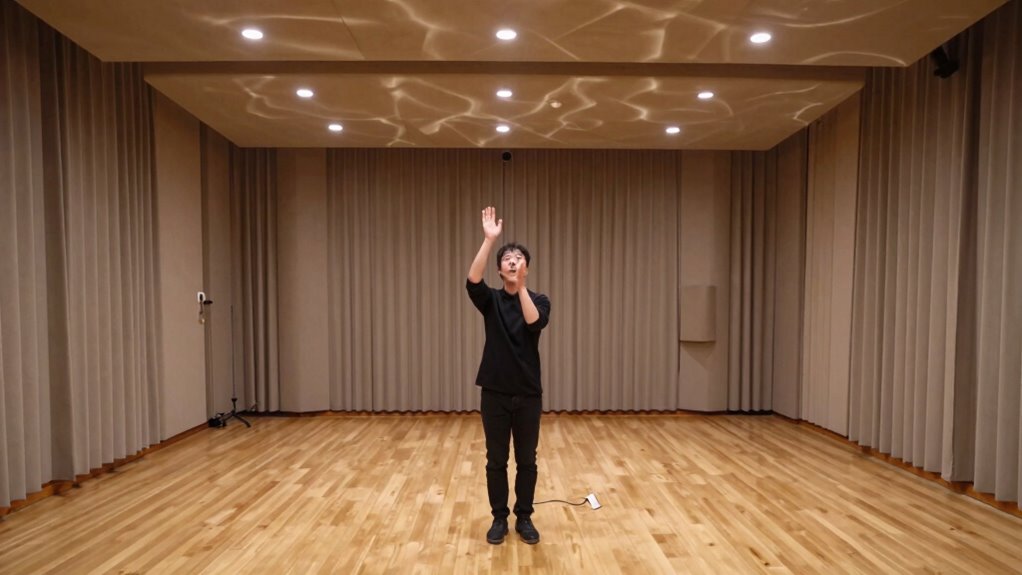
To create a room with excellent sound quality, you need to focus on strategic adjustments and practical solutions. Start by using decorative panels to absorb excess sound and reduce echo, enhancing clarity. These panels not only improve acoustics but also add visual appeal. Next, pay close attention to furniture placement—positioning sofas, shelves, and other furnishings thoughtfully can break up sound waves and minimize unwanted reflections. Avoid clustering large pieces in corners, which can cause bass buildup. Instead, spread out furniture evenly across the room. Keep pathways clear to prevent sound from bouncing unpredictably. Finally, experiment with different arrangements and listen for changes. Small tweaks often make a big difference, bringing balance and clarity to your space’s sound environment.
Frequently Asked Questions
Can the Clap Test Detect Specific Acoustic Issues Like Resonance?
Yes, the clap test can help with resonance detection, but it’s limited. When you clap, you notice lingering or exaggerated sounds at certain points, indicating problematic resonances. To pinpoint specific issues, perform a frequency analysis with a microphone and software. This approach reveals the exact frequencies causing resonance, allowing you to take targeted measures for better room acoustics. The clap test offers a quick, initial check, but detailed analysis provides precise results.
How Does Room Size Affect the Accuracy of the Clap Test?
Room size considerably impacts the accuracy of the clap test because larger rooms with bigger dimensions create more sound reflection, making echoes harder to interpret. Smaller rooms tend to produce clearer reflections, helping you identify acoustic issues more easily. When conducting the test, consider how the room’s dimensions influence sound behavior, as larger spaces can mask reflections or resonance, leading to less precise assessments of your room’s acoustics.
Is the Clap Test Effective in Rooms With Uneven Surfaces or Irregular Shapes?
Sure, the clap test works like magic—if your room has perfectly smooth, regular surfaces. But in rooms with uneven surfaces or irregular shapes, it’s basically pointless. The echoes get all jumbled, making it impossible to interpret the sound accurately. So, if your space looks like a funhouse mirror maze, don’t expect the clap test to give you any useful info. It’s more of a laugh than a tool.
Can Environmental Noise Interfere With the Clap Test Results?
Environmental noise can definitely interfere with your clap test results. Background noise and ambient interference can mask the echoes you’re trying to hear, making it harder to accurately assess room acoustics. To get the best results, choose a quiet time and minimize any nearby noise sources. Remember, the clearer the environment, the more reliable your clap test will be in revealing the room’s true acoustic qualities.
How Often Should I Perform the Clap Test to Monitor Room Acoustics?
You should perform the clap test monthly for a regular frequency check and seasonal monitoring. This helps you catch changes in room acoustics caused by factors like furniture shifts or seasonal humidity variations. By staying consistent, you’ll better understand your space’s sound characteristics and identify issues early, ensuring ideal acoustics for your needs. Regular testing keeps you informed and allows timely adjustments for the best acoustic environment.
Conclusion
Did you know that poor room acoustics can reduce speech clarity by up to 60%? By performing the simple clap test, you can quickly identify issues and improve your space’s sound quality. Remember, a well-optimized room not only sounds better but also enhances your overall experience. So, don’t wait—use this easy test to create a more comfortable, acoustically perfect environment today!
Halloween Picks
halloween
As an affiliate, we earn on qualifying purchases.