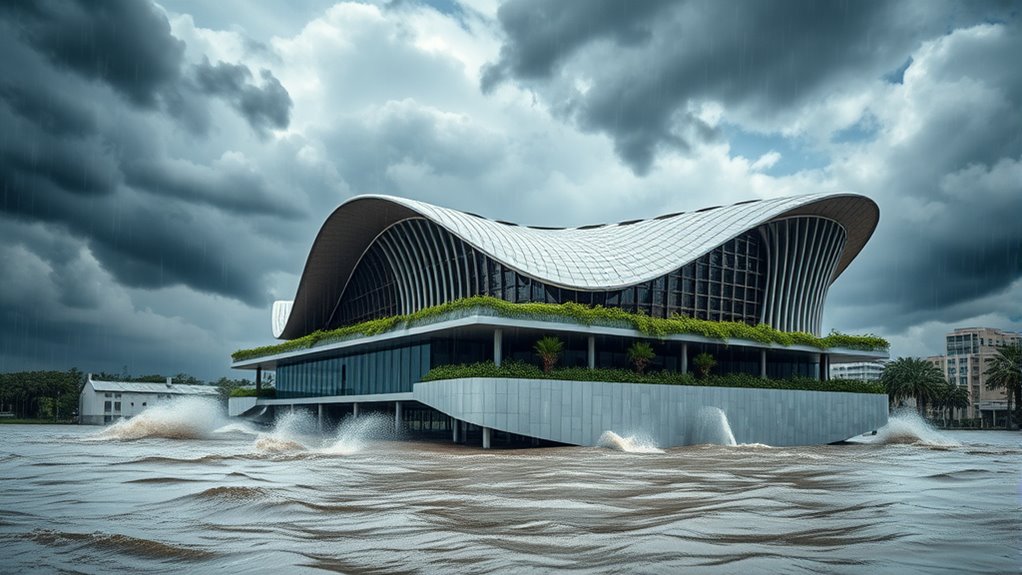

Climate-adaptive architecture helps you design buildings that withstand extreme weather and rising temperatures. By using renewable, low-embodied-energy materials like bamboo and reclaimed wood, you reduce environmental impact and improve resilience. Features like green roofs and reflective surfaces create cooler microclimates and lower heat absorption. These strategies also reduce energy use and extend building longevity. To learn how specific design techniques foster climate resilience, keep exploring innovative solutions that guarantee your structures adapt effectively.

Get art and craft supplies delivered free with Prime
- Fast, free delivery on millions of items
- Prime Video, Amazon Music and more included
- Member-only deals all year
Key Takeaways
- Incorporate renewable, low-embodied energy materials like bamboo and reclaimed wood to enhance thermal performance and sustainability.
- Use reflective surfaces and green roofs to reduce urban heat island effects and create cooler microclimates.
- Design adaptable structures capable of withstanding extreme weather events through resilient, durable materials.
- Integrate natural ventilation and shading strategies to improve indoor comfort during heatwaves and storms.
- Prioritize climate-responsive architecture that minimizes energy consumption and mitigates climate change impacts.
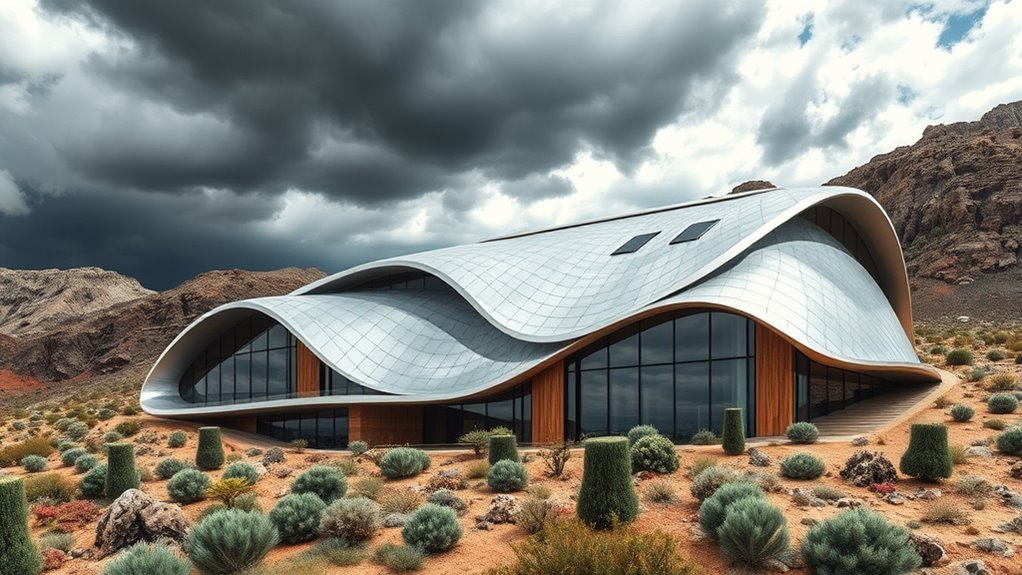
Have you ever wondered how buildings can better withstand the changing climate while reducing their environmental impact? As extreme weather events become more frequent, designing structures that adapt to these conditions is essential. One of the biggest challenges is urban heat, where densely built environments trap heat, raising temperatures well above suburban or rural areas. This intensifies cooling demands and worsens energy consumption. To address this, climate-adaptive architecture emphasizes the use of renewable materials that not only minimize environmental footprint but also improve a building’s resilience. These materials can include bamboo, recycled steel, reclaimed wood, or bio-based insulations, all chosen for their low embodied energy and enhanced thermal properties.
By integrating renewable materials into your building design, you help reduce the urban heat island effect. These materials often have reflective or insulating qualities that can deflect sunlight or retain cooler air inside, making indoor environments more comfortable without excessive air conditioning. For example, using green roofs with plantings or reflective surfaces can considerably lower surface temperatures, creating a cooler microclimate around your building. This approach helps mitigate urban heat, making your space more livable during heatwaves and reducing the need for energy-intensive cooling systems. The use of renewable materials also promotes sustainability by decreasing dependence on finite resources and lowering greenhouse gas emissions associated with manufacturing and transportation.
Using green roofs and reflective surfaces reduces urban heat and cools indoor environments naturally.
Incorporating renewable materials isn’t just about sustainability; it’s a strategic move for resilience. Many renewable options, like straw bale insulation or modular wood panels, provide excellent insulation, helping buildings maintain stable internal temperatures even during extreme weather swings. This stability reduces strain on HVAC systems, lowers energy costs, and extends the lifespan of the structure. Additionally, these materials often have better moisture regulation, preventing mold and deterioration in hot, humid climates. As you design or retrofit buildings to be climate-adaptive, choosing renewable, thermally efficient materials becomes a proactive step toward combating urban heat and climate extremes.
Furthermore, these materials often have lower embodied energy, meaning the total energy required to produce, transport, and install them is minimal. This reduces your building’s overall carbon footprint and aligns with broader efforts to combat climate change. Using renewable materials with low embodied energy can significantly enhance a building’s overall sustainability profile. In the face of rising temperatures and unpredictable weather patterns, utilizing renewable materials in architecture isn’t just an eco-conscious choice—it’s a practical necessity. By doing so, you create buildings that aren’t just more comfortable and energy-efficient, but also more resilient to the impacts of climate change, ensuring they stand strong and serve their purpose for years to come.
As an affiliate, we earn on qualifying purchases.
Frequently Asked Questions
How Does Climate-Adaptive Architecture Impact Construction Costs?
Climate-adaptive architecture can increase construction costs initially due to specialized materials and design features, impacting your overall budget considerations. However, these investments often lead to long-term savings by reducing energy consumption and maintenance expenses during extreme weather events. While the upfront cost implications are higher, you’ll benefit from enhanced resilience and lower operational costs over time, making it a smart choice for sustainable, cost-effective building solutions.
What Materials Are Most Effective for Extreme Weather Resilience?
You should choose materials with high durability and insulation efficiency, like reinforced concrete, insulated metal panels, or advanced composites. These materials resist extreme weather effects, such as high winds, heavy rain, or temperature swings. Using durable materials guarantees longevity, while efficient insulation helps maintain indoor comfort during climate extremes. Prioritizing these qualities allows your building to withstand harsh conditions, reducing maintenance costs and enhancing resilience over time.
Can Existing Buildings Be Retrofitted for Climate Adaptation?
Yes, you can retrofit existing buildings for climate adaptation. Start by upgrading building code updates to improve resilience and incorporate renewable energy integration for sustainability. You’ll want to reinforce structures against storms, improve insulation, and add flood defenses. These upgrades help your building withstand extreme weather, reduce energy consumption, and boost overall durability. With thoughtful planning and modern materials, you can transform your existing space into a resilient, eco-friendly environment that’s ready for the future.
How Do Cultural Factors Influence Climate-Adaptive Design?
You should consider how cultural factors influence climate-adaptive design by respecting cultural aesthetics and integrating traditional techniques. These elements help create solutions that resonate with local communities, ensuring acceptance and effectiveness. By blending modern climate-adaptive strategies with traditional methods, you can develop resilient structures that honor cultural identity while effectively managing extreme weather. This approach fosters sustainability and cultural continuity in climate-responsive architecture.
What Are the Long-Term Maintenance Requirements for Adaptive Structures?
You’ll need to regularly inspect adaptive structures to guarantee maintenance longevity and material durability. Keep up with routine cleaning, check for wear and tear, and promptly address any damage. Use high-quality, weather-resistant materials designed for extreme conditions to extend their lifespan. Regular maintenance not only preserves the structure’s functionality but also prevents costly repairs, ensuring it remains resilient against future weather challenges.
reflective exterior paint for homes
As an affiliate, we earn on qualifying purchases.
As an affiliate, we earn on qualifying purchases.
Conclusion
As you embrace climate-adaptive architecture, you’re helping communities withstand extreme weather. Did you know that buildings designed with climate resilience can reduce energy costs by up to 30%? By incorporating smart features and sustainable materials, you not only protect structures from storms and heatwaves but also contribute to a healthier planet. Your choices in design can make a real difference, ensuring safety and sustainability for generations to come.
As an affiliate, we earn on qualifying purchases.
As an affiliate, we earn on qualifying purchases.
Columbus Day / Indigenous Peoples' Day Picks
long weekend sales
As an affiliate, we earn on qualifying purchases.