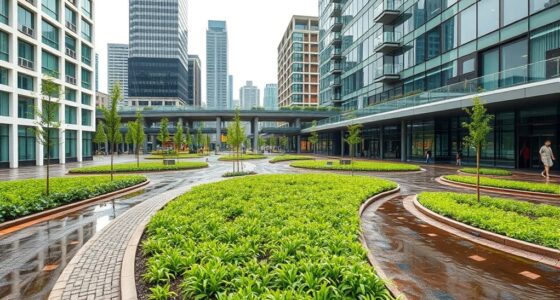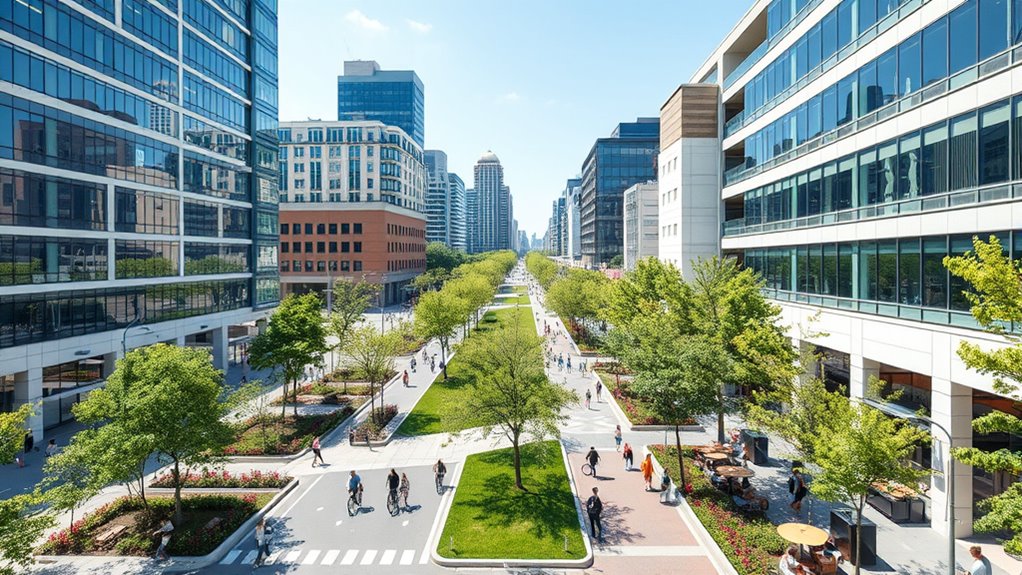

Superblocks and pedestrian zones are shaping the future of cities by making urban spaces safer, greener, and more enjoyable for you. They prioritize walking, cycling, and public transit, reducing traffic congestion and pollution. These designs create inviting areas for socializing, relaxation, and community life while improving air quality and urban aesthetics. If you want to discover how these innovative solutions can transform your city for the better, there’s much more to explore ahead.
Key Takeaways
- Superblocks and pedestrian zones prioritize human-friendly spaces, enhancing urban livability and safety.
- They improve mobility by promoting walking, cycling, and public transit, reducing reliance on private cars.
- These designs offer environmental benefits through lower emissions, improved air quality, and urban cooling.
- They foster community interactions and aesthetic urban environments, making cities more inviting.
- Urban planning strategies focus on sustainable development, balancing mobility, health, and ecological preservation.

Superblocks and pedestrian zones are transforming urban spaces by prioritizing people over cars. This shift is changing the way you experience cities, making them more accessible, safer, and environmentally friendly. When cars are restricted from certain areas, urban mobility improves because walking, cycling, and public transportation become more efficient and appealing. Without constant traffic congestion, you can move around more freely, reducing travel time and frustration. This emphasis on alternative transportation modes supports environmental sustainability because it leads to lower emissions and less air pollution. As cities adopt these designs, you’re encouraged to choose eco-friendly options that contribute to cleaner air and a healthier environment.
In these redesigned spaces, pedestrian zones eliminate the noise and danger associated with vehicle traffic, allowing you to enjoy city life at a human scale. Streets become safe, inviting places to stroll, socialize, or simply relax. By removing cars from these zones, you notice an immediate reduction in air pollution and greenhouse gases, which benefits everyone’s health and the planet’s future. Furthermore, the reduction in traffic flow within superblocks encourages the development of green areas, parks, and community spaces. These areas not only improve urban aesthetics but also promote environmental sustainability by supporting biodiversity and providing natural cooling effects amidst urban heat islands. Additionally, the reorganization of city layouts often involves urban planning strategies that aim to optimize the use of space for people rather than vehicles.
The concept of superblocks often involves rethinking city layouts to prioritize these pedestrian-friendly zones. You may find yourself walking longer distances comfortably, thanks to better-designed pathways and traffic-calmed streets. As a result, urban mobility becomes more sustainable because you rely less on private vehicles and more on active travel methods like walking or cycling. Cities implementing these strategies also tend to upgrade public transit systems, making them more accessible and efficient, further reducing your dependence on personal cars. This integrated approach helps create a balanced urban ecosystem where mobility, health, and environmental goals align.

Adjustable Traffic Cone Bar – Retractable Safety Barrier for Work Zones & Events (20 Pack, Yellow/Black, Long)
EASY TO USE: Attaches effortlessly to various types of traffic cones with built-in plastic rings at both ends
As an affiliate, we earn on qualifying purchases.
As an affiliate, we earn on qualifying purchases.
Frequently Asked Questions
How Do Superblocks Impact Local Businesses?
Superblocks boost local business support by increasing foot traffic and creating a safer, more inviting environment. With pedestrian zone funding, you’ll see more outdoor cafes, markets, and shops thrive as fewer cars pass through. This vibrant atmosphere attracts residents and visitors alike, helping your businesses grow. Overall, superblocks foster a thriving community where local commerce flourishes, making your neighborhood more lively and economically resilient.
What Are the Costs of Implementing Pedestrian Zones?
Implementing pedestrian zones can be costly, as it requires redesigning streets, installing signage, and managing traffic flow disruptions. You might face expenses related to infrastructure upgrades and potential short-term congestion. However, these costs often lead to improved pedestrian safety and smoother traffic flow in the long run, making city spaces more inviting. While the initial investment is significant, the benefits for residents and visitors can outweigh the expenses.
How Do Residents Feel About Reduced Car Access?
You might be surprised to learn that over 70% of residents support reduced car access in pedestrian zones. Public opinion often favors safer, cleaner streets, though some residents initially resist change. Community engagement helps address concerns, fostering understanding and acceptance. By actively involving residents, you can see a shift in attitudes, making these urban transformations more successful. Your participation shapes a more walkable, vibrant neighborhood for everyone.
Are Superblocks Effective in Reducing Air Pollution?
Superblocks are effective in reducing air pollution because they limit vehicle traffic, which lowers emissions. As you walk through these areas, you’ll notice increased urban greenery that filters pollutants and improves air quality. Plus, noise reduction from fewer cars creates a healthier environment. By prioritizing pedestrian spaces, superblocks help make cities greener, cleaner, and more livable, directly benefiting your health and overall well-being.
How Long Does It Take to Develop a Superblock?
It typically takes several months to over a year to develop a superblock, depending on urban planning and traffic management complexity. You’ll need time for community consultations, detailed design, and securing permits. During construction, traffic flow adjustments and infrastructure upgrades are essential. The process involves coordination among city officials, engineers, and residents. Patience is key, as thorough planning guarantees the superblock effectively reduces congestion and improves urban livability.

Allen Sports Deluxe 2-Bike Trunk Mount Rack, Model 102DN-R, Black
Allen Sports Deluxe 2-Bike Trunk Mount Rack, Model 102DN-R
As an affiliate, we earn on qualifying purchases.
As an affiliate, we earn on qualifying purchases.
Conclusion
By embracing bold, barrier-free superblocks and pedestrian-friendly zones, you can transform turbulent traffic into tranquil towns. When you prioritize people over vehicles, progress and prosperity flourish. Let’s lead with logic and leap into lively, livable landscapes — where community, comfort, and creativity collide. Together, you can craft cities that foster freedom, fun, and future-focused fulfillment. Remember, small steps shape significant, sustainable cities — so start shaping your space today!
public transit accessibility devices
As an affiliate, we earn on qualifying purchases.
As an affiliate, we earn on qualifying purchases.

Green: Simple Ideas for Small Outdoor Spaces
As an affiliate, we earn on qualifying purchases.
As an affiliate, we earn on qualifying purchases.