
When exploring AI art and licensing, you should consider the ethical implications around artist rights and proper licensing. AI algorithms often learn from copyrighted works, raising concerns about ownership, fair compensation, and respecting original creators’ rights. Transparency about training data and licensing agreements is crucial to ensure ethical use and protect artists’ control. If you want to understand how to navigate these complex issues responsibly, there’s a lot more to explore.
Key Takeaways
- Ensuring proper licensing and permissions for datasets used in AI training to respect original artists’ rights.
- Promoting transparency about AI training data sources to build consumer and creator trust.
- Establishing clear legal frameworks to protect artists from unauthorized use and infringement.
- Supporting fair compensation and attribution for artists whose work influences AI-generated art.
- Encouraging ethical AI practices by balancing innovation with respect for intellectual property rights.
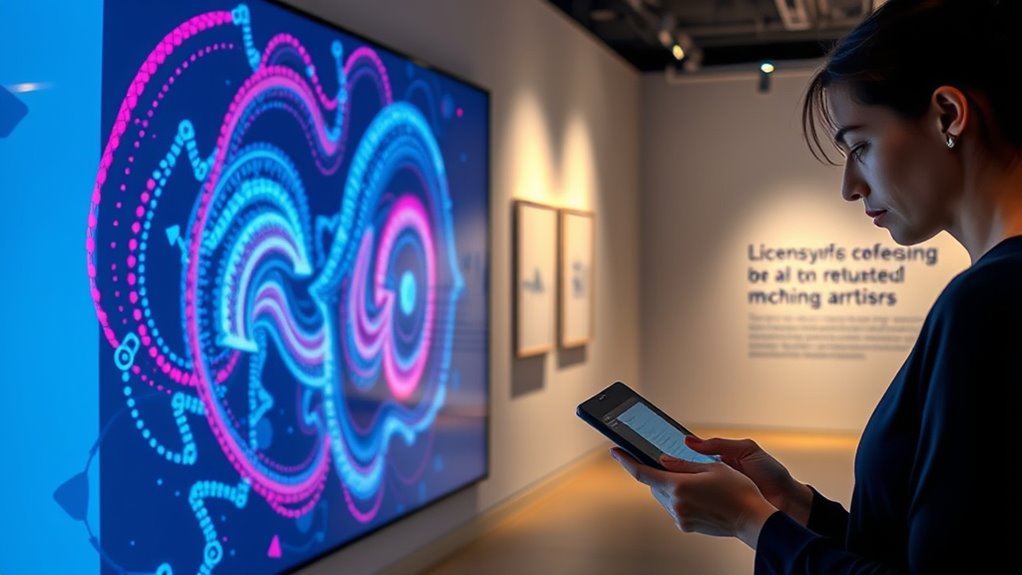
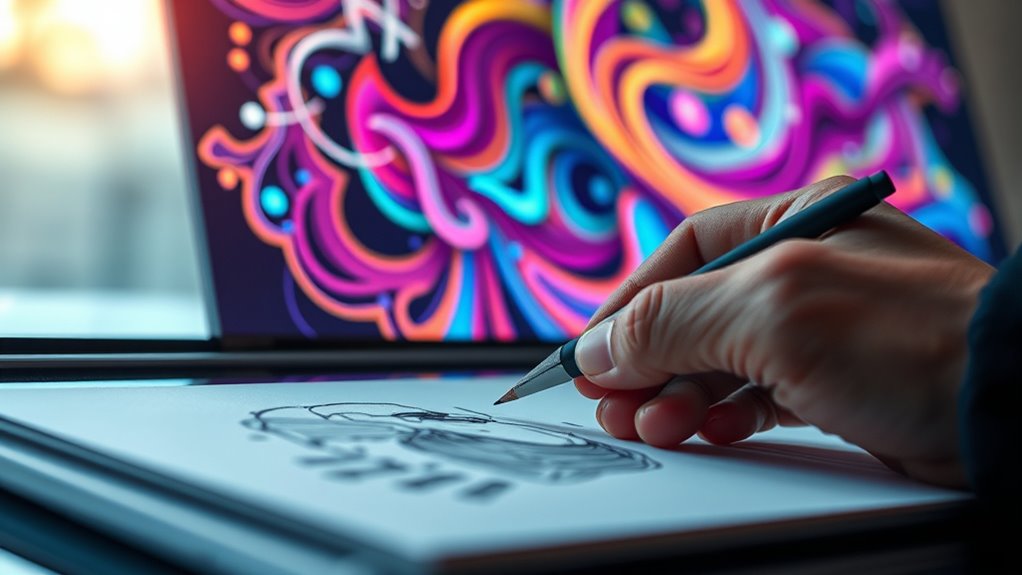
As AI art becomes more prevalent, it’s essential to contemplate the ethical questions it raises. One of the most pressing issues involves intellectual property and artist rights. When AI generates artwork, questions emerge about who owns the final piece and whether the original creators’ rights are being respected. If you’re creating or using AI-generated art, it’s important to understand how intellectual property law applies and to consider the rights of artists whose work might influence or be incorporated into AI training data.
AI algorithms learn from vast datasets, often including copyrighted images created by human artists. This process raises concerns about whether the original artists should be compensated or credited when their work is used to train AI models. If you’re involved in licensing AI art, you need to ask yourself: does the AI tool respect artist rights? Are the creators of the original works aware of how their art is being used? These questions are crucial because, without proper licensing or permissions, AI-generated art can infringe on existing intellectual property rights, potentially leading to legal disputes.
AI training on copyrighted images raises questions about fair compensation and artist rights.
For artists, the rise of AI art may feel like a threat to their livelihood and creative control. You might worry about your work being copied or manipulated without consent. It’s important to advocate for clear policies that recognize and protect artist rights in the context of AI. Some solutions include establishing licensing agreements that specify how AI can use artists’ works, or creating legal frameworks that give artists control over how their creations are employed in training datasets.
Additionally, understanding the technology behind AI art can help creators and consumers make more informed ethical decisions. As a consumer or creator, you should also consider the ethics of using AI-generated images. Are you respecting the rights of the original artists, even if their work is part of an AI training set? Supporting platforms that prioritize fair licensing and attribution can help promote ethical AI art practices. Additionally, transparency about how AI tools generate images and whether they use copyrighted material is vital to maintaining trust and integrity in this emerging field.
Top picks for "ethical consideration licensingart"
Open Amazon search results for this keyword.
As an affiliate, we earn on qualifying purchases.
Frequently Asked Questions
How Can Artists Protect Their Original Work From AI Misuse?
You can safeguard your original work by watermarking your art and licensing it clearly, making misuse less likely. Stay informed about AI bias and advocate for stronger licensing laws that safeguard artists’ rights. Share your concerns within artist communities and collaborate on creating ethical standards. By actively defending your work, you help ensure AI tools respect your originality and prevent unauthorized use. Your advocacy supports a fairer digital art landscape.
What Legal Rights Do Ai-Generated Artworks Possess?
AI-generated artworks generally lack specific legal rights because current legal frameworks don’t recognize them as traditional authors. You might face copyright disputes if someone claims ownership or originality. To protect yourself, stay informed about evolving laws and consider licensing agreements. Keep in mind that legal rights for AI art are still developing, so it’s essential to monitor changes and consult legal experts when needed.
Who Owns the Copyright of Ai-Created Art?
You own the copyright of AI-created art if you’re the human behind its creation, exercising your creative autonomy. AI ethics emphasize that true authorship involves human input, so the legal rights typically belong to you. However, questions about ownership can vary based on jurisdiction and the extent of your creative control. Recognizing your role guarantees your rights are protected and respects the importance of human creativity in AI art.
How Transparent Should AI Art Generation Processes Be?
You should aim for high transparency standards in AI art generation. This means clearly disclosing algorithms used and providing insight into how the AI creates artwork. By doing so, you build trust and help others understand the process. Algorithm disclosure allows viewers to appreciate the technology behind the art, ensuring ethical practices and fostering informed discussions about AI-generated work’s origins and ownership.
Can AI Art Be Ethically Used in Commercial Projects?
Using AI art in commercial projects is like walking a tightrope—you need careful balance. As long as you’re transparent about AI training and guarantee proper licensing, it can be ethically sound. Think of AI as a creative collaborator, not a replacement. By respecting intellectual property and fostering open collaboration, you can confidently incorporate AI art into your commercial work without crossing ethical boundaries.
Conclusion
While AI art opens exciting creative doors, it’s essential to honor original artists and guarantee fair licensing. By respecting these boundaries, you help foster a respectful artistic community and prevent harm. Imagine the impact if your work, inspired by others, was exploited without credit or compensation—that’s a future none of us want. Let’s choose ethics over shortcuts, preserving the integrity of art and inspiring genuine innovation for everyone’s benefit.