AR filters are changing how you experience stories by making them more immersive and personal. They blend digital visuals with your real environment, responding to your movements and expressions to create dynamic interactions. This active participation helps you connect emotionally and share your stories easily on social media. As you explore further, you’ll discover how these interactive effects turn passive watching into exciting, multisensory adventures that deepen your engagement with content.
Key Takeaways
- AR filters create immersive, multisensory storytelling by blending digital characters and scenes with real-world environments.
- They enable user interaction, allowing movements and expressions to influence story progression and engagement.
- Personalization features allow creators to tailor stories to individual preferences, enhancing emotional connection.
- Sharing AR-enhanced photos and videos fosters social engagement and extends the reach of interactive narratives.
- AR transforms passive viewers into active participants, making stories more memorable, dynamic, and emotionally resonant.
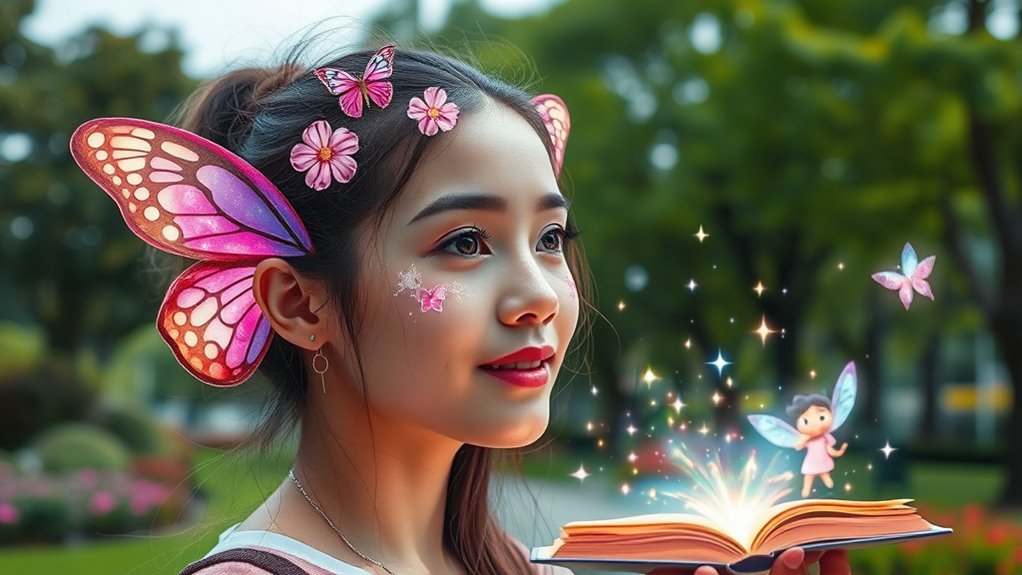
Have you ever wondered how augmented reality filters are transforming the way we tell stories? It’s a fascinating shift that puts you at the center of an immersive experience, blending digital elements with the real world. AR filters leverage augmented reality technology to create dynamic visuals and interactive layers that respond to your movements and expressions. This innovation isn’t just about adding fun effects; it’s about deepening user engagement and making storytelling more personal and enthralling. When you use an AR filter, you’re not just passively watching a story unfold—you’re actively participating in it. This heightened interaction keeps you hooked, encouraging you to explore further and share your experience with others.
Augmented reality introduces a new dimension to storytelling by making narratives more vivid and immediate. Instead of reading about a character or scene, you see it come to life in your environment. For example, a story might involve a mythical creature that appears right in your living room through an AR filter, or historical events might be visualized around you as you walk through a city. This immersive approach transforms traditional storytelling into an engaging, multisensory experience. As a user, your reactions, gestures, and expressions can influence what happens next, creating a sense of agency that wasn’t possible before. This active participation heightens user engagement, making stories more memorable and emotionally resonant.
Moreover, AR filters enable creators to craft personalized stories tailored to your preferences. You might choose a narrative theme or style, and the filter adapts accordingly, making each experience unique. This customization encourages you to spend more time exploring stories and sharing your journey with friends, fostering a sense of community and interaction. The social aspect is amplified because AR filters are often designed for sharing on social media platforms. When you post a photo or video with an AR overlay, you’re not just sharing a moment—you’re sharing a story that others can engage with, comment on, or remix. This circulation of stories amplifies user engagement on a broader scale and creates a sense of collective participation.
Additionally, incorporating elements of Relationship Dynamics can help creators develop narratives that resonate emotionally, fostering stronger connections between viewers and content. In essence, augmented reality filters are revolutionizing storytelling by transforming passive viewers into active participants. They make stories more immersive, personal, and shareable, which boosts user engagement at every turn. Whether it’s through playful effects, interactive characters, or personalized narratives, AR filters invite you to become part of the story rather than just an observer. This evolution in storytelling not only entertains but also connects you more deeply with content, making every experience feel fresh, exciting, and truly your own.

67mm Variable ND2-ND400 Filter for Phone, AR-Coated VND Lens with Metal Cold Shoe Clip, Adjustable Neutral Density Filter Compatible with iPhone 16 15 14 13 Pro Max Plus Samsung Galaxy Moto Google TCL
【Adjustable 67mm ND2-ND400 Filter】The variable neutral density filter reduces light from ND2 to ND400 to avoid overexposure in…
As an affiliate, we earn on qualifying purchases.
As an affiliate, we earn on qualifying purchases.
Frequently Asked Questions
How Do AR Filters Personalize User Experiences?
AR filters personalize your experience by using personalization strategies that analyze your user data. They adapt visuals, effects, and interactions based on your preferences, habits, and even location. This tailored approach makes each interaction unique, engaging, and relevant to you. By leveraging user data, AR filters create a more immersive and connected experience, ensuring you feel more involved and valued during your digital interactions.
What ARe the Latest Trends in AR Storytelling?
You’re witnessing a revolution where augmented reality transforms storytelling techniques, blending the physical and digital worlds. Latest trends include immersive narratives that adapt in real-time, emotional engagement through interactive elements, and seamless integration with social platforms. This juxtaposition of reality and fantasy heightens emotional impact, making stories more personal and memorable. As AR evolves, you’ll find yourself not just watching stories but living them, creating a profound connection with the content.
How Do AR Filters Impact User Engagement Metrics?
AR filters considerably boost your user engagement metrics by enhancing visual engagement and triggering emotional responses. When users interact with filters, they’re more likely to spend time on your content and share it, increasing reach. These filters create memorable experiences, making users feel connected and emotionally involved. As a result, your engagement metrics improve, with higher retention rates, likes, comments, and shares, ultimately strengthening your overall brand connection.
What ARe Common Challenges in Developing AR Interactive Stories?
Imagine building a bridge across a flowing river—you face challenges in developing AR interactive stories, just as you’d navigate shifting currents. You must balance user engagement with technical constraints, ensuring smooth interactions without crashing or lag. Crafting compelling narratives within hardware limits, ensuring accessibility, and maintaining immersive experiences are common hurdles. These obstacles demand creative solutions, patience, and constant testing to deliver stories that captivate users without breaking under technical strain.
How Can Small Creators Start Making AR Filters?
You can start making AR filters by focusing on simple AR filter design ideas and experimenting with free tools like Spark AR or Effect House. Collaborate creatively with friends or fellow creators to enhance your designs and gain feedback. Practice regularly, learn from tutorials, and stay inspired. With dedication and teamwork, you’ll improve your skills and create engaging AR filters that stand out.

Warum das Gehirn Geschichten liebt – inkl. Augmented-Reality-App: Storytelling – analog und digital
As an affiliate, we earn on qualifying purchases.
As an affiliate, we earn on qualifying purchases.
Conclusion
As you explore AR filters and interactive storytelling, you realize they’re a game-changer, blending imagination with technology. These tools let you craft immersive experiences that truly captivate your audience. Don’t be afraid to think outside the box—sometimes, you have to seize the moment to make your mark. With a little creativity and tech savvy, you’re all set to turn ordinary stories into extraordinary adventures. Remember, the sky’s the limit—so go ahead and make your story stand out.
![Corel VideoStudio Pro 2023 | Beginner-Friendly Video Editing Software | Slideshow Maker, Screen Recorder, DVD Burner [PC Key Card]](https://m.media-amazon.com/images/I/419SsEgNdaL._SL500_.jpg)
Corel VideoStudio Pro 2023 | Beginner-Friendly Video Editing Software | Slideshow Maker, Screen Recorder, DVD Burner [PC Key Card]
VIDEO EDITING SUITE: Enjoy this fun, easy-to-use and beginner-friendly video editing suite designed to create movies and slideshows…
As an affiliate, we earn on qualifying purchases.
As an affiliate, we earn on qualifying purchases.

KanDao QooCam Ego-Handheld 3D VR Camera, Portable 24MP 3D Photo shooting/4K 60FPS Video Recording,Compatible with VR Headsets, AR AI Glasses & Projectors, Black Camera Only Without viewer
See the World in True 3D, Just Like Your Eyes Do. The 65mm lens distance matches human vision,…
As an affiliate, we earn on qualifying purchases.
As an affiliate, we earn on qualifying purchases.